Natural stone tiles are dimensioned pieces cut from granite or marble blocks and finished for floors, walls, wet areas and exterior paving. Buyers specify the stone, format, thickness, edge, surface finish, slip class and packing before production, because those choices determine both installed performance and the condition of the delivered order.
Tiles suit projects that want stone in a repeatable module rather than a full slab. The module can be a small bathroom tile, a 60×60cm floor tile or a 120×240cm panel; the purchase decision changes with size, thickness, finish and fixing method.
Natural Stone Tiles: What the Format Includes
A tile is a factory-dimensioned piece of stone, not a moulded imitation. Each piece carries its own mineral composition, veining and subtle colour variation, while a production run is sorted and matched for tone. The format covers flooring, wall cladding, backsplashes and decorative accents in residential, commercial and institutional projects.
The same stone can appear as a tile and as a slab. The tile is the modular format; the slab is the large-format one. Moving from slab to tile changes handling, joint layout, installation labour and cutting waste. That is why the format belongs at the start of the enquiry, not at the packing stage.
For a buyer, the useful definition is commercial rather than geological: a stone tile is a finished unit with a stated face dimension, thickness, edge treatment, surface finish and batch identity. If one of those is missing, the quotation is incomplete. The approval sample and the purchase order should describe the same five properties.
Why Specify Natural Stone Tiles?
Natural stone offers properties that a printed porcelain surface can only imitate: mineral composition, natural variation and a surface that can be re-honed or re-polished where the stone and finish allow. Our flooring source describes a 50-100+ year lifespan for natural stone and a 50+ year service life for granite floors under commercial traffic [source: stone-phoenix.com].
| Feature | Natural stone | Porcelain or ceramic | Hardwood |
|---|---|---|---|
| Lifespan | 50-100+ years | 20-50 years | 25-100 years with refinishing |
| Water resistance | Good when sealed | Excellent | Poor |
| Radiant heat compatibility | Excellent | Excellent | Not recommended |
| Installed cost | $12-$40/sq ft | $8-$20/sq ft | $12-$25/sq ft |
Stone is not automatically the lowest-cost or lowest-maintenance floor. It is the material to choose when longevity, repairability and natural appearance matter, and when the substrate and maintenance budget support it. The installed-cost range overlaps with manufactured alternatives; the difference is in the service life, the variation and the maintenance routine.
Stone is heavy and rigid, so the substrate is a cost line rather than an afterthought. Tile quality cannot compensate for a weak substrate. The specification should cover both the tile and the assembly.
Granite Tiles for High-Traffic Areas
Granite is the workhorse for commercial floors. Our flooring source rates granite at 6-7 on the Mohs scale and gives granite floors a 50+ year service life under commercial traffic. It names kitchens, hallways, high-traffic interiors, commercial spaces and outdoor patios as suitable applications. A flamed finish adds grip in wet or exterior areas; honed and polished surfaces are used where the location and maintenance plan allow [source: stone-phoenix.com].
Granite tiles are supplied in modular floor formats and in thicker paving units. The format has to match the substrate and the load, not just the room. A 60×60cm tile is described in our source as a value floor format, while heavier exterior work moves to the thickness ranges set out later in this guide. The face size and the thickness are separate decisions.
The maintenance routine for granite is straightforward but not optional. Source guidance calls for sealing and a pH-neutral cleaner, with prompt attention to oil and acid spills. Grit acts like sandpaper underfoot, so mats and regular dust mopping matter as much as the stone choice.
Granite is a strong candidate for hotel back-of-house floors, retail circulation, entrance halls and outdoor transition zones. It is less suitable when the design calls for dramatic veining and a book-matched pattern; that is a marble or quartzite conversation. Choose the stone for the performance the room needs, then choose the finish for the condition.
Marble Tiles for Interior Spaces
Marble is the design-led tile. Source guidance places marble at Mohs 3-4, softer than granite, and recommends it for residential and low-traffic commercial use, including bathrooms, living rooms and decorative surrounds. A honed finish is often preferred for floors because it hides scratches and gives more grip when wet than a polished surface [source: stone-phoenix.com].
Marble is acid-sensitive. Citrus, wine and vinegar can etch the face, so spills need prompt cleanup and a pH-neutral cleaner. Sealing every 6-12 months is the source maintenance interval for marble. A sealer slows absorption; it does not turn a calcareous stone into an acid-proof surface.
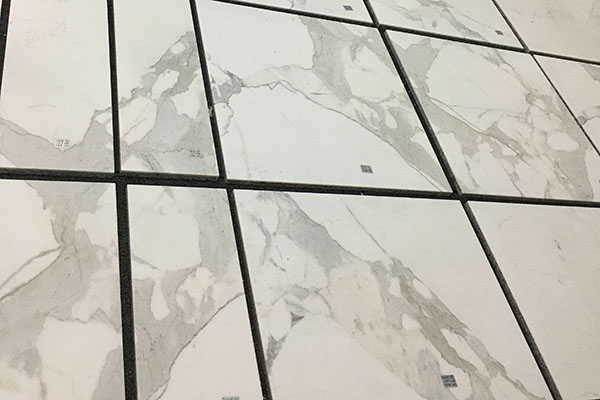
Our marble tile range includes Marble Tiles, Statuario White Marble Tile, Sanit Laurance Marble Tile and Clear River Marble Tile. The named selections are starting points for approval, not a substitute for block selection. For a feature wall or a book-matched floor, approve the vein direction and the dry-lay before production.
Marble works well in bathrooms, reception areas, living rooms and feature walls when the maintenance plan is funded. For a busy commercial kitchen or an entrance exposed to grit and de-icing salt, granite or dense porcelain may be the more defensible specification.
Our Tile Range
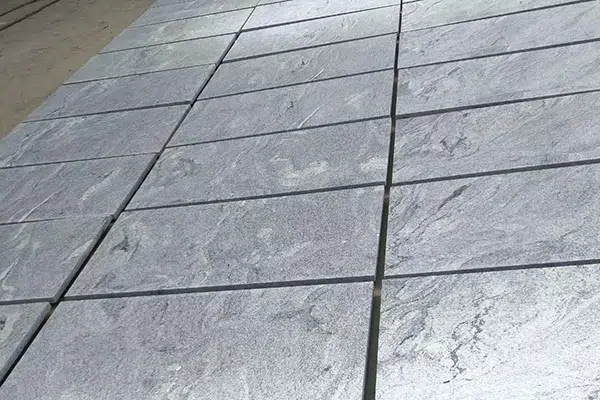
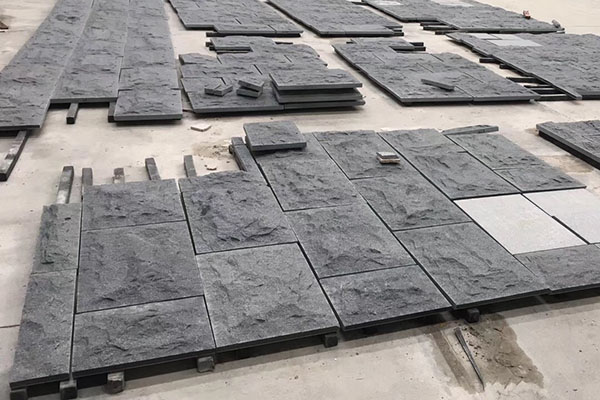
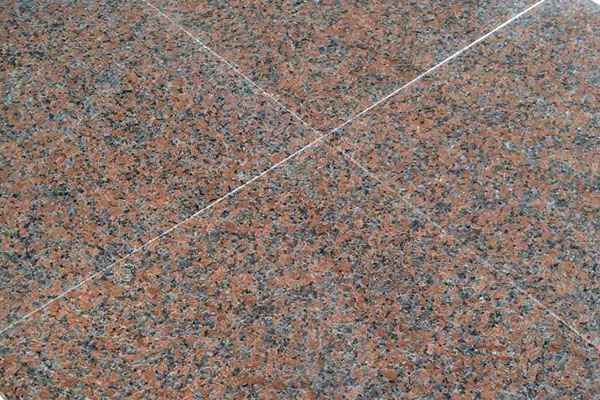
Our current tile supply includes Granite Tiles, Marble Tiles, Viscount White Granite Tile, Statuario White Marble Tile, Sanit Laurance Marble Tile, Granite Mushroom Tile, Maple Red Granite Tile and Clear River Marble Tile. The list is a supply guide, not a stock promise. Each named selection is confirmed against the current block, finish, format and order quantity.
| Product | Family | What to confirm in the quote |
|---|---|---|
| Granite Tiles | Granite | Format, thickness, finish and slip requirement |
| Marble Tiles | Marble | Block selection, finish and maintenance plan |
| Viscount White Granite Tile | Granite | Current batch tone, format and finish |
| Statuario White Marble Tile | Marble | Block, vein direction and finish |
| Sanit Laurance Marble Tile | Marble | Current batch, format and finish |
| Granite Mushroom Tile | Granite | Face texture, format and intended use |
| Maple Red Granite Tile | Granite | Batch tone, format and finish |
| Clear River Marble Tile | Marble | Block, vein direction and finish |
The product gallery below is the visual index. For a project, the more useful starting point is the application and the required performance; the trade name is a direction, not a specification. Send the room, substrate, traffic, slip requirement, finish and target quantity, and we will confirm the formats available for that selection.
No two blocks are identical. The approval record should identify the stone, block, batch, format, thickness and finish, and both sides should keep the same sealed sample.
Standard Sizes and Thicknesses
Format drives cost and installation as much as stone type. In our flooring source, 60×60cm tiles are described as the value format; large-format slabs of 120×240cm and larger add 30-60% for material, handling and installation complexity. The formats below are source-backed examples rather than a fixed stock list.
| Format | Source-backed example | Typical use | Note |
|---|---|---|---|
| Small format | 30×30 or mosaics | Bathrooms and shower floors | More joints can add grip and maintenance |
| Value floor tile | 60×60cm | Living areas and commercial floors | Lower-cost modular format |
| Large format | 120×240cm and larger | Feature floors and wall panels | Adds 30-60% for material and handling |
| Patio set | 600×900mm, 600×600mm, 600×300mm, 300×300mm | Outdoor paving | Mixed sizes for a planned random pattern |
| Large patio slab | 80×80cm and larger | Modern patios | Requires a very flat base |
Thickness follows the application. A hotel lobby case study in our source used 20mm honed marble tiles. Wall cladding moves from 15-30mm for interiors to 30-50mm for mechanically anchored exteriors. Outdoor paving steps up with use: 20-22mm for pedestrian paths and light patios, 30-32mm for standard patios, 40-50mm for commercial and public areas, and 50mm+ for heavy traffic; the source's vehicle-specific rules set higher minimums for driveways. Those ranges are planning guidance; the structural and fixing design decides the final thickness [source: stone-phoenix.com].
Calibration and tolerance belong in the purchase order. A nominal size without a tolerance is not a specification. State whether the tiles are calibrated or gauged, how thickness variation will be measured, and what joint width the tolerance supports. For free-length or plank formats, ask for a shop drawing and confirm the direction of the vein before cutting begins.
Surface Finishes and Slip Resistance
Finish is a safety decision as well as a visual one. The flooring source groups the common finishes by appearance, slip performance and maintenance. The table below turns that comparison into a selection guide; it does not replace the project's slip classification or a wet test on the actual tile.
| Finish | Surface character | Wet slip | Typical use |
|---|---|---|---|
| Polished | Mirror gloss and deep colour | Poor when wet | Walls and low-traffic interiors |
| Honed | Smooth matte | Good | Floors and bathrooms |
| Brushed | Textured matte | Good | Floors and wet areas |
| Leathered | Textured and tactile | Good | Feature floors |
| Flamed | Rough, natural grey | Excellent | Outdoor, entry and commercial areas |
| Riven | Natural cleft texture | Excellent | Rustic and outdoor work |
A polished tile in a dry reception and a honed tile in a bathroom are different specifications even when the stone is the same. Commercial projects should state the required slip performance, test the actual finish and document the result; source guidance calls for professional slip testing on commercial installations [source: stone-phoenix.com].
Finish also changes maintenance. Polished surfaces show traffic wear and may need periodic repolishing; flamed and riven textures hide wear but hold dirt in a different way. Approve the finish wet and dry, under the project lighting.
Laying Patterns and Joint Design
Layout is part of the tile specification. Source paving guidance describes a classic random rectangular pattern using 600×900mm, 600×600mm, 600×300mm and 300×300mm units, laid in a repeating but non-obvious arrangement. The mixed sizes create visual movement without the busy look of irregular crazy paving.
Interior floors should be dry-laid before adhesive. Set out the first rows, plan the cuts and balance the colour across the room. For veined stone, sequence the tiles for a continuous flow and mark the layout before installation. The same discipline applies to book-matched or vein-matched panels: approve the layout, not just the individual tile.
Joint widths depend on the application. Our cladding source gives 2-3mm for interiors and 5-10mm for exteriors to allow thermal movement. The flooring source gives 1/8 inch to 1/4 inch for natural stone floors, with unsanded grout below 1/8 inch and sanded grout above. For driveways, paving guidance uses 8-15mm joints filled with kiln-dried sand or a permeable compound [source: stone-phoenix.com].
Joints are not just a visual detail. They take movement and, in exterior work, help water drain. Large-format tiles reduce the number of joints but require a flatter substrate and careful handling; small tiles create more grip and more joints to maintain. The pattern, joint width and substrate should be designed together.
Stone Flooring by Room
The room determines the stone and the finish more than the other way around. Our flooring source sets out a room-by-room approach that a buyer can use to brief a supplier or fabricator.
Bathrooms
Honed marble, travertine or slate with sealed joints are the classic choices. Small-format tiles such as 30×30 or mosaics add grout lines and grip, while large-format tiles reduce joints but become more slippery when wet. Waterproofing beneath the stone and a sealed, properly drained substrate are part of the specification.
Kitchens
Granite tiles are the durable choice for kitchen floors. Slip resistance matters more than gloss: a polished floor looks strong at handover but shows every mark and water film. Mats at the work zones reduce fatigue and protect the stone.
Living Rooms and Bedrooms
Large-format marble or limestone suits living spaces, with rugs to soften the acoustic and thermal hardness. Stone is compatible with underfloor heating, and a heated floor makes the material more comfortable in cool climates. A honed or brushed finish is less formal than polished marble and hides everyday marks more readily.
Entryways and Commercial Spaces
Entries carry grit, moisture and point loads, so granite or dense slate tiles are more defensible than a soft polished marble. A recessed mat captures grit before it reaches the stone. In commercial work, source guidance recommends granite for heavy traffic and honed marble only with a funded maintenance contract, plus slip testing for the actual installation.
Basements and Utility Rooms
Below-grade floors need moisture control. A sealed slate or porcelain tile is a practical choice; stone below grade risks moisture migration unless the slab and wall assembly are waterproofed. If stone is required, specify a moisture barrier and dense granite or porcelain-grade stone, and verify the substrate before installation.
Wall Cladding with Stone Tiles
Tiles are not only floor products. Our cladding source describes stone wall cladding as a non-load-bearing veneer, typically 15-30mm thick for interiors and 30-50mm for exteriors, fixed with adhesive or mechanical anchors. Interior thin panels can be bonded to a suitable substrate; above ground-floor level, exterior work needs mechanical attachment, and above one story a structural engineer should design the anchorage [source: stone-phoenix.com].
A ventilated rainscreen creates a cavity of 25-50mm between the stone and the building envelope, allowing moisture to drain and air to circulate. Stainless steel anchors and clips are part of the engineered system; the cladding guide specifies 304 or 316 stainless steel and warns against galvanised steel in coastal environments. The cavity, anchors, insulation and drainage paths are designed as one assembly.
Wet-area walls need more than a pretty surface. The cladding guide specifies waterproofing behind the stone, epoxy-based setting materials in wet areas, a honed finish on floors for slip safety, and sealed stone maintained every 6-12 months. A stone shower wall that looks correct but lacks a waterproofing membrane is a future repair, not a finished installation.
Design trends in the source point toward full-height walls, book-matched large formats, backlit onyx, indoor-outdoor continuity and mixed materials. Not every trend belongs in every project. A large-format marble wall in a dry reception is a different risk profile from a wet shower wall or a six-storey exterior facade. Match the fixing method and the maintenance plan to the exposure.
Outdoor Paving and Wet Areas
Outdoor use narrows the material choice. Source paving guidance covers granite, sandstone, limestone, slate and basalt, and identifies granite with water absorption below 0.3% and basalt as the freeze-thaw performers. Dense sandstone below 5% performs well when sealed; limestone, travertine and soft sandstone are poor risks in frost climates [source: stone-phoenix.com].
Thickness follows traffic. Paving guidance gives 20-22mm for pedestrian paths and light patios, 30-32mm for standard patios, 40-50mm for commercial and public areas, and 50mm+ for heavy traffic. For driveways, the source's vehicle-specific rules set higher minimums than its thickness table, so use the stricter figure for cars and trucks. The base is part of the specification: compacted angular stone to the required depth, and a fall of 1 in 60, or 1.7%, for drainage. Stone on an inadequate base is the source of many cracked-paver failures.
Joints and finish carry the wet performance. Driveway joints are commonly 8-15mm, filled with kiln-dried sand or a permeable jointing compound. A flamed or riven face provides grip. Sealed joints reduce oil penetration on driveways, while open joints support drainage in permeable paving systems.
For a pool surround or garden patio, choose the finish before the stone. A smooth honed surface that feels comfortable underfoot may be too slippery at the pool edge, while a deeply textured surface can be uncomfortable in bare feet. Test the actual finish wet and inspect the drainage falls before installation.
Installation: Substrate, Adhesive and Grout
The floor is only as good as the substrate. Source guidance requires a rigid, flat and deflection-free base, with a tolerance of 3mm over 2m. New concrete should cure for at least 28 days; wood subfloors typically need a double layer of plywood with a total thickness of at least 1-1/8 inch, plus cement backer board. Moisture testing is part of the preparation for concrete slabs.
Use a polymer-modified thin-set mortar rated for natural stone. Mastic and pre-mixed adhesives lack the bond strength needed for heavy stone. For exterior work and wet areas, specify an epoxy-based mortar and back-butter each tile for full coverage. Large-format tiles need a medium-bed thin-set to reduce lippage, and every course should be checked for level.
Grout after the setting material has cured. The flooring source waits 24 hours before grouting and recommends sealing grout within 48 hours; the stone should be sealed before grouting to prevent grout staining. A flexible or epoxy grout is appropriate for heated floors and wet areas. Seal the floor after the grout has cured, typically 72 hours, and keep traffic off it until the sealer is fully dry.
Underfloor heating needs its own discipline. The source gives a maximum surface temperature of 80-85°F for comfort, expansion joints at room perimeters and every 25-30 ft in large areas, and flexible polymer-modified adhesive and grout. Commission and test the heating system before the stone goes down [source: stone-phoenix.com].
Sealing and Maintenance by Stone Type
Sealing is not a single schedule for all stone. The source guide gives a working interval by material, then adds a simple water test: if water absorbs within 15 minutes, reseal. The test overrides the calendar [source: stone-phoenix.com].
| Stone | Sealing interval | Notes |
|---|---|---|
| Granite | Every 12-18 months | Annual cleaning and a pH-neutral cleaner |
| Marble | Every 6-12 months | Acid-sensitive; blot spills promptly |
| Limestone | Every 4-6 months | More frequent; acid-sensitive |
| Slate and sandstone | Every 12-18 months | Natural cleft can hide wear |
| Outdoor stone | Every 12-18 months | Use a UV-resistant sealer |
| Grout | Every 1-2 years | Seal grout separately from the tile |
Daily care is mostly about grit and water. Dust mop or dry mop regularly, damp mop with a pH-neutral stone cleaner, and avoid vinegar, bleach and acidic general-purpose cleaners. Wring the mop well; standing water works into joints and edges. Blot spills rather than wiping them across the face.
In high-traffic areas, professional honing and repolishing every 3-5 years restores the factory finish. Chips can be repaired with colour-matched resin, and cracked tiles can be replaced if spare stock was ordered. Act quickly on acidic spills, especially on marble and limestone; the first hour often decides whether a mark becomes permanent.
Packaging and Export Packing
Tile packaging has to protect faces, corners and batch identity. Standard export packing stacks tiles face-to-face with protective paper, places them in double-wall corrugated cartons, and sets the cartons on fumigation-compliant wooden pallets or in wooden crates. Crates are stretch-wrapped with corner protectors. Thick tiles can be packed directly in wooden crates without cartons, with protective interleaving between each piece.
Custom labelling is useful for distributors: barcode, SKU and retail-ready packaging can be produced for wholesale programmes. The packing specification should also state the carton grade, corner protection, pallet or crate type, stack height, batch number and moisture protection. A generic export carton is not a specification for a calibrated marble tile.
Before shipment, inspect the packed units rather than only the loose samples. Check face damage, corner crush, carton compression, label legibility and batch marks. Photograph the packed bundles and the loaded container. At destination, check the crates before signing the delivery receipt, and quarantine any water-damaged or compressed bundles before installation.
Load planning should separate heavy bundles from lighter cartons and keep labels visible. Mixed orders need a clear packing list that ties each format, finish and batch to the crates in the container.
Sourcing, Samples and Order Planning
Our flooring source gives FOB China planning ranges of $10-40/m² for marble tiles and $8-25/m² for granite tiles. Material is only 25-35% of a 500 sq ft installed stone floor; subfloor preparation is 15-20%, labour 35-45%, and grout and finishing 10%. Installation labour is quoted at $5-15/sq ft plus $2-5 for materials on top of the stone. The material price is a starting point, not the project cost [source: stone-phoenix.com].
Wall cladding material from China can run 30-50% below domestic wholesale, according to the cladding source. That saving is most useful when the panel size, finish and fixing system are already defined. A cheap panel that requires extra site cutting, rework or a heavier subframe can erase the material advantage.
Start with production-run samples, not a specially prepared showpiece. Check the face, edge, thickness, finish wet and dry, and colour under the lighting used in the finished space. Approve a sealed reference sample that both parties keep. For a large order, require dry-lay photographs, numbered crates and a batch identity on the packing list.
The purchase order should specify the stone, format, thickness, edge, finish, slip class, joint width, sealer, packing, labels and delivery sequence. If two tile formats will meet at a threshold or a change of plane, detail the junction before production. For projects that mix floors, walls and exterior paving, confirm the batch relationship and the loading sequence so the site team can match crates to zones.
Frequently Asked Questions
What tile products can you supply?
Our tile range includes Granite Tiles, Marble Tiles, Viscount White Granite Tile, Statuario White Marble Tile, Sanit Laurance Marble Tile, Granite Mushroom Tile, Maple Red Granite Tile and Clear River Marble Tile. Availability depends on the block, batch, format, finish and order size. Send the application, required performance, finish and quantity, and we will confirm the formats and current batch photographs for that selection.
What sizes and thicknesses can you supply?
Source-backed formats include 30×30 or mosaics for bathrooms, 60×60cm as a value floor tile, 120×240cm and larger for feature floors and wall panels, and 600×900mm, 600×600mm, 600×300mm and 300×300mm for paving sets. The hotel lobby case in our source used 20mm honed marble; wall cladding runs 15-30mm inside and 30-50mm outside. Outdoor thickness steps up to 50mm+ for heavy traffic. Confirm the load and fixing design before fixing a thickness.
Which tiles suit high-traffic floors?
Granite tiles are the workhorse for commercial floors: source guidance rates granite at 6-7 on the Mohs scale and gives granite floors a 50+ year service life under commercial traffic. A flamed finish adds grip in wet areas. Honed marble can work in a lobby with a funded maintenance plan and slip testing, but it is not the low-maintenance option for a busy entrance. The room, traffic and cleaning regime should decide.
Which finish should I use in wet areas?
For wet floors, honed, brushed, leathered, flamed and riven surfaces are rated good to excellent for slip in our source table; polished is rated poor when wet. A honed finish is common for bathroom floors, while flamed or riven finishes suit outdoor and pool areas. Confirm the project's required slip class, test the actual finish wet and approve a sample before production.
Can natural stone tiles be used outdoors?
Yes, with the right stone and assembly. Granite below 0.3% water absorption and basalt are the freeze-thaw performers; dense sandstone below 5% performs well when sealed, while limestone, travertine and soft sandstone are poor risks in frost climates. Use 20-22mm for pedestrian paths, 30-32mm for standard patios, 40-50mm for commercial and public areas, and 50mm+ for heavy traffic; the vehicle-specific driveway rules set higher minimums for cars and trucks.
How often should granite and marble tiles be sealed?
The source schedule is every 12-18 months for granite, every 6-12 months for marble and every 4-6 months for limestone; slate and sandstone are listed at 12-18 months, and outdoor stone at 12-18 months with a UV-resistant sealer. Grout is sealed separately every 1-2 years. The 15-minute water test overrides the schedule: if water absorbs within that time, reseal the stone.
What substrate and adhesive do I need?
The substrate should be rigid, flat and deflection-free, with a tolerance of 3mm over 2m. New concrete needs at least 28 days of curing; wood subfloors typically need double plywood at 1-1/8 inch total thickness plus cement backer board. Use polymer-modified thin-set rated for natural stone, and epoxy-based setting materials for wet areas and exteriors. Grout after 24 hours and seal after the grout cures.
Can tiles be used on walls and exterior facades?
Yes. Interior cladding is commonly 15-30mm thick, while mechanically anchored exterior panels run 30-50mm. Exterior work above ground-floor level needs mechanical attachment; above one story, a structural engineer should design the anchors. A ventilated rainscreen uses a 25-50mm cavity, stainless steel anchors and drainage paths. Wet-area walls also need waterproofing behind the stone and epoxy-based setting materials.
How are tiles packed for export?
Standard export packing stacks tiles face-to-face with protective paper, packs them in double-wall cartons and places them on fumigation-compliant pallets or in wooden crates, with corner protectors and stretch wrap. Thick tiles can be packed directly in crates with interleaving between pieces. Custom barcode, SKU and retail-ready labels are available. The crate labels and packing list should tie each format, finish and batch to the order.
How do I plan samples and batch matching?
Ask for production-run samples rather than one selected face. Check the face, edge, thickness, finish wet and dry, and colour under the final lighting. Approve a sealed reference sample that both parties keep, and require dry-lay photographs for a large or vein-matched order. Number crates by zone or installation sequence and keep the batch identity on the packing list so the site team can match delivered material to the approved layout.
Related Guides
- Natural Stone Flooring Guide — stone types, room selection, installation, sealing and cost planning.
- Natural Stone Paving Guide — paving thickness, base construction, joints, freeze-thaw performance and maintenance.
- Stone Wall Cladding Design Guide — interior and exterior cladding systems, anchors, rainscreens and installation.
- Stone Maintenance and Sealing Guide — sealing schedules, daily care and long-term stone maintenance.
- Marble Tiles Buying Guide — marble tile selection, finish choice, installation and maintenance.
Packaging Options
- Standard Export Packing: Tiles stacked face-to-face with protective paper, packed in double-wall corrugated cartons, placed on ISPM-15 treated wooden pallets or crates, stretch-wrapped with corner protectors.
- Thick Tiles (≥20mm): Packed directly in wooden crates without cartons, with protective interleaving between each tile.
- Custom labeling: Barcode, SKU, and retail-ready packaging available for wholesale distributors.
Related: Natural Stone Paving Guide · Our QC Standards
Select your tiles below. Welcome to visit our showroom and warehouse.

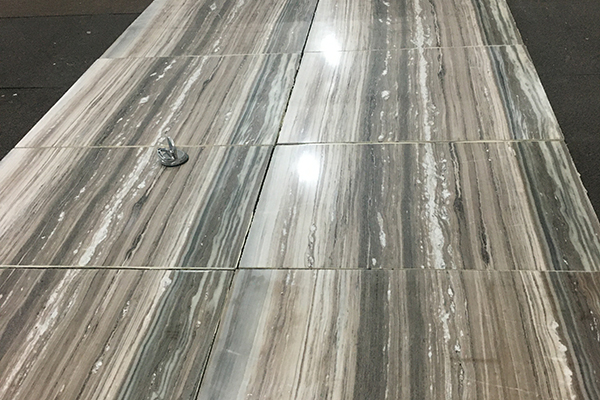
Specifications
| Tile Specifications | |
|---|---|
| Standard Sizes | 305 x 305 x 10 mm (12" x 12" x 3/8") 610 x 305 x 10 mm (24" x 12" x 3/8") 400 x 400 x 10 mm (15 3/4" x 15 3/4" x 3/8") 457 x 457 x 10/12 mm (18" x 18" x 3/8~1/2") 305/400/457 mm x Free length, usually no longer than 2000 mm (78") 600 x 600 available minimum 15/18/20 mm thick 600x600 / 800x800 / 1000x1000 x 18/20/30/50mm etc as per customer's request |
| Surface Finishes | Polished, Honed, Bushhammered, Flamed, Flamed and Brushed, Sandblasted, Antiqued Finish, Natural Cleft etc |
| Packing | Thin tiles: packed in white carton boxes placed in wooden crates. All crates closed with bands and wrapped with nylon shrink covers. Thick tiles: packed in wooden crates or wooden pallets |
Request Free Quote
Thanks for your interest in our products. If you would like to get more information on any product, please send us an email or call us at any time, we will reply to you within 24 hours. We are looking forward to cooperating with you.
Get Instant Quote