Stone blocks are large, unfinished pieces of quarry stone sold by measured volume and weight for cutting into slabs, tiles and architectural work. The buyer is purchasing material, geometry and evidence of soundness rather than a finished surface, so grade, dimensions, fissures and traceability matter before the first saw cut.
What Stone Blocks Are and How Buyers Use Them
A stone block is the raw output of a quarry: a mass of granite or marble that has been separated, trimmed and measured, then sold to a processor rather than to a finished-project buyer. It is an intermediate product whose value depends on what a saw can recover from it and what the buyer can sell afterwards.
That distinction shapes the way a block order should be discussed. A fabricator buying for a slab line cares about the largest sound rectangle the block can produce, the direction of natural veining, and whether the colour holds from face to face. An importer supplying several cutting shops may care more about repeatable supply and the ability to mix block sizes in a programme.
Stone blocks serve importers, distributors, processors and project procurement teams. The common thread is control: the buyer decides the cutting plan, finish, thickness and sorting criteria instead of inheriting decisions made at a factory in another market. That is why blocks remain relevant even where finished slabs are widely available.
China is a major source. The country is the world's largest producer and exporter of natural stone, accounting for over 40% of global granite and marble supply [source: stone-phoenix.com]. Phoenix Power Stone has worked in Chinese stone for 24+ years and supplies buyers in 50+ countries from a 108,000 sqft processing base in Shandong [source: stone-phoenix.com].
Raw Stone Blocks Direct From the Quarry
We source granite blocks and marble blocks from our own quarries and a network of partner quarries in China's stone-producing regions, including Shandong, Fujian, Sichuan and Hubei. The programme covers blocks selected for colour consistency, structural integrity and dimensional suitability for slab production. That last point is easy to overlook: a block with an attractive face but an awkward shape may yield less usable slab than a plainer block with clean geometry.
Blocks are selected at the quarry rather than bought from a stocklist photograph. Quarry teams identify a working zone, inspect the freshly exposed material and set aside blocks that match the requested colour family and size class. The selection does not ensure uniformity across a multi-block order, because natural stone changes through a deposit, but it gives the buyer a traceable starting point.
Availability is tied to quarry output, not to a catalogue that can be reprinted indefinitely, and the buyer should expect a measured range rather than a fixed nominal size. We provide the block schedule with dimensions and photographs so the order can be planned around what exists.
Buying from the quarry side removes a layer of processing decisions. The block can be shipped as extracted, with a trim to remove unstable edges, leaving the destination factory to decide the final saving strategy. For a processor with a reliable local saw line, that is often the most useful format.
Granite Blocks and Marble Blocks We Supply
Our block range consists of two product categories: granite blocks and marble blocks. Granite blocks form the larger part of the programme. They suit slab production for countertops, flooring, cladding, paving and architectural work, and they are specified by colour family, block size, soundness and intended cut. The granite is sourced in blocks rather than pre-cut modules, so the buyer controls the sawing plan.
Marble blocks are supplied for buyers who cut and finish marble in their own market. Marble is softer and more susceptible to fracturing along natural veins, so handling and inspection need more care than for granite. The blocks are selected for colour consistency and structural soundness, and photographs document the visible faces before shipment.
Block availability changes with the working face, and a name alone does not tell a buyer what a particular block will yield. The quotation identifies the material as granite or marble, states the measured block dimensions and grade, and supplies images of the actual lot. For buyers who need a named material, that requirement should be written into the enquiry so it can be matched against current quarry output.
A block buyer needs to know what is being sold, how it is measured and how it will be inspected. That is why the quotation describes the actual lot rather than relying on a catalogue name.
Why Buy Blocks Instead of Finished Slabs
The case for blocks starts with control. A buyer who imports finished slabs accepts the producer's thickness, finish, grade and edge decisions. A buyer who imports blocks can set the slab thickness, surface finish and quality-sorting criteria for the destination market.
The second argument is cost structure. Blocks avoid the Chinese processing labour that goes into slabs, tiles and cut-to-size work. Chinese stone can be quoted 30-50% below domestic wholesale prices at the material stage, although freight, duty and inland delivery change the landed comparison [source: stone-phoenix.com]. The buyer exchanges a lower material cost for the obligation to manage sawing, finishing and waste locally.
The third argument is flexibility. A block can be held and cut to order as demand develops, allowing a distributor or fabricator to respond to changes in slab size, finish or project demand without holding a large finished inventory.
The fourth argument is transparency. Cracks, fissures and colour changes are easier to see in a raw block than in a polished, resined and packaged slab. A block inspection can reveal structural concerns before cutting, while a finished slab may conceal a repair under resin or a surface treatment. Blocks do not remove risk, but they move the decisive inspection earlier.
Larger quarry blocks generally yield larger slabs with fewer defects, and they cost more per square metre for that reason [source: stone-phoenix.com]. Thickness changes the equation again: 2cm is a common countertop specification, while 3cm adds approximately 40-50% to the material cost [source: stone-phoenix.com].
Blocks are not automatically cheaper on a landed basis. They are heavier per cubic metre than many finished products, and a container of blocks can reach its weight limit with fewer units than a container of tiles. The decision should rest on a full cost model: block price, yield, local processing, transport, duty, financing and the value of the finished output.
Block Quality Grading System
We grade blocks against observable criteria rather than a single colour score. The grade communicates what the block is expected to yield and where the material is most appropriate. Because natural stone is variable, the grade is a specification tool, not a promise that every square metre will be identical.
| Grade | Visual and structural criteria | Typical use |
|---|---|---|
| Grade A | Uniform colour across the block, no visible cracks or fissures, consistent grain, sound geometry for large panels | Premium countertops, large-format slabs, bookmatch projects |
| Grade B | Minor colour variation, small non-structural fissures, sound enough for standard production | Standard slabs, commercial tiles, general construction |
| Grade C | Variable colour, natural fissures present, may require resin treatment | Small-format tiles, paving, landscaping |
Grade A is selected for work where the surface is the design and a repair would be conspicuous. Grade B is the working grade for many commercial orders: it accepts limited natural variation while retaining structural soundness. Grade C is an economy input for applications that can absorb more colour movement and smaller finished pieces.
The grade should be read with the block's measured volume. A large Grade B block may provide a better commercial outcome than a small Grade A block, depending on the products being made. The reverse can also be true for a bookmatched feature wall, where a single clean block matters more than total volume.
The purchase order should state the grade definition in words, not only the grade letter. Add the acceptable amount of colour variation, the maximum size and type of fissure, whether resin repair is permitted and what happens if the delivered block falls outside those limits. That written definition becomes the basis for inspection and acceptance.
Typical Block Dimensions and Measured Volume
Blocks are sold in practical size classes rather than one standard footprint. We describe lots as small, medium and large blocks according to the handling and sawing envelope, and report the length, width and height of each block in the quotation. A small block may suit a compact saw line or a project that needs a manageable unit weight; a large block can support longer slabs and more efficient cutting, but it places greater demands on lifting equipment and transport planning.
Natural blocks are irregular in shape. The figure recorded in the schedule is a measured envelope, not a machined cuboid. The usable volume can be lower than the gross volume because weathered surfaces and irregular edges have to be trimmed away, and because the saw kerf consumes material with every cut. A buyer comparing quotations should ask whether the stated volume is gross or net of trimming.
We supply measurement reports with photographs before shipment. The report shows each block's identity, measured dimensions, weight and visible condition. The buyer should be able to match those figures to the planned slab sizes and the loading plan. If the saw line cannot accommodate the length or height, the block is not suitable regardless of its grade.
Start the enquiry with the finished product, not a block dimension. Tell us the largest slab or panel you need, the thickness you intend to saw, the quantity and the handling capacity at your factory. We can then match those requirements to a measured block schedule.
What Sets Block Value: Colour, Structure and Yield
Three variables explain most of the price difference between blocks of the same stone type: colour consistency, structural soundness and recoverable yield. Colour is the most visible. A block with a stable tone from face to face is easier to sell as a uniform slab run, while strong colour banding may suit feature work or natural-variation products.
Structure is the second variable. A visible fissure that follows a natural vein is not necessarily a defect, but its position matters. If it runs through the centre of the intended slab, it may force a smaller cutting plan or a repair. If it sits near an edge that will be trimmed, its commercial effect may be limited. Block inspection is therefore tied to the intended product rather than judged in isolation.
Yield is the third variable. The relevant question is not "how big is the block?" but "how many saleable slabs can be recovered at the target thickness and quality?" A block with a clean rectangular core can outperform a heavier block with irregular edges or internal fractures. Discuss yield assumptions before the price is fixed, because the same block can look attractive on a weight basis and ordinary on a finished-area basis.
Sawing also affects value. Thin slabs recover more area per cubic metre but may need more careful handling and backing. Thicker slabs use more material but can suit exterior paving, steps or heavy-duty work. The target market decides. A block quotation should name the intended slab thickness and finish, because those choices determine what the block is worth to the buyer.
Block Selection at the Quarry
Selection begins at the quarry face. Our teams look for blocks in a working zone that matches the requested material and colour family, then reject blocks with obvious structural defects, deep weathering or geometry that will not suit the intended saw. The aim is not a photogenic block but a shipment that a factory can process predictably.
The first pass is visual. Cracks, discolouration, irregular veining and zones of weathered stone are recorded. A surface crack may still be usable if it is shallow and will be removed during trimming, but that judgement must be made before the block is committed to the order.
The block is then checked for soundness and shape. We look at the faces, corners and edges, and assess whether it can be lifted, transported and sawn safely. A block with an unstable corner may need trimming at the quarry, which changes its measured volume. That is one reason the shipping schedule is a measured document rather than a catalog specification.
Where a buyer has a specific requirement, selection should be linked to it. A block for a bookmatched feature wall needs a clean, coherent face and a plan for matching pairs; a block for a commercial paving programme needs repeatable supply, workable dimensions and a grade that matches the price point.
Inspection, Water Spray Testing and Photographic Records
Visual inspection under dry conditions can miss cracks and colour differences that appear when the surface is wet. The water spray test wets the block face so the polished colour, veining and any fine discontinuities become easier to see. It is a simple step, but it should be recorded rather than left as an undocumented impression.
Inspection covers the visible faces, edges and corners. Structural cracks, deep fissures, soft zones, discolouration and repairs are noted. Where a defect is present, the record should locate it on the block, not merely mention that it exists. A photograph with a scale reference is more useful than a close-up without context, because the buyer needs to understand how much material is affected.
All faces are photographed, with additional close-ups of veins and colour zones. The photographs go to the buyer before shipment approval and are tied to the block identity used in the schedule. Catalogue images have no value at this stage because they do not describe the material being shipped.
For larger or higher-risk orders, a third-party inspection can be added. Our import guide recommends spot-checking at least 5% of pieces during pre-shipment inspection, and third-party inspection costs approximately $300-$500 per inspector-day [source: stone-phoenix.com]. A block order may warrant a different sampling plan because each unit is large, but the principle is the same: inspect the actual lot against the written grade and dimensions before releasing the balance.
Marking, Traceability and Pre-Shipment Review
Every approved block receives a unique identity that travels with it from the quarry to the shipment. The identity appears on the block, in the photograph set, on the measurement schedule and in the loading record. Without that link, a buyer can receive a correct number of blocks of the wrong grade and have no easy way to reconstruct what happened.
The pre-shipment review brings the record together. The buyer should be able to compare the block identity, measured dimensions, photographed faces, grade assessment and loading position. Any change after approval, such as additional trimming or a substitution, should be documented and accepted before the container is sealed.
Traceability is also a commercial control. If a finished slab is rejected later, the block identity can show whether the fault was present in the raw material or introduced during sawing. That does not settle every dispute, but it gives both sides a factual basis for the conversation.
Keep the block photographs and measurement reports in the purchase file. They help with repeat orders, future block matching and showing that the delivered material corresponds to the approved lot. The same record supports a claim if a block arrives with damage that was not visible before loading.
Packing, Flat Racks and Breakbulk Loading
Stone blocks require different logistics from finished stone. Smaller blocks can move on flat racks, while very large tonnage programmes may use breakbulk vessels. The loading method affects the lifting plan, the dunnage, the number of handling steps and the insurance arrangements, so it should be agreed before the blocks leave the quarry.
For flat-rack shipments, each block sits on a prepared bed with timber dunnage separating contact points. The load must be chocked and lashed against vessel movement. Raw stone does not need polished-slab packaging, but any wood in the load must meet ISPM-15 requirements; untreated wood can create a customs problem even when the stone is compliant.
Weight is the controlling constraint. A 20ft container typically holds 20-27 tons of stone. Because stone reaches weight limits before volume, a 20ft often carries the more economical maximum when the order fits: the container guide compares 28 tonnes in a 20ft with 26.5 tonnes in a 40ft [source: stone-phoenix.com]. Those figures are planning references; the actual limit depends on the equipment and route.
Breakbulk can be more economical per ton for very large block programmes, but it requires a full vessel booking and a port handling plan. It also exposes the cargo to a different sequence of lifts and stowage conditions. The decision should be made with the freight forwarder and the insurer, not only on the ocean rate.
We photograph the blocks in position and record their identities against the load plan. That record helps the receiving team identify each unit and supports a damage claim if the load arrives with shifted or broken material.
Ports, Transit and Import Documentation
The main Chinese ports for block exports are Qingdao and Xiamen. Qingdao serves the Shandong quarry cluster, while Xiamen serves Fujian and the wider southern processing base. The port choice should follow the quarry location and the carrier's service, not a default assumption that one port is cheaper for every destination.
Ocean transit from China is typically 14-35 days depending on the destination, before customs clearance and inland delivery [source: stone-phoenix.com]. A first order can take 6-10 weeks from order to delivery, and production alone is commonly 15-25 days after deposit and approvals [source: stone-phoenix.com]. Block orders need those figures in the project programme, because a late block delays every downstream slab.
Documentation should travel with the cargo: a commercial invoice with the correct classification, a packing list that identifies each block, the bill of lading, a certificate of origin, any required fumigation or ISPM-15 evidence, and the inspection record. Duty treatment depends on the stone, the processing stage and the destination. Rough stone sits under a different tariff chapter from worked stone, so classification should be confirmed with a customs broker before the order is priced.
The buyer should check the destination's handling capacity. A block that can be lifted at the quarry may be difficult to unload without the right crane or forklift. Shipping a large block to a site with a small forklift is a cost problem disguised as a logistics problem, easier to solve before the container is booked.
Pricing, Order Size and Payment Terms
A block price is not a single market rate. It reflects the material, grade, measured volume, colour consistency, shape and shipping method. Two quotations for the same stone type can differ because one is priced on a larger or cleaner block, or because one includes loading supervision and the other does not.
The commercial comparison should be built on recoverable finished area, not on the block's gross weight alone. Ask what sawing plan and yield assumption sit behind the quotation. A block that costs more per tonne but produces a higher proportion of saleable Grade A or Grade B slabs may be the better purchase.
For stone shipments generally, the export minimum is normally one 20ft container, roughly 20-27 tons of material, and standard payment terms are a 30% deposit with the 70% balance before shipment after inspection [source: stone-phoenix.com]. For orders above $50,000, a letter of credit at sight can add bank-level protection [source: stone-phoenix.com]. Block terms may differ because unit values and weights differ, so confirm them in the quotation.
Production slots are affected by the Chinese calendar. Chinese New Year closes factories for 2-4 weeks, and orders placed shortly before the holiday can slip past it [source: stone-phoenix.com]. For a construction season, set the order date backwards from the site date, allowing for quarry selection, inspection, loading, ocean transit and clearance.
Quality Clauses and Acceptance Criteria
A block purchase order should define acceptance before the first cut. The clauses below protect both sides because they turn a visual trade into a measurable transaction.
| Clause | What to write |
|---|---|
| Material | Granite or marble block; grade; colour family and any named requirement |
| Dimensions | Measured length, width and height for each block; whether the figure is gross or trimmed |
| Volume and weight | Stated cubic volume and weight per block; tolerance for measurement variation |
| Structure | Acceptable fissures, cracks, repairs and weathered areas; rejection criteria |
| Colour | Retained reference sample or approved photograph set; acceptable range across the lot |
| Inspection | Who inspects, when, against which record, and how disputes are resolved |
| Packing and loading | Flat rack or breakbulk; dunnage; lashing; ISPM-15 compliance for wood |
| Documents | Invoice, packing list, bill of lading, certificate of origin and inspection record |
| Remedy | Replacement, credit or price adjustment if the delivered block fails the agreed criteria |
Write the grade definition in words as well as letters. State whether resin treatment is allowed and, if so, which defects it may address. State how a crack is measured and at what point it becomes a rejection rather than a trimming issue. These clauses prevent a disagreement about whether a block is "as ordered" when the finished slabs show a problem.
The acceptance inspection at destination should repeat the pre-shipment checks: identity, dimensions, visible cracks, colour against the reference, loading damage and documentation. Photograph the block and the container before unloading. If a discrepancy is found, quarantine the block and notify the supplier before cutting, because cutting changes the material and weakens the evidence.
Requesting a Block Quotation
A useful block enquiry gives us enough information to match a measured lot to your production plan. Include the material type, the intended finished products, the target slab or panel dimensions, the required grade, the quantity, the destination port and the preferred Incoterm. If the block will be used for bookmatching or a colour-critical project, say so at the start.
Photographs and samples help, but they do not replace a written specification. Tell us the acceptable colour range and the maximum defect size, and state whether you want a single block or a matched selection. If you have a preferred sawing plan, attach it. That lets us discuss yield and price on the same basis rather than trading adjectives.
We can quote granite blocks and marble blocks against a measured schedule, with photographs, inspection records and loading details. Send the requirement to sale@stone-phoenix.com, or use the quote form on this page. Buyers new to blocks should start with one container and one clear product objective, which is a more useful trial than a mixed order.
Frequently Asked Questions
What is a stone block?
A stone block is a large piece of quarried granite or marble that has been separated, trimmed and measured for sale to a processor. It is not a finished slab or tile. Its value depends on its colour, structural soundness, measured volume and the slabs or other products that can be recovered from it by sawing and finishing.
Which stone blocks do you supply?
We supply granite blocks and marble blocks. These are the two block categories in our range. Availability is confirmed against current quarry output and a measured block schedule, so the quotation identifies the actual lot rather than a generic catalogue name.
Can I buy blocks for my own slab production?
Yes. Blocks are intended for buyers with access to gang saws, polishing lines or a partner fabricator. We can discuss the intended slab thickness and finished dimensions so the block selection matches your cutting plan. Buyers without local processing capacity are usually better served by finished material.
How is block quality graded?
We use Grade A, Grade B and Grade C. Grade A calls for uniform colour, no visible cracks or fissures and consistent grain. Grade B allows minor colour variation and small non-structural fissures. Grade C allows variable colour and natural fissures, and may require resin treatment. The grade should be defined in writing on the purchase order.
What block sizes can you supply?
We supply small, medium and large blocks, measured individually because natural blocks are irregular. The quotation reports length, width, height, volume and weight for each block. The right size depends on crane capacity, saw envelope and finished slab dimensions, so the schedule is matched to those constraints.
How do you inspect a block before shipment?
The block is checked at the quarry face for colour, cracks, fissures and geometry. We photograph the visible faces and close-ups of any features, record the block identity and compare the lot with the approved specification. For larger orders, a third-party pre-shipment inspection can be arranged before the balance is released.
How are stone blocks shipped?
Blocks can move on flat racks or by breakbulk for very large tonnage programmes. We plan the lifting points, dunnage, chocks and lashing, and ensure that any wood used in the load meets ISPM-15 requirements. Weight is the limiting factor, so the loading plan is built around the equipment's rated payload.
What is the minimum block order?
The standard export minimum for stone is one 20ft container, typically 20-27 tons of material. Block orders can also be shipped by breakbulk when volume justifies a full vessel booking. The commercial minimum depends on the block sizes, destination and shipping method, so confirm it in the quotation.
What payment terms and documents apply?
Standard stone export terms are a 30% deposit with the 70% balance before shipment after inspection; orders above $50,000 may use a letter of credit at sight [source: stone-phoenix.com]. Documents normally include the commercial invoice, packing list, bill of lading, certificate of origin and inspection record. The exact set depends on the destination and shipping method.
Related Guides
- How to Import Stone from China — supplier vetting, inspection, shipping, duties and payment terms.
- Stone Container Loading Guide — container capacities, packaging and loading practice for heavy stone.
- Stone Sourcing by Country — origin comparison, block quality risk and landed-cost planning.
- Granite Slabs Wholesale — how blocks become wholesale slabs, grades and pricing tiers.
Stone blocks from different quarries are ready for your choices. Select below.
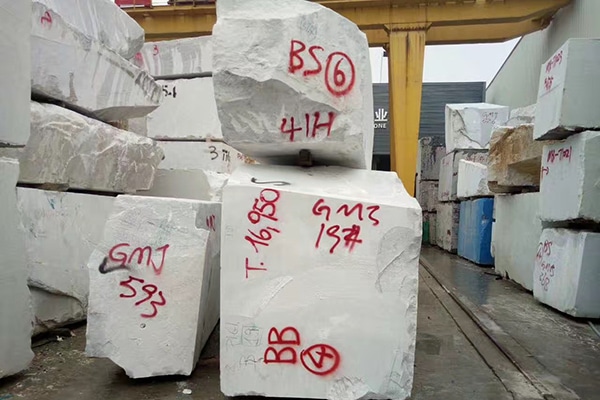
Stone Block 1
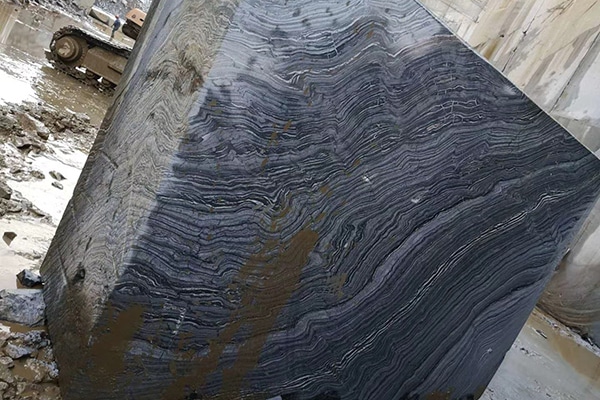
Stone Block 2
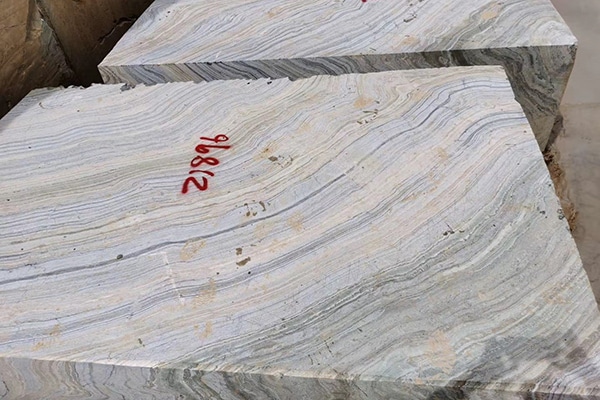
Stone Block 3
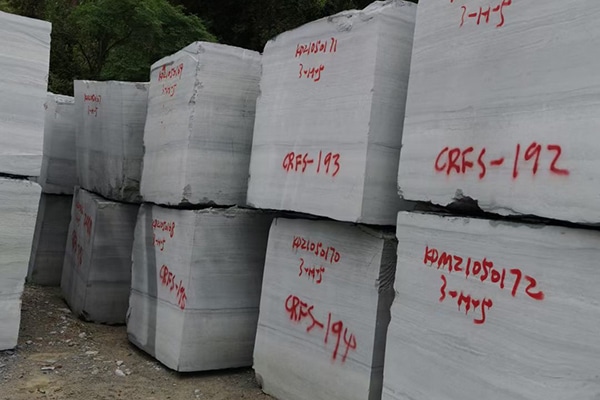
Stone Block 4
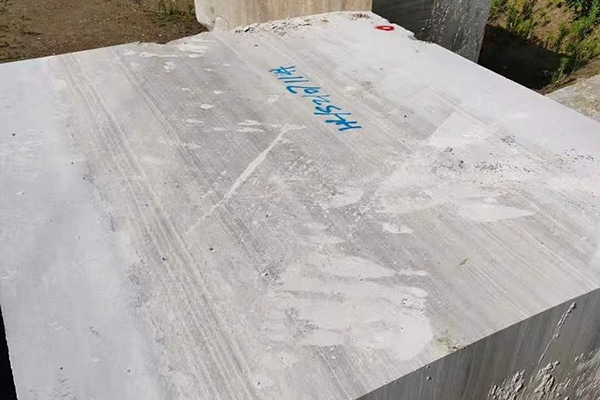
Stone Block 5
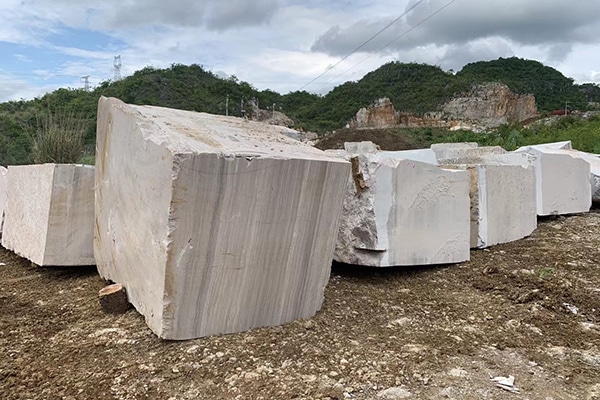
Stone Block 6
A wide variety of raw stone blocks options are available to you. You can select and choose the block quality and size to meet your different projects requirements
Request Free Quote
Thanks for your interest in our products. If you would like to get more information on any product, please send us an email or call us at any time, we will reply to you within 24 hours. We are looking forward to cooperating with you.
Get Instant Quote