Many colors of both natural stones and quartz stones with high durability and low-maintenance characteristics for your choices
Marble Countertop
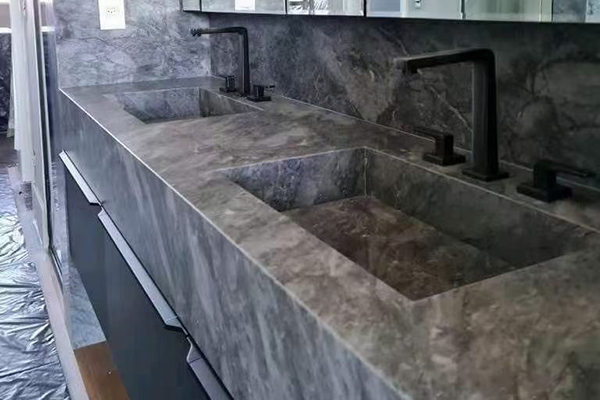
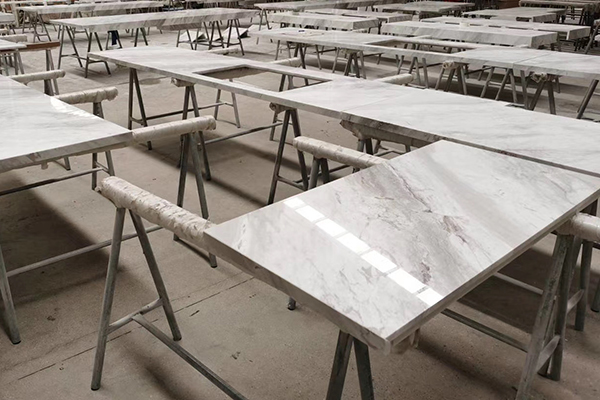
Granite Countertop
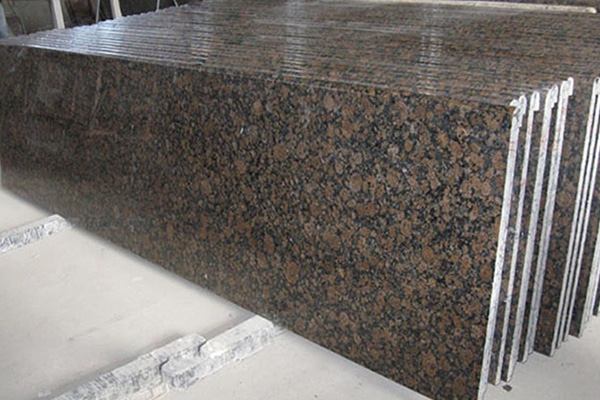
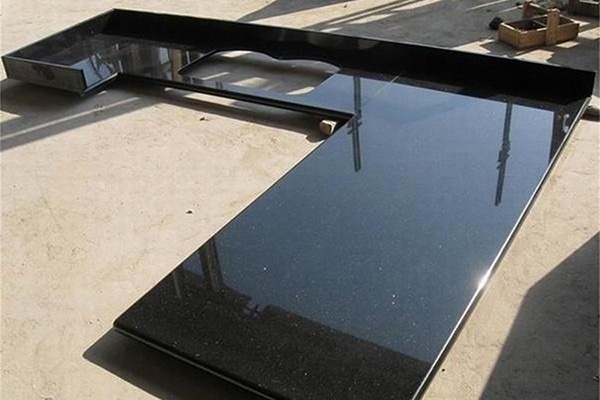
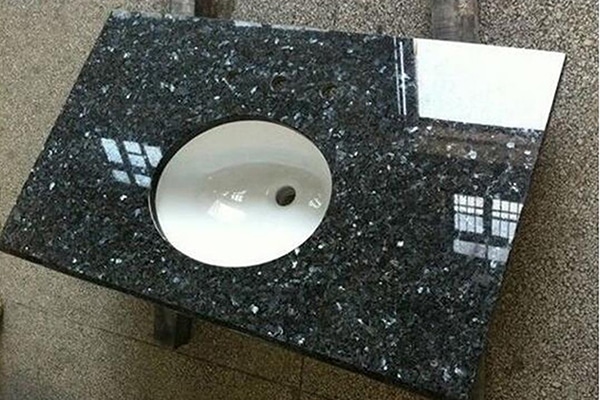
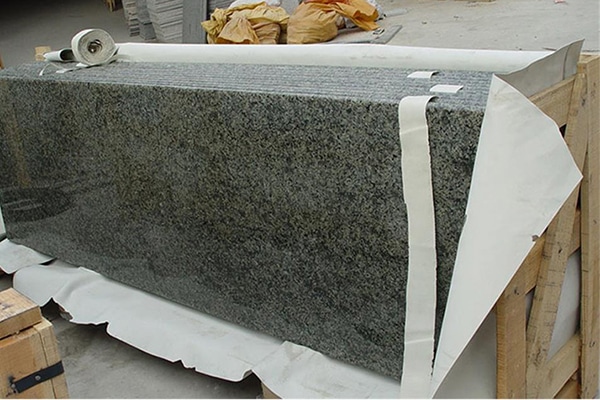
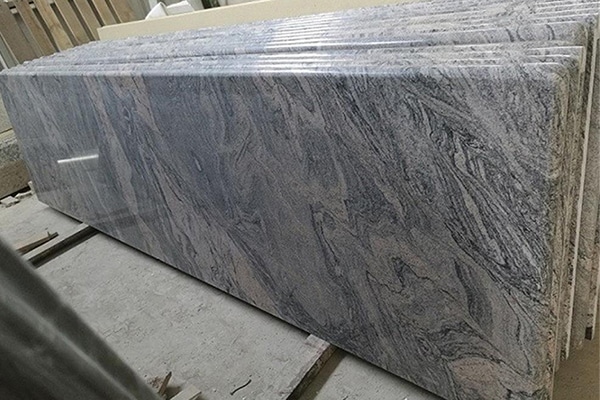
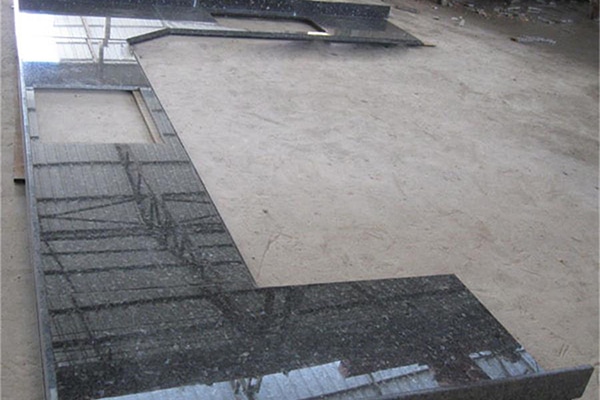
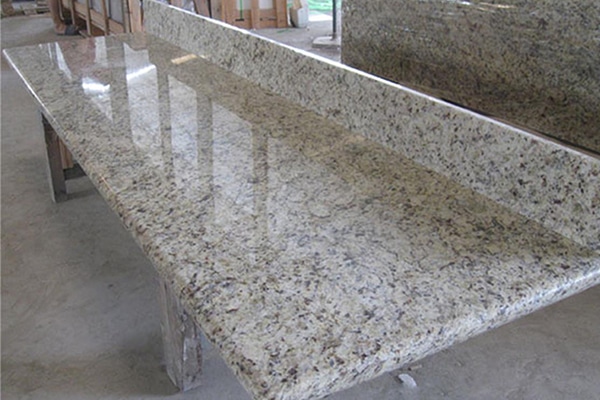
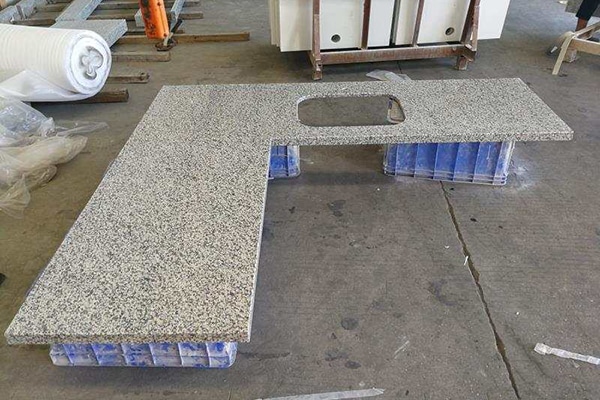
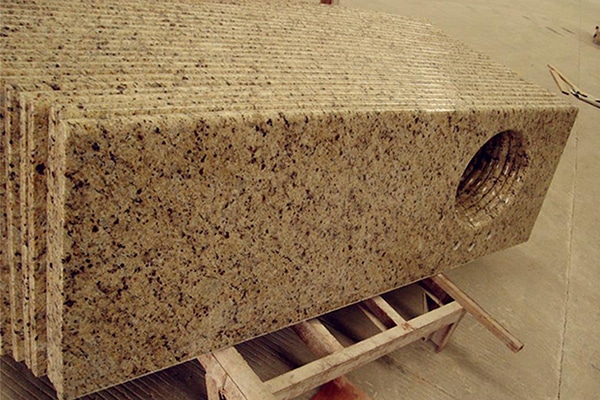
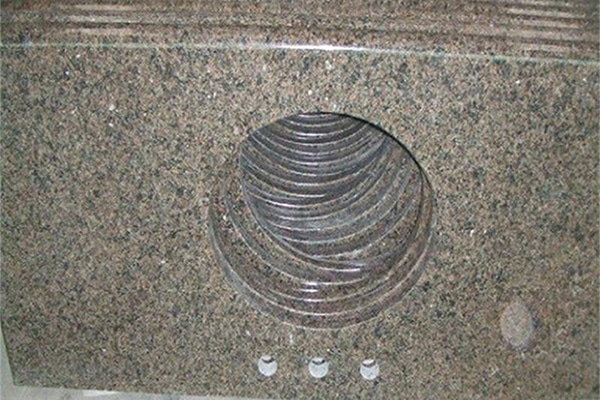
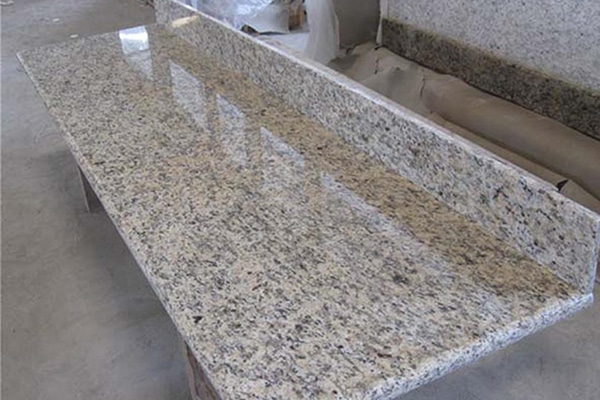
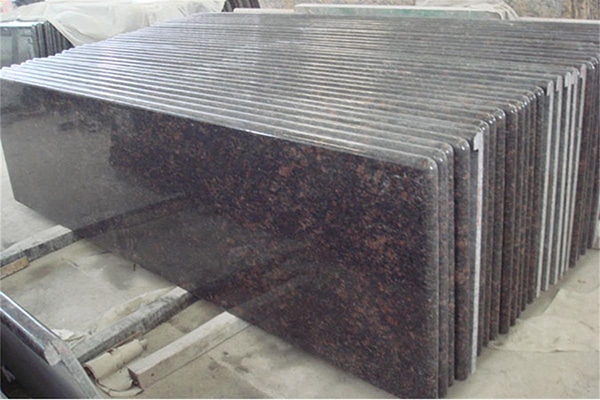
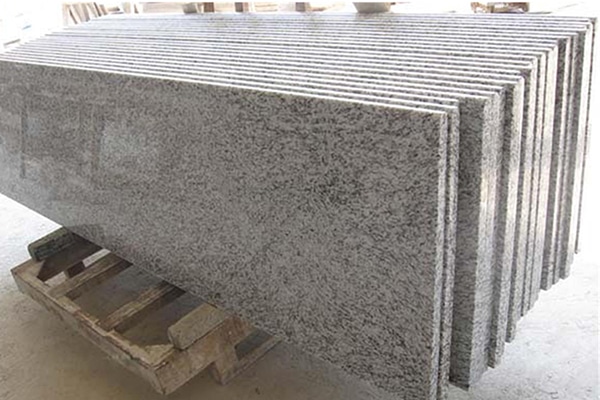
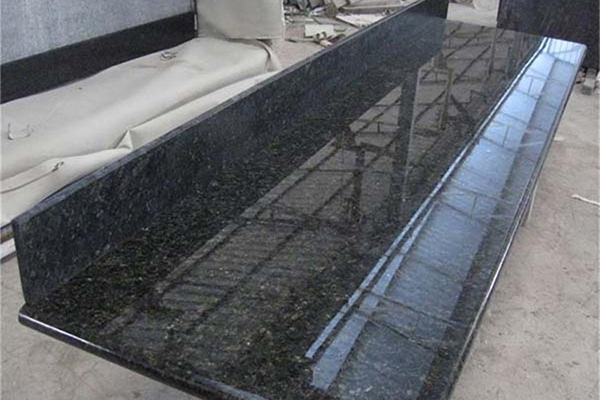
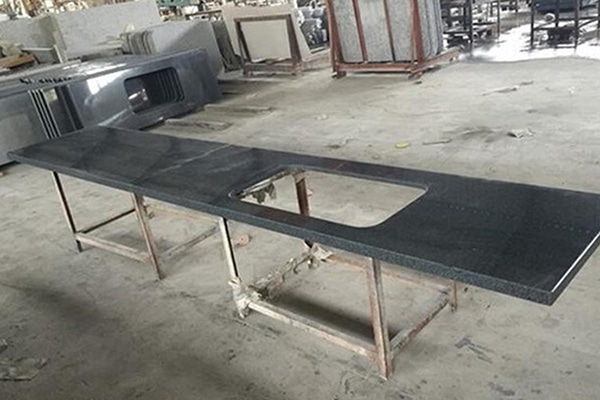
Countertops Fabricated in China for Importers and Project Buyers
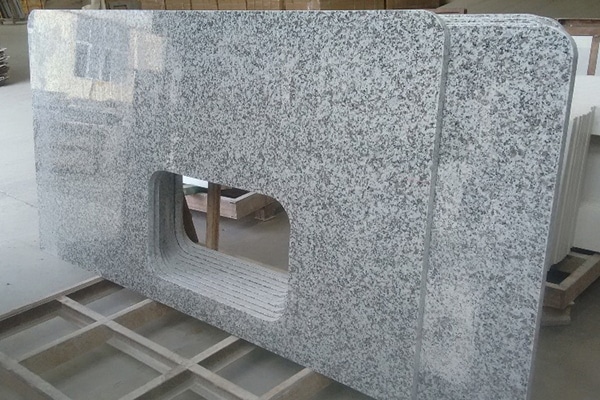
Countertops are cut-to-size stone work surfaces fabricated from slabs to a project's cabinet layout, with sink and faucet openings, edge profiles and backsplash pieces finished before export. We fabricate granite, marble, quartzite, soapstone and engineered quartz countertops in China for importers, architects and project buyers, quoting by material, thickness, edge and quantity.
Granite and marble are the two most specified natural stone surfaces in kitchens and bathrooms. Sourcing factory-direct from China changes the cost base: FOB granite pricing sits 30-50% below US slab yard wholesale for equivalent grades, and the same route applies to marble, quartzite and soapstone. The trade-off is planning. A countertop order has to be settled before the slabs are cut, because sink positions, overhangs and edge profiles are fabrication instructions rather than site decisions.
Our Shandong facility cuts and finishes countertops in granite, marble, engineered quartz, quartzite and soapstone. Each order is quoted against a drawing, because cabinet runs, island size, overhangs and cutouts move both price and yield [source: stone-phoenix.com].
Granite vs Marble: A Property Comparison
The choice between granite and marble is a service-condition decision before it is an aesthetic one. Both are natural stone; they respond differently to heat, acid, impact and cleaning.
| Property | Granite | Marble |
|---|---|---|
| Hardness | Mohs 6-7; resists knife scratches | Mohs 3-4; scratches more easily |
| Heat | Withstands 1,200°F; hot pans can go on the surface | Good, but thermal shock can crack thin stone; use trivets |
| Acid | Does not etch like marble when sealed | Calcite stone; lemon, vinegar and wine etch the polish |
| Staining | Good when sealed; annual sealing | Porous; needs sealing every 6-12 months and prompt spill cleanup |
| Appearance | Speckled, granular, every slab unique | Fluid veining, translucent depth, every slab unique |
| Typical use | Busy kitchens, outdoor kitchens, rental units | Bathrooms, feature islands, low-acid kitchens |
| Installed cost | $45-$120 per square foot | $70-250+ per square foot |
Granite is an igneous rock formed when magma cools slowly underground, which gives it interlocking quartz, feldspar and mica crystals and its characteristic speckle. Marble is metamorphic, recrystallised limestone, and its calcite content is why acid attacks it. Neither property is a defect; each is a specification constraint.
For a family kitchen with daily cooking, cast iron and hot pans, granite is the lower-risk surface. For a bathroom vanity or a show kitchen where appearance leads and acid exposure is controlled, marble is defensible. A white marble island in a serious cooking kitchen will etch within months unless the owner accepts patina and maintains the surface. Put that trade-off in the design conversation, not in the maintenance leaflet.
The Countertop Materials We Fabricate
We cut and finish countertops in five material families. Each has a different fabrication route, a different care regime and a different price band.
| Material | What it is | Typical countertop role | Installed cost guide |
|---|---|---|---|
| Granite | Natural igneous stone, Mohs 6-7 | Kitchens, islands, outdoor kitchens, vanities | $45-$120 per square foot |
| Marble | Natural metamorphic stone, Mohs 3-4 | Bathrooms, feature islands, bars, fire surrounds | $70-250+ per square foot |
| Engineered quartz | About 93% crushed quartz with 7% resin binder | Low-maintenance kitchens, uniform colour schemes | $65-$100 per square foot |
| Quartzite | Natural metamorphic stone, dominantly quartz | White veined kitchens, islands, outdoor use | $70-$200 per square foot |
| Soapstone | Natural talc-rich metamorphic stone | Dark matte kitchens, lab benches, outdoor counters | $70-$120 per square foot |
Granite covers the widest colour range and has the deepest supply base. Marble carries the luxury veined look and the maintenance burden. Engineered quartz gives repeatable colour and needs no sealing, but its resin limits heat and UV exposure. Quartzite sits between marble and granite in appearance and hardness when the slab is genuinely quartz-based. Soapstone is a specialist material: non-porous, heat-tolerant and acid-resistant, with a soft surface that develops a patina.
Marble Countertops in Our Range
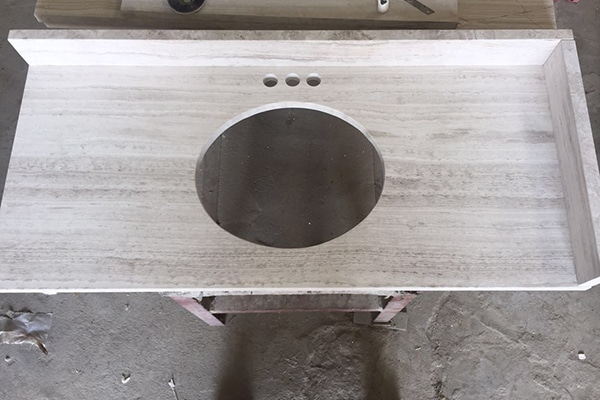
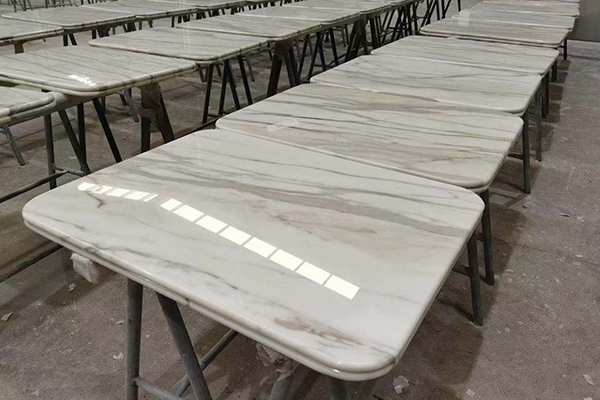
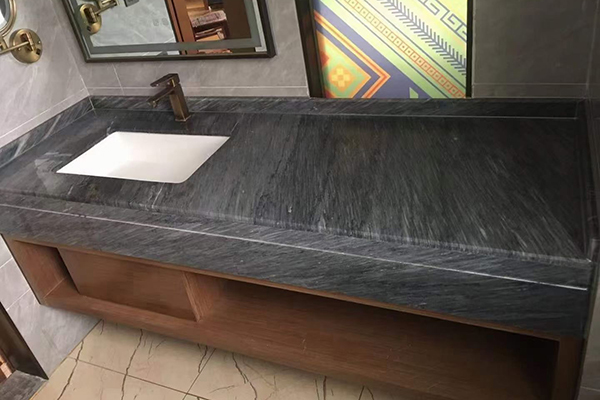
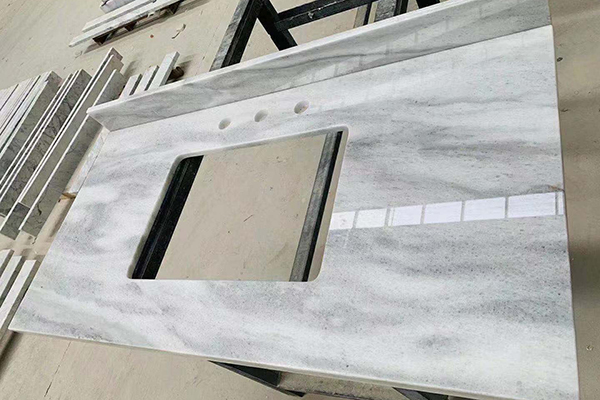
Our marble countertop range covers warm browns, blacks, greys and whites. The names below are the product references; the description is a visual summary, and the approved slab remains the specification.
| Product | Appearance | Suitable application |
|---|---|---|
| Marble Countertop | The category reference for cut-to-size marble tops | Kitchens, vanities, bars and table tops |
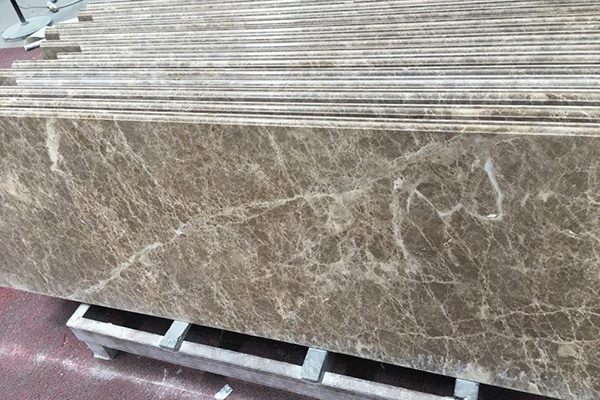
| Light Emperador | Warm brown ground with white veining and a polished face | Warm kitchens, bathroom vanities, reception counters |
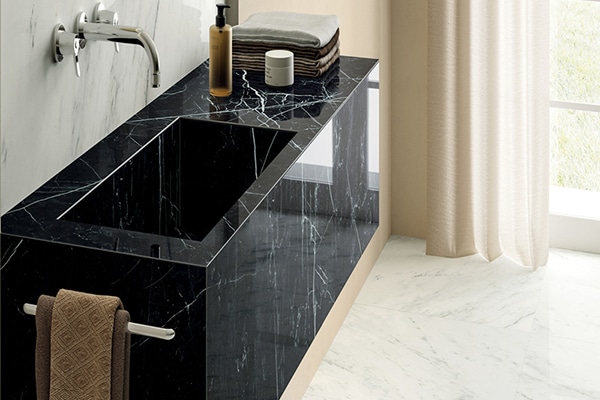
| Nero Marquina | Black ground with white veining; honed reduces visible marks | Bathrooms, bars, feature islands, powder rooms |
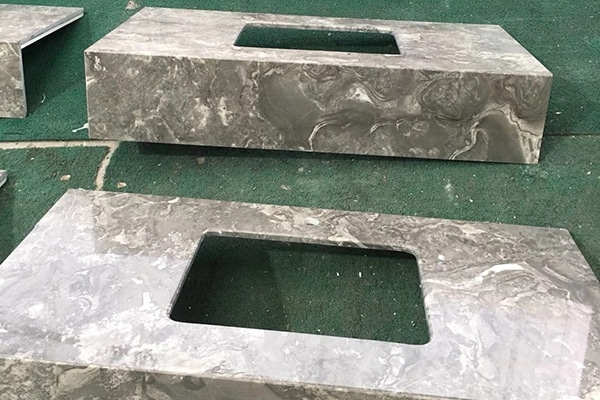
| Romantic Grey | Grey ground with soft white and cloudy movement | Modern kitchens, vanities, neutral schemes |
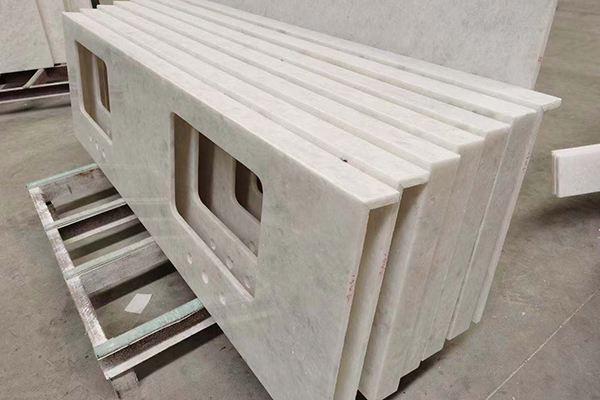
| Imperial Jade | Pale cream-white with soft grey veining | Bright kitchens, bathroom tops, low-acid work areas |
| White Wood | White to light grey with fine linear grain | Minimalist kitchens, vanities, full-height backsplashes |
| Calacatta Gold | White ground with grey and gold veining | Feature islands, luxury kitchens, bathroom statements |
| Clear River | Deep grey with fine pale veining | Dark schemes, bars, contemporary vanities |
Marble rates Mohs 3-4, and its calcite content means acid etches the polished surface. In a kitchen it suits an island, a show kitchen or a vanity where acid exposure is controlled. In a bathroom it is a natural fit because most toiletries are neutral and the visual return is high.
A honed finish is often more practical than polished on a countertop. Honed marble hides micro-scratches and water marks better. Polished marble gives the deepest colour but shows every etch and fingerprint. Approve the finish on the actual slab under the lighting of the finished room.
Granite Countertops in Our Range
Granite is the workhorse of the countertop range, and the colour tiers below reflect both supply and demand. These are the granite names we fabricate most often for countertop orders.
| Granite | Colour character | Price tier |
|---|---|---|
| G654 Sesame Grey | Grey with fine dark speckle | Level 1 |
| G682 Padang Yellow | Warm yellow-brown, consistent speckle | Level 1 |
| Tan Brown | Brown with dark mineral movement | Level 1 |
| Ubatuba | Green-black with speckled crystals | Level 1 |
| Baltic Brown | Brown with large circular crystals | Level 1 |
| Santa Cecilia | Light grey-beige with fine grain | Level 1 |
| G684 Pearl Black | Black with a fine, even surface | Level 2 |
| Absolute Black | Uniform mirror-black field | Level 2 |
| Black Galaxy | Black with gold flecks | Level 2 |
| Blue Pearl | Blue-grey with iridescent flecks | Level 2 |
The level describes installed price in the US market, not quality. Level 1 stones are common colours with abundant supply and typically install at $45-$65/sq ft; Level 2 stones are popular but less abundant and run $65-$90/sq ft. Level 3 and exotic colours move above $90/sq ft, up to $120-$200+.
Granite suits every room, including outdoor kitchens where marble weathers and engineered quartz degrades under UV. It is also the most forgiving material for a rental or a flip, because it tolerates tenant use and reads as a durable upgrade.
Black Granite Is Not One Material
Buyers often specify "black granite" as though it described one stone. It does not. The name covers dark igneous rocks including dolerite, basalt, gabbro and gabbric anorthosite, and ASTM C119 allows them to be sold under the black granite name even when they are geologically something else [source: stone-phoenix.com].
Hardness across the varieties we handle runs from approximately 4.5 to approximately 7 on the Mohs scale. Shanxi Black is reported at approximately 7, Absolute Black at 6–7, and Black Galaxy at approximately 4.5. G684 Fuding Black is a basalt with reported hardness below Shanxi Black and Fengzhen Black, and the verified data quotes no single Mohs figure for it. A buyer who needs scratch resistance should name the variety and ask for a batch hardness report, not a category claim.
Other properties are equally specific. Absolute Black dolerite carries a reported water absorption of approximately 0.05–0.30%, and G684 reports an alkali resistance of 99.93–99.96%. Those figures belong to those stones. They do not transfer to another black material, and alkali resistance is not acid resistance. Black Galaxy also has a constrained large-format yield: 30–40% of production reaches gang-saw size above 2.40 m × 1.20 m × 1.00 m, which matters when a project needs matched islands or future replacements.
For a countertop order, specify the variety, the rock type, the quarry or district and the grade, then require the batch report. "Black granite" describes an appearance; the purchase order has to describe the material.
Quartzite, Soapstone and Engineered Quartz
Three alternatives sit around granite and marble, and each answers a different brief.
Quartzite is a natural metamorphic rock formed from quartz-rich sandstone. Genuine quartzite is hard, resistant to mild acids and low in absorption, and it takes a high polish or a flat hone. It is the material buyers choose when they want a marble look with more toughness. The risk is mislabelling: dolomitic marble and hard marble are sold as "soft quartzite" and behave like marble under acid. A five-minute acid test on an inconspicuous area separates the two, and the ASTM C616 classification on the batch certificate tells you what the stone actually is. Quartzite is not engineered quartz; keep the names separate.
Soapstone is a talc-rich metamorphic rock, naturally non-porous with water absorption below 0.1%, and it does not need sealing. It is soft at Mohs 1-2, so it scratches and develops a patina, and it is available mainly in grey tones. Its strengths are heat, acid and chemical resistance: a 500°F pan can sit on the surface, and lemon, vinegar and wine leave no etch. It suits dark matte kitchens, laboratory benches, fireplace surrounds and outdoor counters. The limitations are the soft surface, a limited colour range and a smaller fabricator pool.
Engineered quartz is a manufactured composite of about 93% crushed quartz and 7% resin binder. It is non-porous, needs no sealing and gives repeatable colour, which suits multi-unit projects. Its weaknesses are heat and UV: the resin binder discolours at roughly 185°F, so hot pans require trivets, and prolonged sunlight yellows the surface. It is not the right choice for an outdoor kitchen, but within its limits it is one of the lowest-maintenance options in the range.
Thickness, Support and Overhangs
Countertop thickness is a structural decision as well as a visual one. Two nominal thicknesses dominate the trade: 2cm and 3cm.
In 2cm material, the countertop is usually laminated to a plywood substrate built up to the same finished height. Material runs 20-30% cheaper than 3cm, but the substrate adds labour and the savings narrow. In 3cm material, no substrate is needed on a supported run, the edge reads as a solid section, and the stone is stronger across an overhang. After accounting for substrate savings, 3cm costs $2-8 more per sq ft installed than 2cm. Custom thicknesses of 4-6cm are available for feature islands and bar tops, with material jumping 40-80% over 3cm.
An unsupported overhang is a cantilever, and the stone's own weight is the load. A 3cm slab is the conventional specification for an island with a seating overhang; 2cm material is normally built up over a substrate for the same span. For marble, use 3cm for overhangs because its flexural strength is lower than granite's. Overhangs beyond the standard depth need corbels or steel support.
Thickness also affects freight and handling. A 3cm slab weighs more per square metre, so a container reaches its weight limit at a lower area. The loading plan should use the actual thickness and slab format.
Edge Profiles and What They Add
The edge is the detail a client touches, and it is one of the few countertop choices that is purely a fabrication decision. Eased and half bullnose suit most kitchens; ogee belongs in formal traditional rooms; waterfall is the most expensive detail in the range.
| Edge profile | Added cost | Character |
|---|---|---|
| Eased | Included | Square with a softened corner; modern and minimal |
| Beveled | +$8-$12 per linear ft | Angled edge, contemporary |
| Half bullnose | +$10-$15 per linear ft | Rounded top, comfortable to lean against |
| Full bullnose | +$15-$20 per linear ft | Fully rounded, popular on islands with seating |
| Ogee | +$20-$30 per linear ft | Traditional S-curve, formal |
| Mitered upstand | +$20-$40 per linear ft | Raised backsplash lip |
| Waterfall | +$500-$2,000 per side | Stone continues vertically to the floor |
Edge upgrades are where quotes diverge most. A waterfall consumes extra slab area, and the veining has to continue from the top down the leg, which works better when the pieces are cut from the same bundle. A waterfall on the island only, rather than the perimeter, delivers most of the visual effect at lower cost.
Thin, sharp profiles chip more readily on hard and brittle stones such as quartzite. An eased or slightly rounded edge costs little and reduces the risk around sink cutouts, where the stone is narrowest. Ask the fabricator which profile they recommend for the material, not just for the design.
Fabrication: Sink Cutouts, Faucet Holes and Shop Drawings
Countertop fabrication begins with a drawing, not a saw. The cabinet layout, island size, overhang, sink model, faucet positions, cooktop cutout and backsplash height are fixed before the slab is cut.
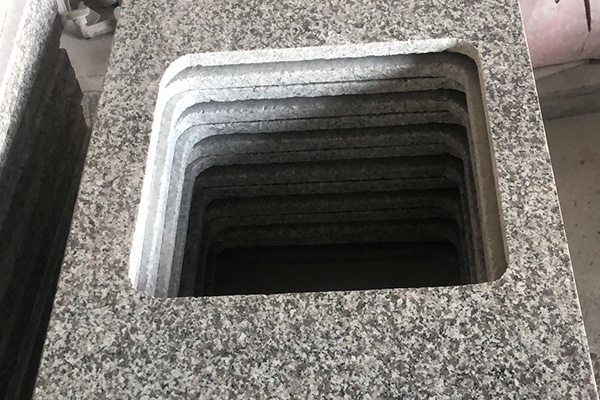
Sink cutouts are the highest-risk operation. Undermount sink and hob cutouts remove material from the weakest part of the slab, so the cutout dimensions and corner radii should be specified rather than left to the shop floor. Send the sink template or the exact model number, and confirm who reinforces the cutout edge. Farmhouse sinks need a reveal detail agreed in advance, because the front edge is exposed and the cabinet has to accommodate the apron.
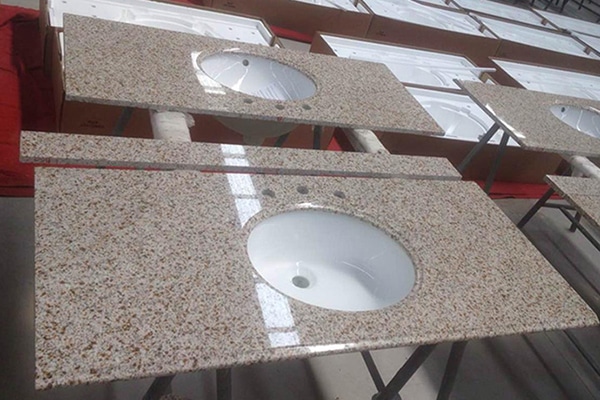
We cut sink openings, faucet holes and edge profiles in China before export. That moves the dust and the risk out of the site and reduces the local fabricator's work to installation. The trade-off is that dimensions must be right before production: a cut-to-size top cannot be re-sized after it leaves the factory. Where site dimensions are uncertain, a final measure before cutting is cheaper than a remake.
A shop drawing should show every piece by room and position, with vein direction, joint locations, edge profile and cutouts. The factory should return it for approval before cutting begins. One dimensional error can affect a whole kitchen, and a signed drawing assigns responsibility.
How to Order Countertops From China
A countertop order follows a sequence. Skipping a step moves the risk to the site.
- Send the layout. Cabinet plan, island size, overhang, sink and faucet positions, and any appliance openings. Drawings or dimensioned photographs both work, but the dimensions must come from the actual room.
- Choose the material and finish. Name the stone, the variety and the finish. For granite and marble, approve the actual slab or a sealed production sample, because the showroom sample is not the slab in the yard.
- Confirm the thickness and support. 2cm over a substrate or 3cm on a supported run; 3cm for islands and overhangs. State the nominal thickness and where it is measured.
- Approve the cutting plan. Review the shop drawing for vein direction, seam positions, cutouts and edge profile. Confirm the waste allowance and the spare pieces.
- Confirm packing and documents. Crates, interleaving, edge protection, piece numbering and the layout drawing. For export, confirm the test reports and the destination's documentation requirements.
- Ship and inspect. Book the container and arrange pre-shipment inspection before loading. Check the delivered pieces against the drawing and the approved sample before installation.
The order should state the material by variety and origin, the finish, the thickness and tolerance, the edge profile, the cutout list, the number of pieces, the spare allowance and the inspection regime.
What Moves a Countertop Price
Countertop pricing has two levels: the FOB price of a finished slab or cut-to-size piece, and the installed price in the destination market. They are not comparable, and a buyer should ask which one is being quoted.
At FOB level, price is driven by colour tier, thickness, finish, selection and packing. The ranges below are planning ranges for the named grades, not a project quotation.
| Granite | 2cm FOB (per m²) | 3cm FOB (per m²) |
|---|---|---|
| G654 Sesame Grey | $25 - $35 | $35 - $50 |
| G682 Padang Yellow | $28 - $40 | $38 - $55 |
| G684 Pearl Black | $30 - $45 | $40 - $60 |
| Absolute Black | $45 - $65 | $60 - $85 |
| Shanxi Black | $25 - $38 | $35 - $55 |
| Black Galaxy | $40 - $60 | $55 - $75 |
At installed level, the market numbers are much higher because they include fabrication, freight, duty and installation. Granite installs at $45-$120 per square foot; marble at $70-250+; engineered quartz at $65-$100; quartzite at $70-$200; soapstone at $70-$120. In the US, a 2cm G654 slab at $25-35/m² FOB lands at roughly $40-55/m² before fabrication, against $60-90/m² at a domestic slab yard.
The other cost lines are predictable. Sink cutouts run $150-$350 each, cooktop cutouts $100-$200, old countertop removal $200-$500, and edge upgrades from the table above. Fabricators add 10-15% overage to slab orders for cutting waste, and a waterfall edge consumes additional slab area. A buyer who compares only the slab price is comparing the smallest part of the project.
Standard Sections, Backsplashes and the Specification Gallery
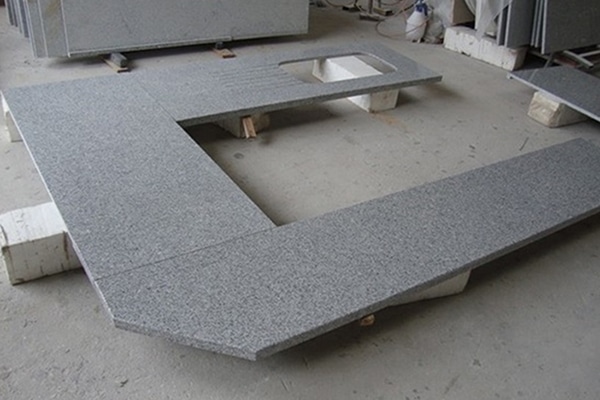
Below this article, the specification gallery lists the standard countertop sections we fabricate: straight runs, end sections, peninsulas, central islands, left and right L-shapes, and backsplash pieces. Dimensions are given in both inch and centimetre, and the nominal thickness shown is 2cm. The gallery is a reference library, not a fixed catalogue; every piece is cut to the project drawing.
The common edge profiles in the gallery are eased, bevel, bullnose, ogee, Dupont and custom profiles. The gallery also distinguishes between a front edge, a butt-jointed end and a four-sided island, because the edge treatment and the joint detail differ. A peninsula or an L-shape needs a seam plan, and the seam should fall where the vein and the light make it least visible.
Use the gallery for budgeting and to understand the range, then replace the standard dimensions with project dimensions. Backsplash height, sink centre lines, faucet spread and appliance openings are project-specific and belong on the fabrication drawing.
Quality Control, Test Reports and Incoming Inspection
Countertop quality is checked at three points: the slab, the fabrication and the delivery. Each has its own evidence.
At slab level, the buyer should approve the actual slab or a retained production sample, not a catalogue image. Natural stone varies between blocks, and the slab that arrives should be the slab that was approved. Record the bundle or lot number on the order. For granite, ask for a batch hardness report where scratch resistance is a requirement; for quartzite, ask for the ASTM C616 classification and the acid test result; for marble, ASTM C503 is the relevant reference. For all natural stone, ask for a batch absorption and density report.
At fabrication level, check the shop drawing against the site dimensions, confirm the edge profile and cutout positions, and inspect the first completed piece before the run continues. A trial on an offcut from the production lot is the cheapest way to confirm the finish, the edge and the tool behaviour on a hard or brittle stone.
At delivery level, inspect the pieces against the drawing and the approved sample before installation. Check the thickness at the edge and at the centre, the edge profile, the cutout dimensions and radii, and the seam match. Photograph any chip, crack, repair or tone mismatch and hold the affected piece before cutting or installing. A repair acceptable on a utility top can be a reject on a feature island.
Packing, Container Loading and Lead Time
Countertops travel as finished pieces, so packing is part of the product. Crates should be built for the piece format, with foam interleaving, edge protection, bracing and a moisture barrier. Pieces should be numbered by room and position, and the packing list should match the layout drawing. A crate that arrives with the wrong piece in the wrong room costs a site day even when the stone is undamaged.
A 20ft container holds roughly 400-500 m² of 2cm slabs, but the number moves with thickness, slab format and packing. Weight is usually the binding constraint, not volume: 3cm material carries roughly double the mass per square metre of 2cm, so a container reaches its payload limit at a lower area. Ask for a packing plan with the bundle dimensions, net and gross weight, and the margin against the carrier's payload limit for the route.
Lead time has three parts: production, inland transit and loading, and ocean transit. Production depends on whether the material is in stock as finished slab, in stock as block, or has to be sourced; on a thin-market stone, availability rather than cutting speed is the constraint. Inland transit, port congestion and ocean transit depend on the route and service. Ask for all three separately in writing. Add the Chinese New Year shutdown to the calendar at the start of any project with a spring deadline, because factories close for an extended period and capacity is tight before and after.
For payment, the common terms are a deposit before production and the balance before shipment after inspection. Larger orders should include third-party inspection, with the report sent to the buyer. The scope should cover dimensions, thickness, edge profile, cutouts, finish, tone against the approved sample and piece numbering.
Frequently Asked Questions
What is the minimum order for countertops from China?
The standard minimum is one 20ft container, roughly 400-500 m² of 2cm slabs depending on format. A cut-to-size order occupies less area than a slab order because the waste stays at the factory, so the number of kitchens per container depends on the pieces. Trial quantities and mixed loads are quoted case by case.
Can you fabricate countertops with sink cutouts?
Yes. We cut sink openings, faucet holes, cooktop cutouts and edge profiles in China before export. Send the sink template or the exact model number, and we include the cutout in the fabrication drawing for your approval. Cutting at the factory removes the risk of site damage and reduces the local fabricator's work to installation.
How do Chinese countertop prices compare with local supply?
FOB prices from Chinese factories are typically 30-50% below domestic wholesale for equivalent grades. A 2cm G654 granite slab at $25-35/m² FOB lands at roughly $40-55/m² before fabrication, against $60-90/m² at a domestic slab yard. After freight, duty and installation, the landed cost still sits below local supply for many materials. The trade-off is lead time and the need for reliable import logistics.
What thickness should I choose?
2cm is the budget option and needs a plywood substrate on most installations. 3cm is the North American standard for supported runs, needs no substrate, and is stronger across an overhang. After substrate savings, 3cm costs $2-8 more per sq ft installed than 2cm. Use 3cm for islands and for marble overhangs, and confirm the support detail with the fabricator.
Which countertop material suits a busy kitchen?
Granite is the lower-risk choice for a kitchen with daily cooking, hot pans and heavy use. It rates Mohs 6-7, withstands 1,200°F and does not etch like marble. Engineered quartz is the alternative where low maintenance matters more than heat tolerance, but its resin binder discolours at roughly 185°F and it is not suitable outdoors. Marble suits a show kitchen or an island where acid exposure is controlled.
Does quartzite need sealing?
Yes. A penetrating sealer is routinely applied to quartzite to slow liquid absorption, and it is a maintenance item rather than a permanent treatment. Confirm that the material is genuinely quartz-based before relying on its acid resistance; some material sold as soft quartzite is carbonate-based and behaves like marble.
Is black granite suitable for a countertop?
It depends on the variety. Reported hardness across black granite runs from approximately 4.5 to approximately 7 on the Mohs scale. Shanxi Black is approximately 7, Absolute Black is 6–7, and Black Galaxy is approximately 4.5. For a scratch-critical surface, name the variety and request a batch hardness report. For a feature top with controlled contact, a softer black can be the right choice if the hardness is disclosed.
Do you supply book-matched or waterfall islands?
Yes. Book-matching and waterfall edges are planned at slab selection, not at fabrication. The pieces must come from the same bundle so the veining continues from the top down the leg. A waterfall adds $500-$2,000 per side and consumes extra slab area. Send the island drawing early so the slabs can be reserved as a set.
How do you control colour and batch consistency?
We approve a physical sample, record the bundle or lot number and number the pieces by room and position. For a multi-unit project, the matched set should come from one bundle, with spare pieces ordered at the same time. A later order from another bundle may not match.
What documents come with a countertop order?
A commercial invoice, packing list with piece numbers and weights, certificate of analysis or batch test report, certificate of origin and the bill of lading. For quartzite, ask for the ASTM C616 classification and free silica content; for granite, ASTM C615; for marble, ASTM C503. EU projects typically need CE marking and a Declaration of Performance, and timber packing must meet phytosanitary rules.
Related Guides
- Granite Countertop Cost Guide — installed pricing by colour tier, edge profile and region.
- Granite vs Marble vs Quartz — performance, maintenance and long-term cost of ownership.
- Quartzite Countertops Guide — identifying true quartzite, bundle selection and wholesale buying.
- Soapstone Guide — properties, patina, sourcing and where soapstone earns its place.
- Black Granite Durability — hardness by variety, absorption data and contract clauses.
Specifications
| Countertop | |||||
|---|---|---|---|---|---|
| Unit: inch | Unit: cm | Unit: inch | Unit: cm | ||
| Straight section (front – 1/2 b/n) | 99 x 26 x 3/4 | 251 x 66 x 2 | Central island (4 sides b/n) | 84 x 39 x 3/4 | 213 x 99 x 2 |
| End section (front & right b/n) | 99 x 26 x 3/4 | 251 x 66 x 2 | Central island (4 sides b/n) | 78 x 39 x 3/4 | 198 x 99 x 2 |
| End section (front & left b/n) | 99 x 26 x 3/4 | 251 x 66 x 2 | Central island (4 sides b/n) | 78 x 36 x 3/4 | 198 x 91 x 2 |
| Straight section (front b/n) | 99 x 26 x 3/4 | 244 x 66 x 2 | Central island (4 sides b/n) | 78 x 28 x 3/4 | 198 x 71 x 2 |
| End section (front & right b/n) | 99 x 26 x 3/4 | 244 x 66 x 2 | Central island (4 sides b/n) | 60 x 36 x 3/4 | 152 x 91 x 2 |
| End section (front & left b/n) | 99 x 26 x 3/4 | 244 x 66 x 2 | Left L – shape (b/n) | 48 x 26 x 3/4 | 122 x 66 x 2 |
| Straight section (front b/n) | 78 x 26 x 3/4 | 198 x 66 x 2 | Right L – shape (b/n) | 48 x 26 x 3/4 | 122 x 66 x 2 |
| End section (front & right b/n) | 78 x 26 x 3/4 | 198 x 66 x 2 | L- shape (70 st. b/n) | 70 x 26 x 3/4 | 178 x 66 x 2 |
| End section (front & left b/n) | 78 x 26 x 3/4 | 198 x 66 x 2 | L- shape (70 st. + right b/n) | 70 x 26 x 3/4 | 178 x 66 x 2 |
| Peninsular (2 long & 1 short b/n) | 78 x 39 x 3/4 | 198 x 99 x 2 | L- shape (70 st. + left b/n) | 70 x 26 x 3/4 | 178 x 66 x 2 |
| Peninsular (2 long & 1 short b/n) | 78 x 36 x 3/4 | 198 x 91 x 2 | L- shape (st. + right b/n) | 22 x 26 x 3/4 | 56 x 66 x 2 |
| Back Splash | 4 x each top's long | 10 x each top's long | L- shape (st. + left b/n) | 22 x 26 x 3/4 | 56 x 66 x 2 |
| Back Splash | 6.5 x each top's long | 17 x each top's long | L- shape (One corner b/n) | 28 x 28 x 3/4 | 71 x 71 x 2 |
| Edge Profile | |||||
| Eased, Bevel, Bullnose, Ogee, Dupont, and more custom edge profiles available. | |||||
Request Free Quote
Thanks for your interest in our products. If you would like to get more information on any product, please send us an email or call us at any time, we will reply to you within 24 hours. We are looking forward to cooperating with you.
Get Instant Quote