Natural stone slabs are large, block-sawn sheets of granite or marble, usually 2cm or 3cm thick, supplied as full slabs or cut to project drawings. For importers, architects and project buyers, a slab quotation must name the stone, block origin, grade, finish, thickness, slab dimensions and packing before production begins.
Slab buying is a sequence of decisions, not a catalogue lookup. The same trade name can describe a first-choice block and a commercial bundle, a polished face and a flamed one, a full slab and a half slab. This page sets out the supply range, the specifications that change the price, and the checks that belong in a purchase order.
Why Source Stone Slabs from China?
China is the world's largest producer and exporter of natural granite, accounting for over 40% of global granite supply. Chinese material is typically 30-50% below US wholesale prices, though that comparison holds only when grade, thickness, finish and packing are matched. Integrated factories can select blocks, saw, finish, inspect and pack a mixed-SKU order under one roof, which shortens the chain between block selection and dispatch.
Phoenix Power Stone has 24+ years of manufacturing experience and operates a 108,000 sqft factory in Shandong, supplying slab buyers in 50+ countries. Quarry access and processing sit close together, so block selection and finishing can be controlled as one job rather than two disconnected purchases. We quote block origin and processing location separately, which lets a buyer see whether the material is Chinese-quarried or an imported block finished in China [source: stone-phoenix.com].
Country of origin is not a grade statement. A Chinese-origin granite and a Chinese-processed imported marble can both be first-choice or commercial material. What separates them is the block, the grading standard, the finishing standard and the inspection record. The useful RFQ therefore asks for the block name or number, the processing site, the grade definition and the finish, not just a country and a price per square metre.
Slab Types and Applications
Slabs reach the market in two broad families: granite and marble. Both are sawn from blocks, but the application questions are different. A granite enquiry usually turns on thickness, finish and slip performance; a marble enquiry turns on block selection, vein direction and maintenance. The stone and the service condition should be specified together.
| Slab family | Applications | What to settle before quotation |
|---|---|---|
| Granite slabs | Exterior paving, wall cladding, countertops, monuments, commercial flooring | Grade, thickness, finish, edge detail and slip requirement |
| Marble slabs | Feature walls, reception surfaces, vanities, low-traffic floors, decorative work | Block selection, vein direction, finish, sealing and maintenance plan |
The table is a starting point, not a restriction. A granite slab can be book-matched for a reception wall, and a marble slab can be used for a carefully maintained interior floor. The important discipline is to name the service condition before choosing the surface and format. A finish that looks appropriate in a showroom can be the wrong surface for a wet floor or a high-traffic entrance.
Our slab supply is organised around these two families: Granite Slabs and Marble Slabs, supported by named selections that give buyers a starting point for approval. The finished page gallery below shows the wider catalogue and should be read alongside the specification notes in this guide.
Granite Slabs for Paving, Cladding and Countertops
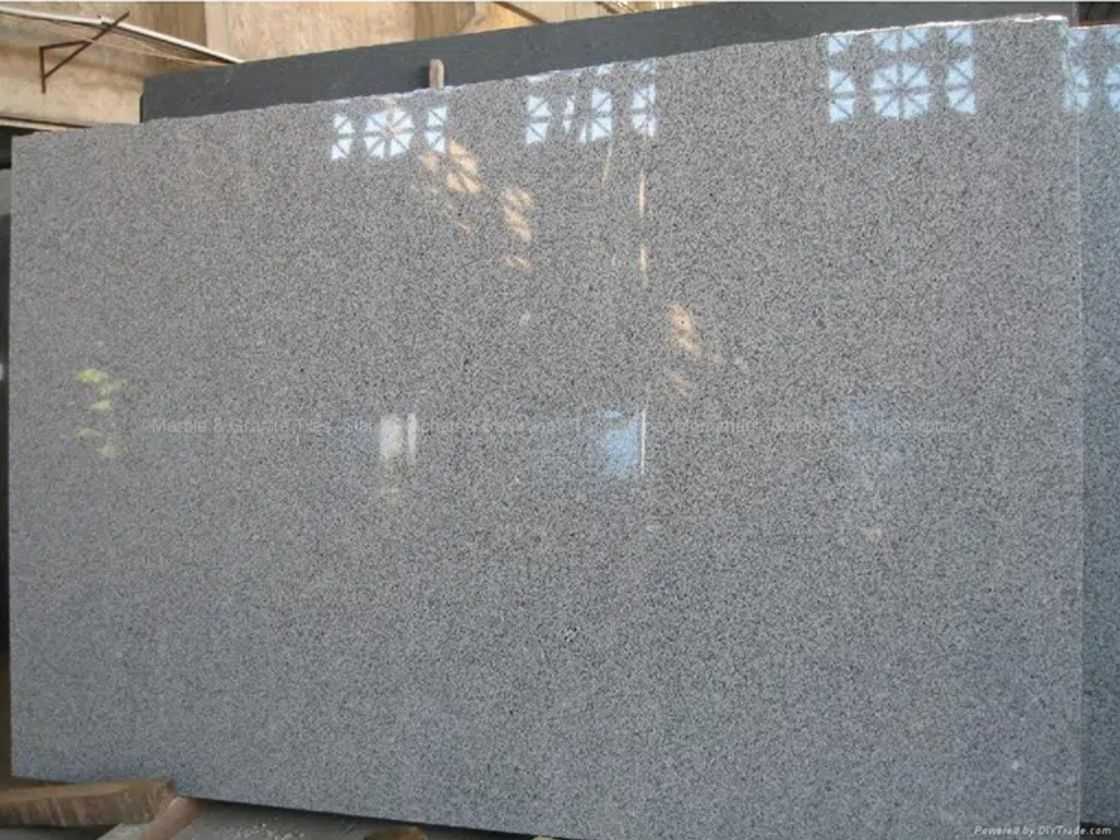
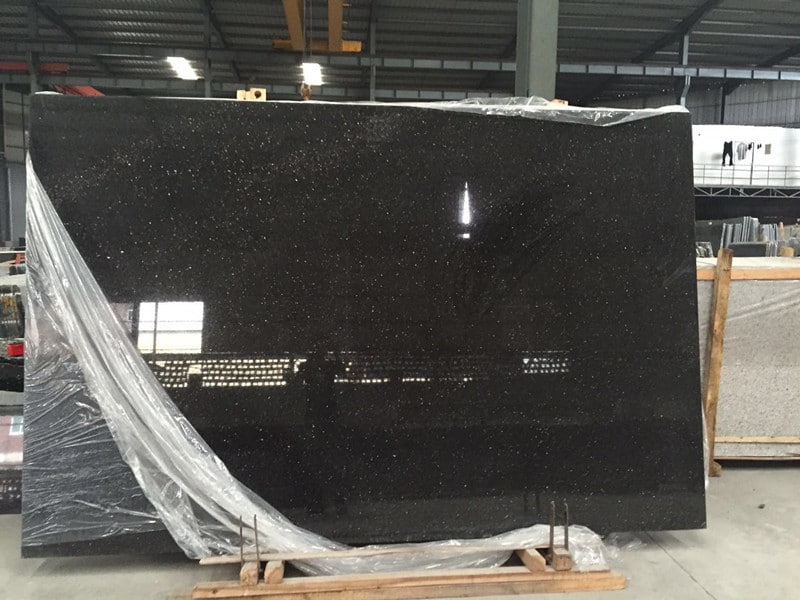
Granite is the volume side of Chinese slab exports. Source references list granite for exterior paving, wall cladding, countertops, monuments and commercial flooring, with G654 as a medium-grey Chinese granite used for exterior paving and wall cladding. Our current slab range includes G654 Granite alongside Granite Slabs and Galaxy Gold Granite.
Typical slab dimensions in Chinese granite supply run from 240×120cm to 320×190cm, depending on the material, block and finishing line. A quotation should state the actual bundle dimensions rather than a nominal size, because usable area changes with block shape, edge condition and repairs. Two bundles with the same nominal footprint can yield different finished areas.
Thickness is a cost decision as well as a structural one. A 2cm slab is the standard thickness for countertops; a 3cm slab adds 40-50% to material cost. Exterior paving and cladding may need a different thickness and finish from an interior countertop, so each application should appear as a separate line item on the quotation.
For a granite programme, ask for the available block sizes, the sawing plan, the usable area after defects, and a bundle-level photo set. These details matter more than a headline price per square metre. They also make it easier to compare two suppliers that are describing different products under the same trade name [source: stone-phoenix.com].
Marble Slabs for Interior Feature Work
Marble is the design-led side of the slab range. Chinese marble supply combines domestic stone with imported blocks that are cut and finished in China. A factory can import a block from Italy, process it in Fujian or Shandong, and sell the finished slab below the European processed price. That model gives buyers an Italian block with Chinese processing cost, provided the block origin and processing site are documented.
Chinese marble FOB prices in our sourcing guide range from $10-$60/m², but that range spans commercial and premium material, different thicknesses and different finishes. It is a screening tool, not a quotation. At the upper end, block selection, vein pattern and scarcity drive the price more than the nominal stone type.
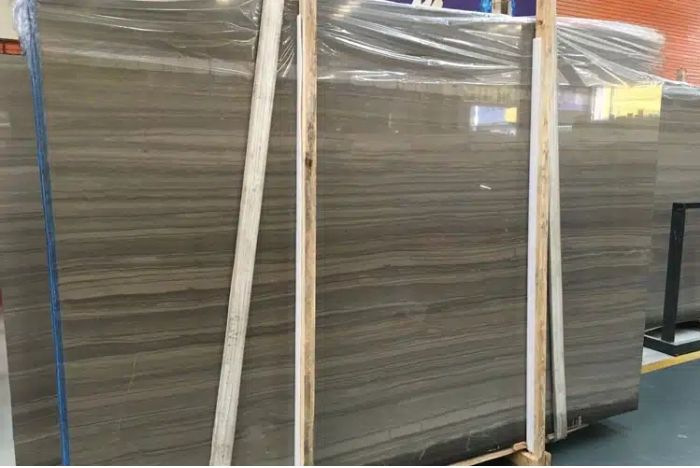
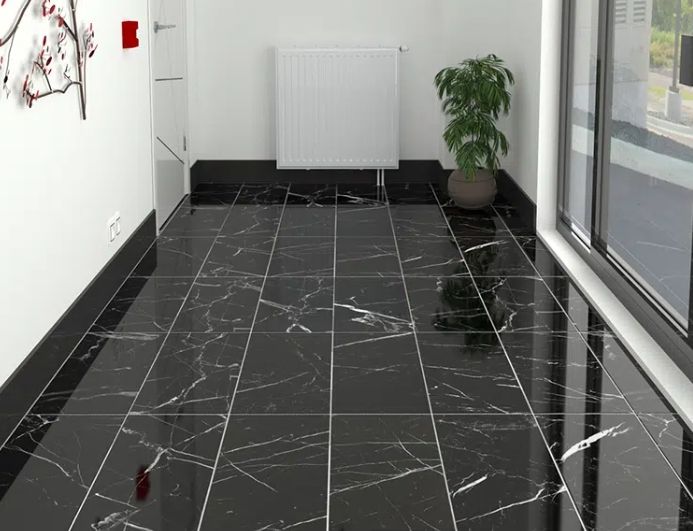
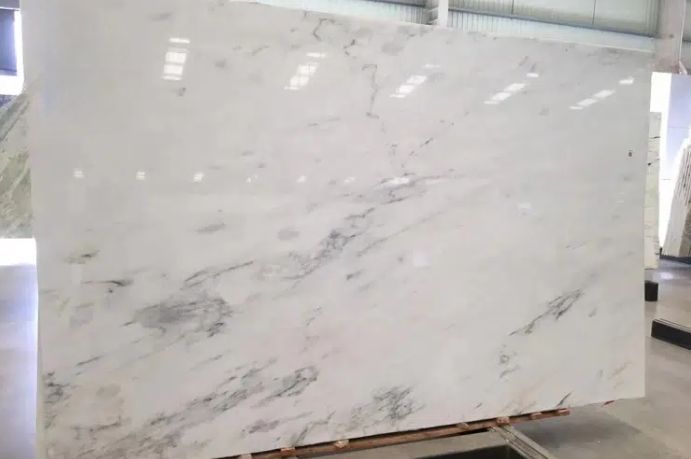
Our current marble slab range includes Marble Slabs, White Wood Marble Slab, Nero Marquina Marble Slab and Panda White Marble Slab. The names describe the selections we quote; they do not remove the need to approve the actual block. For a feature wall, ask for the vein direction and a dry-lay photograph. For a floor, make sealing and maintenance part of the specification before the finish is chosen.
Marble selection should start with the block, not the catalogue image. Two slabs carrying the same trade name can differ in background tone, vein density and the amount of repair. Reserve the block for the whole order and keep a sealed reference sample. If the design depends on a continuous vein, book-matching has to be reserved at block stage rather than created by sorting finished slabs [source: stone-phoenix.com].
Our Slab Range
The current slab supply list is deliberately short: it names the families and selections we quote most often, while the product gallery below shows the wider catalogue. Availability depends on the block, finish, thickness and order size, so the list is a starting point for an enquiry rather than a stock promise.
| Product | Material | What to confirm |
|---|---|---|
| Granite Slabs | Granite | Bundle dimensions, grade, thickness, finish and edge detail |
| Marble Slabs | Marble | Block selection, vein direction, finish and dry-lay |
| White Wood Marble Slab | Marble | Current block photos, batch tone and finish |
| G654 Granite | Granite | Bundle dimensions, grade and finish for paving or cladding |
| Galaxy Gold Granite | Granite | Current block photos, finish and available thickness |
| Nero Marquina Marble Slab | Marble | Vein direction, repair status and finish |
| Panda White Marble Slab | Marble | Block photos, tonal range and panel layout |
We quote from current bundles and include slab photographs, bundle marks and, where the design depends on pattern, a dry-lay photograph. For buyers who start from an image, the page gallery below provides a visual index; for buyers who start from a project, send the application, finish, thickness and target quantity and we will reply with the formats available for that stone.
No two blocks are identical. A named slab selection is a direction, not a colour code. The approval record should identify the stone, block, batch, finish and thickness, and both parties should retain the same sealed sample. That record is more useful than a catalogue image when the material arrives on site.
Slab Quality Grades Explained
Grade labels are not universal. Our source guide uses three working tiers: Commercial, Standard and Premium/Select. Commercial material may include minor surface pitting, slight colour variation between slabs and small edge chips; it suits large-area paving, external cladding and commercial flooring where some natural variation is acceptable. Standard is the grade commonly specified for residential countertops and interior work: consistent colour and pattern, minimal surface defects and clean edges. Premium or Select is reserved for high-end projects and may offer very high colour consistency, carefully selected surfaces and book-matched availability.
| Grade | Working description | Typical use |
|---|---|---|
| Commercial | Minor pitting, slight colour variation, small edge chips | Paving, external cladding, commercial flooring |
| Standard | Consistent colour and pattern, minimal defects, clean edges | Residential countertops, vanities, interior flooring |
| Premium / Select | Very high colour consistency, selected surfaces, book-matching availability | Luxury residential and high-end commercial work |
Premium or Select commands a 30-60% price premium over Standard in our source guide. That premium can be justified when the slab is going into a visible wall or a carefully matched countertop, but it is not automatically the right grade for a paving programme. Grade should follow application and location.
Some suppliers quote Grade A, B and C instead. Because the definitions are not standardised, an A grade from one factory may match a B grade from another. Write the observable criteria into the purchase order: colour consistency, permitted pitting, permitted repairs, edge condition, usable area and the procedure for rejection. Do not rely on a letter alone [source: stone-phoenix.com].
Surface Finishes for Slabs
Finish changes both appearance and performance. A polished slab deepens colour and reflects the surrounding room; a honed slab is quieter and hides surface marks more readily; a flamed face is rough and provides grip. The same block can read as a different stone after a finish change, so finish belongs on the RFQ rather than in a factory default.
| Finish | Surface character | Applications to discuss |
|---|---|---|
| Polished | Reflective, high-gloss face that deepens colour and veining | Interior countertops, feature walls, reception surfaces, low-traffic areas |
| Honed | Smooth matte surface without a mirror gloss | Bathroom floors, high-traffic commercial areas, quieter interior surfaces |
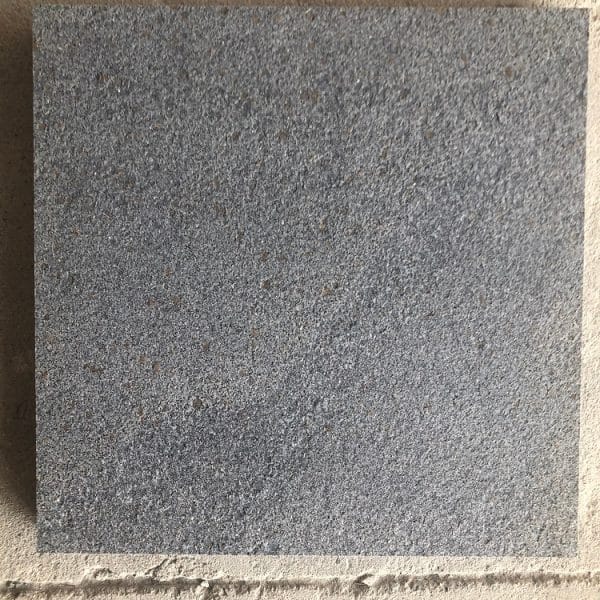
| Flamed | Rough, textured face produced by thermal treatment | Exterior paving, pool surrounds, driveways and entrance areas |
| Bush-hammered | Uniform dimpled texture from mechanical hammering | Exterior facades, plazas and other textured exterior work |
| Flamed + brushed | Flamed then wire-brushed for a worn, antique character | Heritage renovations and Mediterranean-style projects |
| Sandblasted | Fine, uniform roughness with a subtle texture | Decorative panels, signage and monuments |
Finish is assessed on the actual stone under the project lighting. A photograph cannot show how a honed surface will read beside a warm interior light or how much a flamed texture will change the colour of a grey granite. Approve the combination of stone, finish and lighting together, and state whether the finish applies to the face only or to the edges as well [source: stone-phoenix.com].
For floors, discuss slip performance before selection. A polished surface is not the natural choice for a wet exterior area; a flamed or bush-hammered texture is more defensible where water and foot traffic meet. For walls, polished remains a common choice because the surface is not exposed to the same wear. The application should drive the finish, not the other way around.
Slab Sizes, Thickness and Tolerances
Chinese granite slabs are commonly quoted in bundle sizes from 120×60cm to 320×190cm. The more common slab formats sit around 240×120cm to 320×180cm, depending on the stone and the block. These are supply formats, not finished module sizes; a fabricator still has to cut the slab to the project dimensions and account for edge trim and waste.
Thickness should be written as a separate line item. A 2cm slab is the standard for countertops; a 3cm slab adds 40-50% to material cost. A quotation that mixes thicknesses in one square-metre rate is not comparable with one that prices each thickness separately. The same applies to finish, edge profile and any cut-to-size work.
Tolerances also need a definition. Our import guide distinguishes +/- 1mm for premium work and +/- 2mm for standard work. State whether the tolerance applies to length, width, thickness or diagonal, and measure random pieces rather than one selected face. A slab can meet a thickness tolerance and still have an unacceptable bow, chip or repair.
We quote full slabs, half slabs and cut-to-size pieces. For each format, confirm the usable area, the direction of the veining and the edge condition. A nominal size is only a starting point; the usable area after trimming is the number that matters in fabrication [source: stone-phoenix.com].
Block Selection and Batch Consistency
Colour consistency starts at block selection. A catalogue image shows one slab; it does not show the range inside a bundle. Reserve blocks for the whole order, record the block number, and ask for bundle-level dry-lay photographs. For multi-container projects, select blocks together rather than buying them one container at a time.
A sealed reference sample should be labelled with the stone, block, batch, finish and thickness, and both parties should keep a copy. Number slabs or panels by installation position, and load them in the sequence the site team will use. That makes it possible to compare the delivered bundle against the approved layout without guesswork.
Book-matching is a block decision. Adjacent slabs from the same block can mirror a vein; two attractive slabs from different blocks cannot be made into a pair by sorting. Reserve the pair before production, approve the dry-lay and keep the pair number on the packing list. If a project needs a continuous vein across a wall, raise the requirement at the block-selection stage, not after the slabs are finished.
These controls do not remove natural variation. They make it visible before it becomes a dispute. A dry-lay photograph, a bundle mark and a sealed sample are simple records, but they are more useful than a supplier's assurance that the next bundle will be identical [source: stone-phoenix.com].
Inspection and Acceptance Criteria
Pre-shipment inspection is the key checkpoint before the balance payment. Our import guide recommends spot-checking at least 5% of pieces for dimensional tolerance, and slab inspection should add thickness measurements, bundle-level dry-lays and a check of repairs against the agreed grade. Third-party inspection typically costs about $300-$500 per inspector-day; SGS, Bureau Veritas and Intertek are named services in the guide.
The inspection should cover the following items:
- Quantity and bundle count against the packing list, including slab numbers and batch marks.
- Thickness and dimensions, measured on random pieces rather than one selected slab.
- Grade against the sealed sample, with repairs, pitting and colour variation assessed against the written definition.
- Surface and finish, including gloss, texture and any edge damage.
- Usable area and vein direction for book-matched or feature work.
- Packing condition, steel straps, interleaving and ISPM-15 stamps on wooden packaging.
- Commercial invoice, packing list, bill of lading, certificate of origin and inspection certificate.
- Container loading photographs that show the bundle arrangement and the container seal.
Write a reject and replacement procedure into the purchase order. A repaired slab that would pass on a Commercial paving job may fail a Premium book-matched wall. Acceptance should follow the grade and the location, not a generic standard. Document issues with photographs and bundle labels, and hold the affected material before cutting begins [source: stone-phoenix.com].
Packing and Container Loading
Slabs are heavy and brittle, so packing is part of the specification. Our container guide calls for solid wood frames rather than plywood, cross-bracing and frame members of at least 12mm. Polished faces should be separated by plastic sheet or thin foam, and each slab bundle should be secured with steel straps—at least 2 straps per bundle. Slabs travel vertically in A-frame cradles at a 5-10° angle; flat-loading increases the risk of cracking under the slab's own weight.
Wooden packaging must be ISPM-15 compliant. Heat treatment means a core temperature of 56°C for at least 30 minutes, and the packaging must carry the official ISPM-15 stamp. Non-compliant wood can cause the container to be quarantined, re-exported or destroyed at the buyer's expense.
A 20ft container typically holds 400-500 m² of 2cm slabs, around 20-27 tons, and often 60-90 slabs depending on dimensions. The crate weight itself can account for 5-8% of the payload, so the loading plan has to carry frames as well as stone. Weight is usually the practical limit. Ocean freight is typically 10-25% of total landed cost, which is why a better-loaded container can change the economics of a slab programme.
Before the container is sealed, photograph the loaded bundles, the straps, the ISPM-15 stamps and the seal. Photograph the dry-lay as well. These records support an insurance claim if damage appears in transit, and they help the site team match crates to rooms when the order is loaded in sequence [source: stone-phoenix.com].
Pricing, Landed Cost and Order Planning
A slab price is not comparable until the stone, grade, format, finish, thickness and origin are named. Two suppliers can quote the same trade name at different prices because they are describing different products. A first-choice block, a 3cm slab and a book-matched pair are not the same line item as a commercial 2cm bundle.
Source wholesale ranges for granite, FOB China, provide a planning frame:
| Granite tier | FOB China planning range | Typical buyer |
|---|---|---|
| Entry-level granite | $8-$15/sq m | Large-scale paving and construction |
| Mid-range granite | $15-$30/sq m | Wholesale distributors and fabricators |
| Premium granite | $30-$60/sq m | High-end fabricators and luxury projects |
| Exotic or rare granite | $60-$150+/sq m | Specialty dealers and luxury retail |
Chinese marble is quoted from $10-$60/m² in our sourcing guide, with the same caveat: grade, block and finish decide where a specific lot sits. Thickness and grade premiums can be larger than a small difference in freight. A 3cm slab adds 40-50% to material cost, and Premium or Select commands a 30-60% premium over Standard.
FOB is not the landed number. Total landed cost is typically 1.3× to 1.8× the FOB price, depending on distance, fuel, destination port charges and duty. Chinese-origin stone may also carry a 25% US Section 301 surcharge. Worked granite under HTS 6802.93 carries a base rate of 3.7%, before any additional measure. Confirm the exact HTS line, current tariff status and import charges with a broker before comparing suppliers [source: stone-phoenix.com].
The usual minimum is 1 × 20ft container, roughly 400-500 m² of 2cm slabs or 20-27 tonnes. LCL can be used for trial quantities, but the per-unit freight is higher and polished slabs face more handling risk. For a first order, choose a small number of stones, confirm the block and packing specification, and inspect before shipment.
Lead Times, Documentation and Shipping
Production in China typically runs 15-25 days after deposit confirmation and approval of the details. Ocean transit adds 14-18 days to the US West Coast and 28-35 days to the US East Coast, so a first order from Asia is realistically 8-12 weeks door to door. Chinese New Year closes factories for 2-4 weeks; an order that touches January or February needs a calendar check before the vessel is booked.
Payment terms are commonly 30% deposit with the order and 70% before shipment after inspection. For orders above $50,000, an L/C at sight can add bank-level protection for both sides. Establish the inspection standard before the balance is due; a payment milestone without an inspection checkpoint leaves the buyer with little leverage.
Documentation should include the commercial invoice, packing list, bill of lading, certificate of origin and fumigation certificate, plus any inspection certificate. Ask for batch test reports such as ASTM C97 for absorption and C170 for compressive strength, and for CE marking and a Declaration of Performance on EU projects. Marine insurance at 0.3-0.5% of the declared cargo value is a standard line in the landed-cost model. Confirm whether the shipment is FOB, CIF or DDP and who arranges insurance, port handling and inland delivery.
The purchase order and the packing list should agree on the stone, block, grade, dimensions, finish, bundle numbers and quantity. Have the documents checked before the container leaves the factory, and keep the loading photographs with the inspection file [source: stone-phoenix.com].
Frequently Asked Questions
What slab products can you supply?
Current slab supply includes Granite Slabs, Marble Slabs, White Wood Marble Slab, G654 Granite, Galaxy Gold Granite, Nero Marquina Marble Slab and Panda White Marble Slab. Availability varies with the block, finish, thickness and order size. Send the stone name, application, finish, thickness and target quantity, and we will reply with current bundle photographs, usable dimensions and a quotation. The product gallery below shows the wider catalogue.
What sizes and thicknesses can you supply?
Typical source slab sizes run from 120×60cm to 320×190cm, with common formats around 240×120cm to 320×180cm. Thickness is commonly 2cm for countertops and 3cm for heavier work, with 3cm adding 40-50% to material cost. We also quote half slabs and cut-to-size pieces. Write the actual dimensions and tolerances on the purchase order, because nominal size does not tell you the usable area.
What is the minimum order quantity?
The normal minimum is 1 × 20ft container, roughly 400-500 m² of 2cm slabs or 20-27 tonnes. LCL can be arranged for trial quantities, but per-unit freight is higher and polished slabs face more handling risk. For a smaller first order, ask for LCL with reinforced crating and a pre-shipment inspection. Mixing compatible products in one container can improve utilisation when the weight allowance permits.
How are slab grades defined?
We work with Commercial, Standard and Premium/Select descriptions. Commercial accepts minor pitting, slight colour variation and small edge chips; Standard calls for consistent colour and pattern with minimal surface defects and clean edges; Premium/Select is reserved for high-end work and can command a 30-60% premium over Standard. Because grade labels vary, write the exact acceptance criteria and permitted repairs into the purchase order.
Which finish should I choose for floors, walls and exterior areas?
Honed is the practical choice for many interior floors: it is matte, quieter than polished and hides surface marks more readily. Polished suits feature walls, reception fronts and low-traffic surfaces, but it is not the natural choice for a wet exterior floor. Flamed, bush-hammered, flamed-and-brushed and sandblasted surfaces offer texture and grip for exterior and heavy-use applications. Approve the finish on the actual stone under project lighting.
Can you supply book-matched slabs?
Yes. We select adjacent slabs from the same block, number them by installation position and provide a dry-lay photograph or layout for approval. Book-matching is a block-selection decision, not something created by sorting finished slabs. Reserve the pair before production, keep the pair number on the packing list and approve the layout under the lighting used in the finished space.
How do you control colour and batch consistency?
Reserve blocks for the whole order, record the block number and replace the catalogue image with bundle-level dry-lay photographs. Agree a sealed reference sample labelled with stone, block, batch, finish and thickness, and keep a copy on both sides. Number panels by position and load them in installation sequence. For multi-container orders, select blocks together rather than buying container by container.
How many slabs fit in a container?
A 20ft container typically carries 400-500 m² of 2cm slabs, around 20-27 tons and often 60-90 slabs depending on dimensions. A-frame loading, interleaving, steel straps and ISPM-15 crates are part of the packing specification. Check the loading plan against both weight and volume; stone normally reaches the weight limit before the space is full.
What documents and test reports should accompany a slab order?
Ask for batch test reports such as ASTM C97 for absorption and C170 for compressive strength, plus the commercial invoice, packing list, bill of lading, certificate of origin, fumigation certificate and inspection certificate. EU orders typically need CE marking and a Declaration of Performance. Wooden packaging must carry the ISPM-15 stamp. For US imports, confirm the HTS line and any Section 301 measure with your broker; worked granite under HTS 6802.93 carries a base rate of 3.7% in our source guide.
How long does production and delivery take?
Production is typically 15-25 days after deposit and approval. Transit adds 14-18 days to the US West Coast and 28-35 days to the US East Coast, so a first order is commonly 8-12 weeks door to door. Chinese New Year closes factories for 2-4 weeks; book production around that window and confirm the vessel schedule before fixing site dates.
Related Guides
- Granite Slabs Wholesale — factory-direct buying, block selection, grades and import steps for granite slab importers.
- Stone Sourcing by Country — origin profiles, price indices, lead times and tariff considerations across major stone sources.
- How to Import Stone from China — supplier vetting, quality control, documentation, payment terms and shipping.
- Container Loading Guide for Stone — A-frame packing, container capacity, weight limits and loading economics.
- Stone Finishes Comparison — how polished, honed, flamed and textured surfaces differ in appearance and use.
Surface Finishes
The same stone looks and performs dramatically differently depending on its surface finish:
- Polished — High-gloss mirror finish (80-95 GU at 60°). Brings out color depth and veining. Best for: interior countertops, feature walls, luxury flooring. Not recommended for wet exterior areas (slippery).
- Honed — Smooth, matte surface without shine. Softer, more natural appearance. Best for: bathroom floors, high-traffic commercial areas.
- Flamed — Rough, textured surface created by thermal shock. Excellent slip resistance. Best for: exterior paving, pool surrounds, driveways.
- Bush-Hammered — Uniform dimpled texture created by mechanical hammering. Decorative and slip-resistant. Best for: exterior facades, plazas.
- Flamed + Brushed — Flamed then wire-brushed for a worn, antique texture. Softened slip resistance. Best for: heritage renovations, Mediterranean-style projects.
- Sandblasted — Fine, uniform roughness. Subtle texture. Best for: decorative panels, signage, monuments.
For detailed technical guidance, see our Quality Control page with ASTM and EN testing standards, or read Stone Finishes Comparison Guide in our Knowledge Base.
Select your slab below. Welcome to visit our showroom and warehouse in Laizhou, Shandong.
Specifications
| Item | Length | Width | Thickness |
|---|---|---|---|
| Big Slabs | 2400mm – 3000mm up | 1200mm – 2000mm | 20mm, 30mm, 40mm, 50mm, 60mm, etc. As per customers' request |
| Half Slabs | 1800mm up | 600mm up | |
| 1800mm up | 650mm up | ||
| 2400mm up | 600mm up | ||
| 1800mm up | 700mm up | ||
| 2400mm up | 800mm up | ||
| 2400mm up | 900mm up | ||
| Finish | Polished, honed, flamed, bush-hammered, flamed + brushed, sandblasted, etc. | ||
| Packing | Slabs are packed in wooden bundles, polished against polished face. | ||
Request Free Quote
Thanks for your interest in our products. If you would like to get more information on any product, please send us an email or call us at any time, we will reply to you within 24 hours. We are looking forward to cooperating with you.
Get Instant Quote