Stone Stairs and Stair Components for Project Supply
Stone stairs are prefabricated treads, risers, landing slabs and skirtings cut from natural stone and installed over a structural core, forming the walking surface, visual centrepiece and safety edge of a staircase. We fabricate complete marble and granite stair sets to project stair plans for importers, architects and contractors.
A stair package is more than a stack of treads. It includes the horizontal walking surfaces, the vertical faces between them, the landing platforms and the side trim that closes the staircase against the wall. Edge profiles, anti-slip detailing, finish, thickness, joint direction and piece numbering are resolved before cutting. We supply full sets or replacement components, selecting treads, risers and landings from the same production batch.
Components are cut to a reviewed layout that follows the stair plan, floor-to-floor height, landing positions and intended joint lines. When the stone package is coordinated with the structural core early, fewer site adjustments are needed later.
Why Stone Stairs Need an Early Specification
A stone staircase is one of the first elements a visitor experiences and one of the hardest to change. Visual decisions - straight or curved, light or dark, open or closed, polished or textured - are made early. Safety decisions are equally early: riser consistency, tread depth, slip resistance, nosing condition and handrail continuity depend on the core geometry and the stone package.
Stone is usually a finish over a structural core, not the structure itself. Indoors, treads and risers are installed over concrete, steel or timber stringers. Outdoors, stone can be laid as solid block steps at low heights or as treads over concrete for longer runs. If the core is out of level or the risers vary, the stone package cannot correct the error without visible compromises. Measure the core, agree the tolerances and approve the cutting plan before fabrication.
Bring the stone supplier in while the stair plan is still being coordinated. A shallow tread, oversized landing, individually cut curve or unworkable nosing detail can be flagged before production, when changes are inexpensive.
Stair Components and Construction Over the Core
Stair treads are the horizontal walking surfaces. They need enough thickness to span the stair width and resist point loads without a hollow feel, and enough surface texture to grip under the expected conditions. Stone treads should be a minimum of 3cm thick; 5cm is preferred for unsupported spans and for a more substantial visible edge. Each tread should carry an anti-slip insert or treatment near the nosing, particularly on commercial stairs and public buildings.
Stair risers are the vertical faces between treads. They can match, contrast with or introduce another material, and they set the visual rhythm of the flight. Riser height is governed by the code and by consistent site geometry. A slight variation between risers is more noticeable than almost any other stair defect. The riser package should be measured against the completed core, not only the architectural drawing.
Landing slabs are the large-format pieces at intermediate platforms and changes of direction. They are cut to site dimensions and matched to the tread stone. A landing is often the largest single stone piece in the staircase, so handling, lifting and joint layout need to be planned with the contractor. Where a landing turns a corner, the joint direction should follow the dominant sight line.
Skirtings and stringers are the side trim pieces that frame the staircase against the wall or form the visible side of the flight. They are cut to the stair profile and should follow the tread and riser line. On an open side, the exposed edge needs the same finish and thickness discipline as the treads.
The core carries the load; the stone provides the walking surface, appearance and wearing layer. For low outdoor steps, solid granite blocks can form structure and finish, but the base still needs proper compaction and drainage. A stone stair should not be treated as structural unless engineering and test data support that use.
Stair Geometry, Dimensions and Code Coordination
Stair geometry has to satisfy building codes before aesthetics. Start with a dimensioned stair plan showing total rise, total run, number of steps, landing positions, handrail line and open sides. The supplier can then translate it into tread, riser, landing and skirting pieces without relying on site measurements alone.
| Element | Recommended dimension |
|---|---|
| Tread depth | Minimum 280mm for residential work; 280-355mm preferred for comfort |
| Riser height | 100-178mm ideal; maximum 197mm for residential work |
| Tread thickness | 3cm minimum; 5cm preferred for unsupported spans |
| Nosing overhang | 25-32mm over the riser below |
| Handrail height | 864-965mm above the stair nosing |
| Guard height | 900mm for US residential work to 1100mm in the EU |
| Riser consistency | Variation over 10mm is a trip hazard |
| Two-rise-plus-going rule | 550mm and 700mm in the US; 600-630mm in the UK and EU |
A common code check is 2R + G, where R is the riser and G is the going or tread depth. A 175mm riser with a 280mm tread gives 630mm, inside the usual UK and EU range. The US range is wider, but confirm the local requirement in writing. Commercial and accessible stairs often impose stricter limits.
Stone thickness and piece size are separate from code geometry. A tread can meet the depth and rise requirements but still flex across an unsupported width. Confirm support conditions, maximum unsupported span, joint positions and piece weight. If a stair has a landing, check whether it can be one slab or must be jointed. The specification should state finished dimensions, tolerances and nosing direction [source: stone-phoenix.com].
Marble Stairs and Interior Stone Selection
Marble is the material most often chosen for residential and hospitality stairs where appearance leads the brief. Calacatta White offers a bright white ground with dramatic veining; Imperial Grey gives a quieter grey field; Nero Marquina provides a black ground with white veining. Carrara, Panda White and Star White expand the white and grey range. Book-matched pairs across adjacent treads can turn a flight into a continuous pattern, but the slabs must be selected and numbered together.
Marble treads belong indoors. They are specified with a honed or leathered finish for grip; polished marble on a tread is not a suitable specification. Acid spills can etch the surface, so maintenance should use pH-neutral cleaners and prompt spill control. In high-traffic installations, budget for professional repolishing every 5-7 years.
Granite is the practical alternative for interior stairs in commercial buildings and busy homes. G654 Sesame Grey is a common commercial choice because its mid-grey tone hides scuffs and marks. Absolute Black creates contrast with light risers and walls, while G684 Pearl Black is a denser dark option that shows less wear in heavy traffic. Quartzite, bluestone, limestone and slate broaden the palette, but each changes the slip, maintenance and cost profile.
| Stone | Mohs hardness | Outdoor use | Wear resistance | Typical price per tread |
|---|---|---|---|---|
| Granite (G654, Absolute Black) | 6-7 | Yes | Excellent | $50-$150 |
| Marble (Carrara, Nero Marquina) | 3-4 | No | Good indoors | $80-$250+ |
| Quartzite | 7 | Yes with sealing | Excellent | $90-$220 |
| Bluestone (dense sandstone) | 6-7 | Yes | Very good | $40-$110 |
| Limestone | 3-4 | Limited | Moderate | $45-$120 |
| Slate | 3-4 | Yes, split face | Good but can split | $35-$90 |
These prices are planning references for treads in standard sizes, not a finished staircase quotation. The stone selection also has to match the riser and landing pieces, the edge profile and the available slab sizes. A large curved tread may cost more than a rectangular one even when the stone is identical, because every curved piece is cut individually [source: stone-phoenix.com].
Exterior and Garden Stairs
Outdoor stairs face rain, freeze-thaw cycles, UV and debris. Material selection narrows quickly. Granite, bluestone and dense sandstone are the proven performers; granite dominates because it maintains grip when flamed and resists surface loss under heavy use. Marble is not specified for exterior treads because acid rain, frost and moisture attack the surface. Limestone has limited exterior use, and slate can delaminate or split.
A flamed or bush-hammered finish is essential outdoors. The tread should slope 1-2% away from the building to shed standing water, and open or wide joints of 5-8mm help drainage. Outdoor treads commonly run 30-50mm thick, depending on span and support. In cold climates, a concrete footing placed 150-200mm below the frost line helps prevent heaving. The base and drainage do as much work as the stone.
Garden steps are often built as step-and-terrace runs using solid granite blocks 150-200mm thick, laid on a compacted base. This can be more economical than a concrete core for low heights. Where an outdoor stair continues into paving, the riser and tread dimensions should align with the site's dimensional rules: risers of 100-180mm, treads of 280-350mm and consistent geometry through the transition. A change from stair to paving should not introduce a trip edge or a water trap [source: stone-phoenix.com].
Edge Profiles and Nosing Details
The edge profile determines how a tread reads, meets the riser and behaves under impact. An eased or straight edge has a small bevelled arris that reduces chipping and suits modern interiors. A half bullnose rounds the top front edge while leaving the bottom flat, common on residential stairs and hotel lobbies. A full bullnose rounds the entire front edge for a softer classic look. An ogee or pencil-round profile adds decorative detail for premium residential and heritage work. A split edge gives a rough, quarried arris where that rustic detail is wanted.
Specify the profile for every exposed edge. A stair with one open side needs a finished return there, while a tread that meets a wall may use a simpler edge. The factory should show the profile at full scale on the shop drawing, with nosing projection, tread thickness and joint line. A profile that looks comfortable in a hand sample can look heavy across a whole flight.
Nosing condition matters for safety as well as appearance. Chipped nosings are a common impact failure where heavy objects are carried, and a damaged nosing is a weak point for water ingress on exterior stairs. For exterior work, a slightly rounded or eased arris is less vulnerable than a sharp edge. For interior work, keep the profile consistent from the first tread to the last.
Finishes and Anti-Slip Treatment
Tread finish is a safety specification. Polished stone is appropriate for walls, risers and low-traffic surfaces, but it is not appropriate for a stair tread unless the design includes a tested anti-slip treatment. Honed, leathered, flamed, bush-hammered and sandblasted finishes change the surface texture; the rougher finishes generally improve grip but hold more dirt and require a different cleaning routine. Flamed and brushed combinations are also available for exterior work.
Slip resistance can be measured by the pendulum test value (PTV) or the coefficient of friction (COF). A wet PTV of 36+ is a UK reference for stair treads, and US commercial projects commonly require a wet COF of at least 0.6. Flamed granite typically tests at PTV 55-70, while polished marble typically tests at PTV 15-25 and is not approved for stairs. These figures are material and finish-specific, so request test data for the actual stone and finish being supplied.
Physical anti-slip measures should be combined with the finish. Carborundum or metal strips can be embedded in a groove near the tread nosing to give both a visual warning and a physical grip edge. Parallel grooves cut across the nosing, 5-8mm wide and 3-5mm deep, improve traction where the foot leaves the tread. Factory-cut grooves are cleaner than site-cut ones and belong in the cutting plan, not added after the stone arrives.
Staircase Configurations and Design Styles
The staircase configuration is a major cost and fabrication decision. Straight flights are the simplest and most economical: identical rectangular treads, minimal cutting and a straightforward installation sequence. L-shaped stairs introduce a landing at a turn of 90 degrees, which is usually an oversized tread slab. U-shaped stairs use two parallel flights joined by a landing; split stairs branch left and right from a shared landing, a strong entrance-hall move in hotels and large homes.
Curved and spiral stairs demand individual cutting. A curved staircase sweeps without landings, and each tread is cut to the curve radius; book-matching across curved treads is a specialist detail. A spiral staircase wraps around a central column, typically with 12-16 treads per full revolution; the treads are trapezoidal, so every piece is a unique shape. Floating or cantilevered stairs remove the visible riser or stringer and make the stone edge the main event. A typical floating tread is 1200-1600mm long, 300-350mm deep and 30-50mm thick, anchored into a concealed steel stringer or wall pocket [source: stone-phoenix.com].
Cantilevered stairs with one visible stringer are a variation on the same idea; the exposed stone edge carries the design, which is why 5cm treads are often preferred. Outdoor projects are moving toward deeper treads in the 600-900mm range, with flamed or bush-hammered finishes and pre-drilled holes for railing posts. Whatever the configuration, the fabrication drawings should show every unique piece, its position, its edge treatment and its joint direction.
Railings, Balustrades and Integrated Lighting
The balustrade should be designed with the stone package, not after it. Stainless steel is the most common pairing because it suits most stone colours and allows a slim profile. Glass panels keep the stone visible and make a small stair feel lighter. Timber handrails warm a marble stair, while stone balusters create a classical composition. The chosen system determines where anchors, cores and fixing points must be cast or drilled.
Handrail height is commonly set at 864-965mm above the stair nosing. Guard height on an open side is a minimum of 900mm for US residential work and can rise to 1100mm in the EU. When a stone tread overhangs an open side, the guard post should mount through or beside the stone rather than relying on an insert in the tread edge. Agree the anchor detail before the stone is cut, because a post that lands too close to the nosing can force a remake.
Integrated lighting is now common in hotels and increasingly requested in homes. A groove of 5-8mm can be cut into the nosing at the factory, with a continuous LED strip installed on site. Some flexible strips need a 10×10mm groove, so the LED supplier's profile and the stone drawing must be coordinated. Plan the cable route and driver location before the stone is fixed.
Product Range: Marble Stair and Granite Stair Collections
The Marble Stair range includes Calacatta White, Imperial Grey and Nero Marquina, with further white and grey options such as Carrara, Panda White and Star White. Calacatta White suits bright interiors, Imperial Grey offers a quieter field, and Nero Marquina provides high contrast. Each marble selection can be supplied as treads, risers, landing slabs and skirtings, with honed or leathered tread finishes and book-matched treads where required.
The Granite Stair range covers G654 Sesame Grey, G684 Pearl Black, Absolute Black, Maple Red and River White, among other selections. G654 is the common commercial specification for its practical mid-grey tone; G684 is a denser dark option for heavy traffic; Absolute Black gives a crisp contrast. Granite treads can be polished for interior use with a tested anti-slip treatment, or flamed and bush-hammered for exterior and wet conditions.
Both collections can be supplied as complete stair sets or as individual Stair Treads, Stair Risers, Landing Slabs and Skirtings/Stringers. The product pages show the current selection, but availability varies by block and finish. A custom colour, size or curve can be quoted from a stair plan. Choose the stone family before the cutting plan is finalised, because slab sizes and vein direction affect the tread layout.
Measuring, Ordering and Factory Quality Control
A staircase quotation starts with a measured plan, not a list of tread counts alone. We need the number of steps, tread length, depth and thickness, riser length, height and thickness, edge profile and which edges receive it, surface finish, and the quantity and dimensions of landing pieces. For a curved, split or spiral stair, send the radius or plan geometry. A dimensioned PDF or CAD drawing is more useful than a photograph, and a site measurement report should identify deviations.
From the approved plan, the factory prepares a cutting layout for review. Check it against the site, including joint direction and the position of any book-matched pairs. Production typically runs 15-25 days after the layout and sample are approved, and a dry-lay photograph should be reviewed before shipment. Batch-specific ASTM C97/C170 test data should be tied to the delivered batch. Sample treads of 30×30cm are available for colour approval [source: stone-phoenix.com].
Order 5-8% extra material at the initial purchase. Stone colour and veining vary between blocks, and matching a single tread later is difficult. The spare pieces also cover cutting waste, site damage and future repairs. The factory should number every piece by flight and position, pack in installation sequence and supply a layout drawing with the crates. A 20ft container holds roughly 60-90 treads, so larger projects need packing and shipping planned alongside production.
Installation Sequence and Common Problems
Stone stairs are installed over a prepared structural core. The core should be clean, stable and set out to the approved dimensions before the first tread is placed. A flexible polymer-modified adhesive is used for many interior installations, with a 2-3mm gap left at the bottom for the tread to overlap; the adhesive should achieve full contact to avoid hollow spots. Joints are grouted with colour-matched grout: typically 2-4mm for interiors and 5-8mm for exteriors. The stone is sealed 24 hours after grouting, and the stair should be protected from traffic while the assembly cures.
Hollow or loose-sounding treads indicate a failed adhesive bond or substrate movement. Tap each tread before handover and re-bed any hollow piece. Spalling on exterior treads often comes from water entering joints or inadequate frost resistance; replace the piece with dense granite and correct the drainage. Etching on marble shows as dull white spots and needs honing and repolishing, not a surface cleaner.
Nosing chips can be repaired with colour-matched resin; careful handling and corner protection reduce the risk. A worn traffic line is normal on a busy stair; periodic machine honing and resealing restores the surface, with commercial stairs often budgeted every 3-5 years. Riser cracking points to substrate movement or thermal stress and should be assessed before replacement. A stair that feels or sounds wrong should be investigated before handover [source: stone-phoenix.com].
Maintenance and Repair Planning
A stone staircase is a long-term investment. Granite needs little beyond sweeping, damp mopping and annual sealing. Marble needs more attention: reseal every 6-12 months, use pH-neutral cleaners and avoid acidic products that etch the surface. In high-traffic locations, plan for professional repolishing every 5-7 years. Exterior granite stairs should be checked for moss in shaded areas, have joints kept free of weeds and be resealed every 12-18 months. A well-specified and maintained granite staircase can remain in service for 20+ years.
The maintenance plan should include a spare-parts strategy. Keep a few treads and risers from the original order, labelled with the stone and finish. A single replacement tread ordered years later may not match the original block, even when the stone name is the same. If the stair has book-matched or curved pieces, the spare requirement is higher because an individual replacement cannot recreate the pattern. Photograph the completed stair and keep the approved layout with the building documents.
For exterior stairs, remove grit and organic growth without damaging the surface. Keep drainage paths clear, check sealant at landings and wall junctions, and inspect nosings for chips after winter. Wipe interior marble spills promptly. A simple annual inspection catches loose inserts, sealant failure and early nosing damage.
Cost Factors and Quotation Inputs
Stone stair cost is driven by material, geometry, thickness, finish and edge detail. Standard granite treads typically cost $50-$150 each; marble treads run $80-$250+; quartzite is $90-$220; bluestone $40-$110; limestone $45-$120; and slate $35-$90, based on standard sizes. Professional installation adds $50-$100 per tread. A full staircase of 15 treads typically budgets $3,000-$8,000 installed in granite and $5,000-$12,000+ in marble.
Factory-direct FOB pricing from China can reduce material cost by 30-50% compared with domestic wholesale. As a planning example, a 15-tread set of G654 granite is quoted at roughly $750-$2,250 FOB Qingdao. Those figures do not include freight, duties, installation, anti-slip inserts, custom edge profiles or structural work for cantilevered designs. A curved or spiral flight costs more than a straight flight of the same tread count because every piece is unique and the yield from each slab is lower.
To quote accurately, send the stair plan, number of steps, tread and riser dimensions, landing dimensions, edge profiles, finish, stone selection, railing or lighting interfaces and delivery port. State whether the stair is indoors or outdoors and what the structural core is. Identify multiple flights separately. The quotation should show the component schedule, spare percentage, packing method and price assumptions.
Frequently Asked Questions
What components are included in a stone stair set?
A complete set normally includes Stair Treads, Stair Risers, Landing Slabs and Skirtings/Stringers, with edge profiles, anti-slip details and finishes specified on the drawing. We can supply the full package or replacement components for a renovation. Each piece is numbered by flight and installation position, and the packing list should match the approved cutting layout.
What thickness should stone stair treads be?
Stone treads should be at least 3cm thick, and 5cm is preferred for unsupported spans or where a substantial visible edge is required. The thickness must suit the support conditions, the tread width and the expected loading. A thicker tread does not correct a flexible core. Confirm the finished thickness and joint detail on the shop drawing before production.
Which stones suit interior stairs?
Marble and granite are the two dominant interior materials. Marble, including Calacatta White, Imperial Grey and Nero Marquina, is chosen for appearance and can be supplied with a honed or leathered tread finish. Granite, including G654 Sesame Grey, Absolute Black and G684, is chosen for durability and wear resistance. Quartzite is another option where a harder stone with marble-like veining is wanted.
Can marble stairs be used outdoors?
Marble is not suitable for exterior stair treads. Acid rain, freeze-thaw cycling and moisture attack the surface, and a wet marble stair can become a slip risk even with a honed finish. Granite, bluestone and dense sandstone are the appropriate exterior materials. If marble is used near an entrance, keep it inside the weather line and protect it from direct water and de-icing salts.
How do I measure a staircase for a quote?
Start with the floor-to-floor rise, the number of steps, and the tread length, depth and thickness. Measure each riser height and width, the landing dimensions and any curved or tapered pieces. Note the edge profile, finish, anti-slip requirement and which edges are exposed. Send a dimensioned plan or CAD file, and identify any site deviations before the factory prepares the cutting layout.
Which edge profile should I choose?
The choice depends on the design language and the amount of exposure. Eased or straight edges suit modern interiors and resist chipping at the arris. Half bullnose is a practical traditional profile for residential and hotel stairs, full bullnose gives a softer rounded look, and ogee or pencil round adds decorative detail for premium work. Confirm the profile on a full-scale shop drawing and apply it consistently to every exposed edge.
How is slip resistance specified for stone stairs?
Slip resistance should be specified by a tested value and a physical measure. A wet PTV of 36+ is a UK reference for stair treads, and US commercial work commonly requires a wet COF of at least 0.6. Flamed granite typically tests at PTV 55-70; polished marble typically tests at PTV 15-25 and is not approved for treads. Anti-slip inserts or factory-cut nosing grooves provide additional grip.
How are stone stairs packed and shipped?
Treads, risers, landings and skirtings are packed with foam separation, secured in wooden crates and numbered to match the installation drawing. A 20ft container holds roughly 60-90 treads depending on size and packing format. Larger or longer pieces may need special loading arrangements. Request the packing plan, piece numbers and loading photographs before shipment.
What maintenance does a stone staircase need?
Granite stairs need sweeping, damp mopping and annual sealing, with exterior joints and drainage checked regularly. Marble stairs need sealing every 6-12 months, pH-neutral cleaners and professional repolishing every 5-7 years in high-traffic areas. Keep spare treads from the original batch, inspect nosings for chips and re-seal exterior granite every 12-18 months in exposed conditions.
How long does production take?
Production typically takes 15-25 days after the cutting layout and stone sample are approved. Complex curved, spiral or book-matched stairs take longer because each piece is unique and the dry-lay must be checked before packing. Production time is separate from sampling, freight and site installation; allow time for sample approval and review of the dry-lay photograph before shipment.
Related Guides
- Stone Stairs Design Ideas — staircase styles, safety detailing, installation and material guidance.
- Natural Stone Paving Guide — outdoor steps, base preparation, drainage and landscape paving.
- Stone Installation Mistakes — common site errors and how to avoid repeat work.
- Stone Maintenance Guide — cleaning, sealing and repair scheduling for interior and exterior stone.
- Stone Sourcing from China Guide — supplier checks, sampling, inspection and export planning.
Measurement Guidelines for Ordering
When requesting a quote, provide these measurements for accurate pricing:
- Number of steps — Total count of treads and risers
- Tread dimensions — Length (left-to-right) × width (front-to-back depth) × thickness
- Riser dimensions — Length × height × thickness
- Edge profile — Which profile, and on which edge(s)
- Surface finish — Polished / honed / flamed / bush-hammered
- Landing pieces — Quantity and dimensions of any landing slabs
We recommend ordering 5-8% extra material for cuts, waste, and future repairs — stone color batches vary, and matching later is difficult.
Related: Stone Stairs Design Ideas · Common Installation Mistakes to Avoid
Select your stair material below. Welcome to visit our showroom and warehouse.
Marble Stair
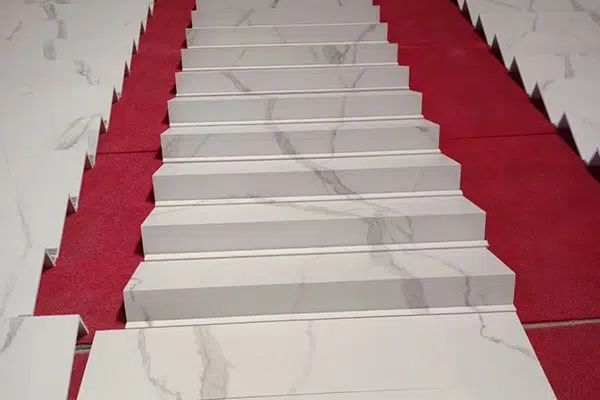
Calacatta White Marble Stair
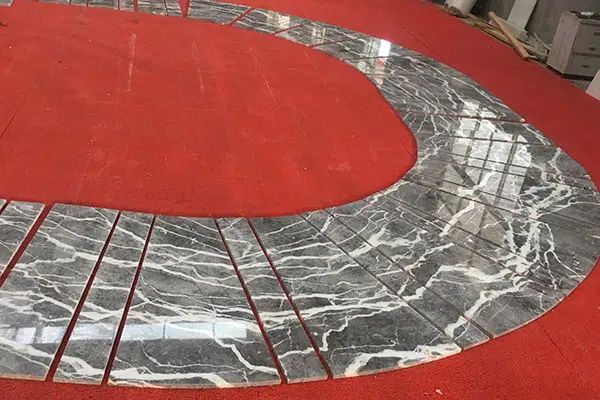
Imperial Grey Marble Stair
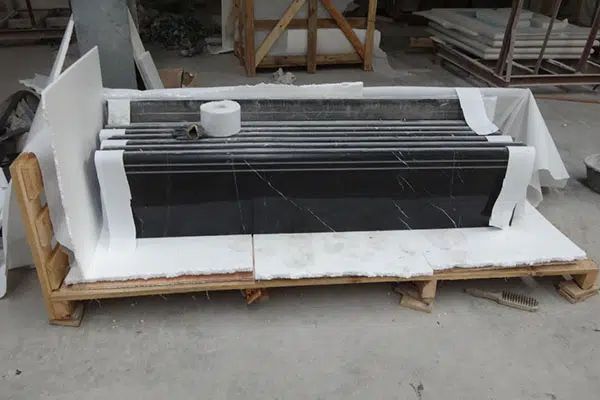
Nero Marquina Marble Stair

Panda White Marble Stair

Star White Marble Stair
Granite Stair
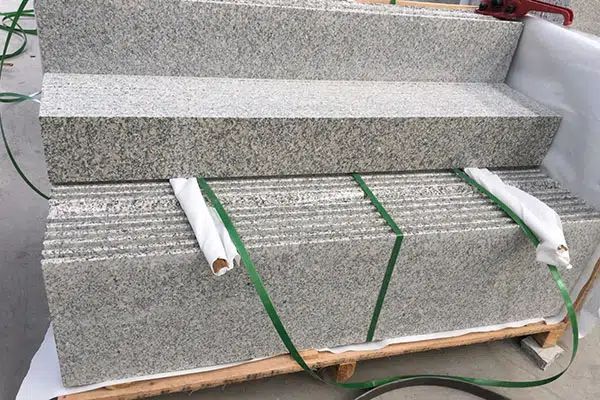
G602 Granite Stair
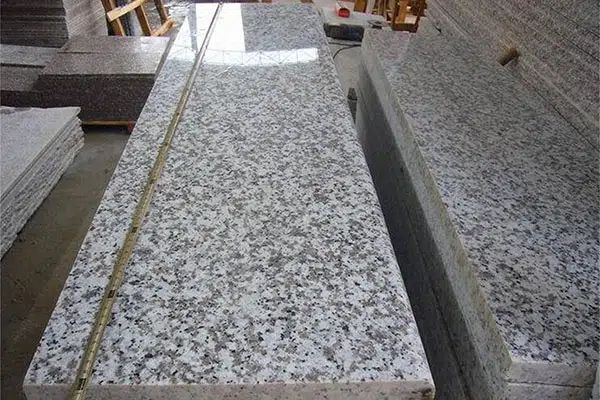
G439 Granite Stair
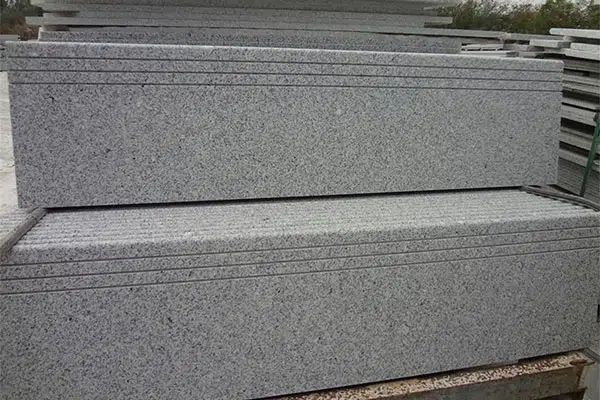
G603 Granite Stair
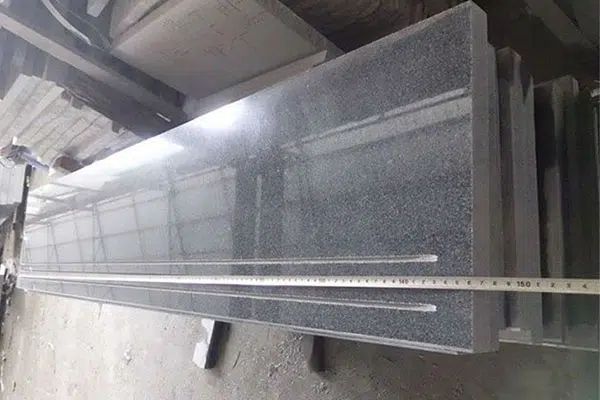
G654 Granite Stair
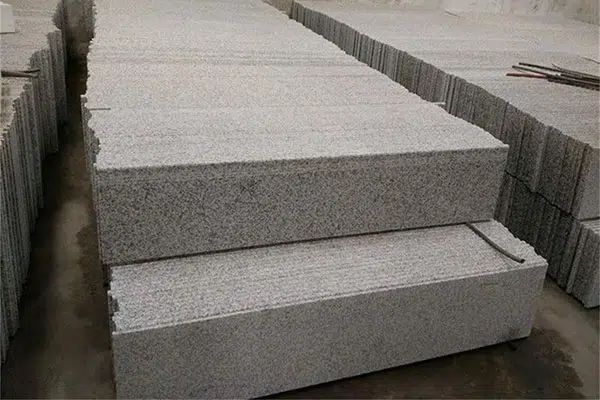
G655 Granite Stair
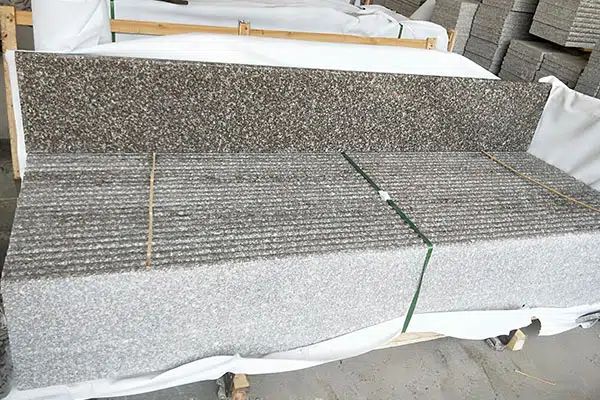
G664 Granite Stair
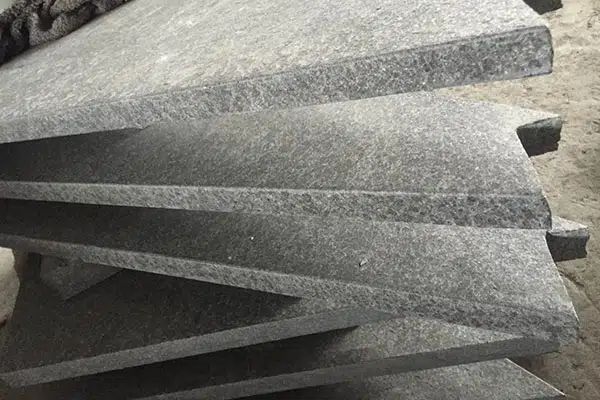
G684 Granite Stair
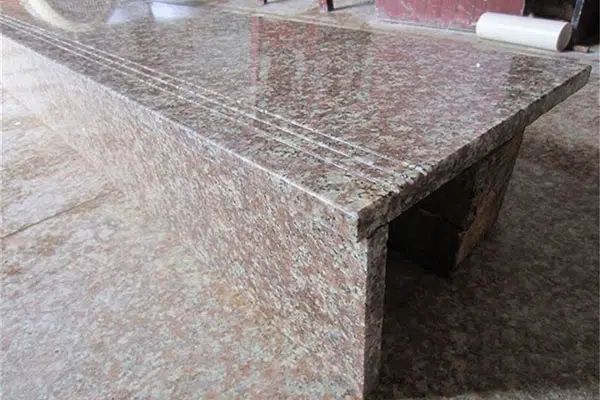
G687 Granite Stair
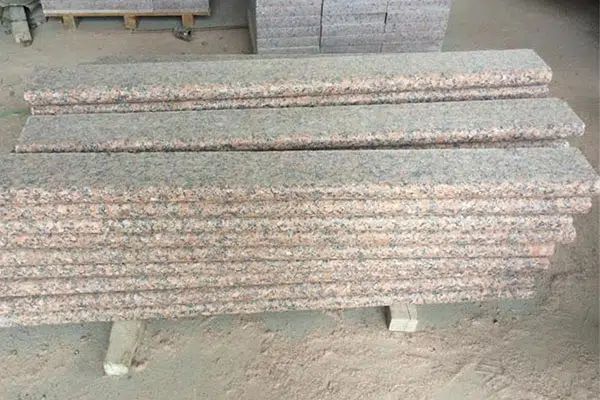
Maple Red Granite Stair
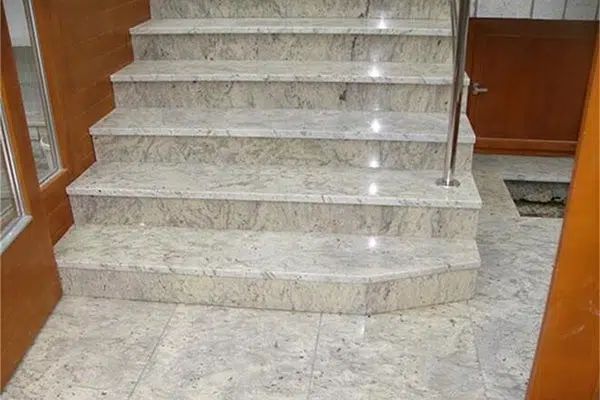
River White Granite Stair
Specifications
| Item | Length (cm) | Width (cm) | Thickness (cm) |
|---|---|---|---|
| Stair Tread | 100/110/120/130/140/150/160/180 or customized | 33/34/35 etc | 2cm, 3cm, 4cm, 5cm, 6cm, etc. As per customers' request |
| Stair Riser | 100/110/120/130/140/150/160/180 or customized | 15/17 etc | 2cm, 3cm, 4cm, 5cm, 6cm, etc. As per customers' request |
| Finish | Polished, honed, flamed, bush-hammered, flamed and brushed, sandblasted, etc. | ||
| Edge Profile | Eased, Half Bullnose, Full Bullnose, Split etc | ||
Request Free Quote
Thanks for your interest in our products. If you would like to get more information on any product, please send us an email or call us at any time, we will reply to you within 24 hours. We are looking forward to cooperating with you.
Get Instant Quote