Stone mosaic is a surface finish made from small cut pieces of natural stone mounted on a flexible backing and supplied as repeatable sheets. This page covers the marble and waterjet mosaic formats we produce in China, the material and finish choices behind them, and the specification, inspection and packing points that matter to importers, architects and project buyers.
What We Supply
Phoenix Power Stone supplies aluminium chevron and hexagon marble mosaics, Thassos hexagon mosaics, Calacatta hexagon mosaics, Arabesque waterjet patterns and artistic flower waterjet mosaics. Each order is made to the approved pattern and material, with face finish, joint gap, backing, sheet or panel format and packing confirmed before production. We quote both repeat geometric patterns and project-specific waterjet compositions for importers, architects and contract buyers.
This is a finish-product business, not a stone-block business. The buyer is approving an assembled pattern, not only a material. Two sheets made from the same marble can fail for different reasons: a wandering joint, a loose backing, an inconsistent shade sequence or an edge that was not resolved. The approved sample and shop drawing carry more weight than the stone name.
| Format | What defines it | Common interior use | Approval focus |
|---|---|---|---|
| Aluminium chevron | Angled marble pieces with aluminium detailing in a directional chevron repeat | Feature walls, vanity walls, backsplashes | Diagonal alignment, metal-to-marble junction, edge trim |
| Aluminium hexagon | Hexagon marble cells with aluminium detailing | Bathroom walls, shower walls, feature panels | Geometry, sheet flatness, cut edges |
| Thassos hexagon | White hexagon marble with no veining | Spa bathrooms, bathroom walls and decorative panels | Shade, grout contrast, wet-area slip |
| Calacatta hexagon | White-ground marble with grey veining | Feature walls, kitchens, bathroom walls | Vein sequence, batch tone, sheet layout |
| Arabesque waterjet | Curved waterjet pattern cut from marble | Feature walls, fireplace surrounds, powder rooms | Repeat, line quality, protection of fine tips |
| Artistic flower waterjet | Floral composition cut from marble | Statement walls, entry panels, reception features | Artwork scale, orientation, panel joinery |
How a Mosaic Sheet Works
Mosaic is made from small pieces of stone assembled into a repeating sheet. The individual pieces are the design unit; the sheet is the production, packing and installation unit. The backing, whether mesh, paper or another mounting system, holds the pattern and affects how the sheet sits on the adhesive. The joint gap is designed, not accidental: the spacing between pieces determines the visible line, the amount of grout and how readily the pattern reads at a distance.
A mosaic sheet is not a small tile. It is a composite that must stay flat, keep a consistent joint and hold its pieces through cutting, handling and installation. The approval should therefore cover the mounted sheet: pattern repeat, face finish, joint width, backing adhesion, edge straightness and the sequence from one sheet to the next. For a waterjet panel, the layout drawing forms part of the product.
Sheet formats vary by pattern and project. Rather than assume a module, confirm the actual sheet size, thickness and joint on the approved shop drawing. The same pattern can be produced as a standard repeat, a border set, a corner set or a site-specific panel; each is a different packing and installation problem.
Marble Choices: Thassos and Calacatta
Thassos is a Greek white marble with a pure white ground, no veining and high hardness. In a mosaic it produces a quiet field where geometry and grout line do the work; in a waterjet pattern it supplies a clean bright element. At slab level, our color guide lists Thassos at $90-180/m² FOB China for 2cm material. That is a raw-material reference, not a price for a finished mosaic sheet, which also carries cutting, assembly, mounting and packing cost.
Calacatta is an Italian white marble with a white ground and bold grey veining. Our color guide lists Calacatta at $120-220/m² FOB China for 2cm material. In mosaic work, vein direction and continuity matter at every sheet edge: a hexagon pattern breaks a vein into small pieces, while a waterjet design can use its movement as part of the composition. Plan the vein sequence before cutting and approve a dry-lay or a panel image.
Both are calcareous marbles with Mohs 3-4 hardness. They can be scratched and etched by acid, and they need sealing and prompt spill control. The material name does not fix the tone from sheet to sheet. Thassos can vary in shade even without veining, and Calacatta veining is block-specific. Reserve the material for the order and approve the actual batch, not a generic white or veined photo. [source: stone-phoenix.com]
Aluminium Chevron and Hexagon Formats
The aluminium formats combine marble fields with visible metal lines. In the chevron pattern the metal helps define the diagonal; in the hexagon pattern it can frame each cell. The metal is a second surface with its own finish, reflectivity and cleaning requirement, so the approval sample must show the complete assembly rather than a marble chip and a metal sample viewed separately.
Chevron work is directional. Set out the starting point, the direction of the point, and the treatment at internal and external corners before production. At a wall return, a niche or a window reveal, the diagonal must be planned, or a clean elevation will end in a cut line that looks accidental. Hexagon work depends on repeat alignment and edge cuts: centre the pattern on the design axis, and agree perimeter cuts in the shop drawing. Where the pattern meets a floor, ceiling or another material, a trim or border should be designed rather than improvised on site.
Confirm the intended use before specifying an aluminium mosaic for a floor. The metal detail changes wear, cleaning and fixing considerations, and a sheet developed for a wall should not be moved into a floor schedule without an assembly review. Movement and fixing compatibility between the metal and the stone should also be reviewed by the project team. We quote the version that suits the application, not a generic sheet description.
Arabesque and Waterjet Designs
Waterjet cutting allows a design to be cut from stone rather than painted or printed on it. The process suits arabesque curves, floral motifs and geometric panels: pieces are cut to the drawing, fitted together and mounted as a sheet or panel. The result is a natural stone surface with a drawn pattern, but the detail must be designed for stone. Narrow necks, sharp internal points and isolated tiny pieces create handling risk and may be strengthened, simplified or joined during development.
Arabesque patterns need a true repeat. The curve must meet the next sheet cleanly, and the border or edge condition should be part of the drawing, not resolved on site. Artistic flower panels are compositions rather than repeats: scale, orientation, centre point and surrounding field must be fixed before cutting. For a wall with a mirror, niche or lighting feature, the design should be set out around those conditions.
Waterjet is a cutting method, not an assurance that every panel will finish flat or that every design can be produced at any scale. The approved sample should show the assembled face, the joint between colors, the surface finish and the edge detail. Ask for a panel layout image at the actual viewing distance; a pattern that reads well on a small sample can become busy across a full wall.
Color, Vein and Grout-Line Planning
Color selection for mosaic is a system problem: marble field, secondary stone, aluminium detail, grout and lighting all meet within a small area. Choose the overall palette first, then decide how much contrast belongs in the pattern. A Thassos field with a dark grout reads as a drawn grid; the same field with a matching grout reads as a quiet white surface. Calacatta pieces carry their own movement, so a bold waterjet pattern can compete with the veining if the layout is not edited.
Natural stone color is not fixed. Our color guide notes that the same slab can read grey under fluorescent yard lighting, blue in north daylight and almost black under warm interior light; warm light at 2700-3000K pushes greys toward brown, and 4000K+ pushes beiges toward grey. Approve the mosaic under the final lighting, and view it vertically as well as flat. A photograph cannot reproduce how a polished face shifts with angle.
Plan the grout line at the same time as the pattern. Grout width and color change the scale of the design, the sharpness of the curves and the cleaning burden. The stone-flooring guide notes that small-format tiles and mosaics create more grout lines, which adds grip but also maintenance. For a wet floor, that trade-off belongs in the design discussion, not only in the cleaning schedule.
Vein and shade control are procurement controls. Reserve the blocks for the order, ask for a dry-lay or sheet-layout image before shipment, keep a sealed reference sample, and order 5-8% extra for cuts, edges, future repair and pattern approval. Multi-sheet patterns should be numbered and packed in installation sequence. A mosaic order is not the place to discover a shade mismatch after the boxes are opened on site.
Polished, Honed and Textured Finishes
Finish changes the way mosaic reads and the way it behaves. A polished marble face has a gloss that deepens color and veining; a honed face is matte to satin and makes the pattern quieter. For a wall, polished is common because glare and reflection can be part of the design. For a floor or shower, honed is usually more practical: our stone finish references put polished around DIN R9, with low wet slip resistance, and honed around R10, with moderate slip resistance. Mosaic geometry adds grout lines that can improve grip, but it does not replace a wet slip assessment of the assembled surface.
Marble is calcium carbonate and can be etched by acidic cleaners, wine, citrus and some grouts; seal it and clean spills promptly. A polished floor in a wet area should be reviewed carefully. Honed and textured faces hide scratching and water marks more readily, but they can hold dirt in the surface profile. Approve the actual finish on the actual stone.
Our mosaic quotations should state the face finish, the sealer schedule and the cleaning method. “Polished” and “honed” are not interchangeable descriptions just because the pattern is the same. If a project needs a different face, confirm it as a development request with a sample before the order is priced.
Floors, Walls and Feature Surfaces
Wall applications are the natural home for most marble mosaics. The material is used on bathroom walls, shower walls, vanity walls, kitchen backsplashes and fireplace surrounds. In these positions, pattern, glare and cleanability matter more than heavy point loads. A polished hexagon can look compact and crisp; a honed arabesque can feel softer; a white Thassos field lets the grout or aluminium line carry the design. Around a fireplace, confirm clearances and the full assembly with the project team.
Floor use requires more input. Marble is softer than granite and can scratch, etch and stain; small mosaic pieces and grout lines improve grip, but a wet floor also needs a tested slip surface, a sound substrate and a maintenance plan. For bathrooms, honed marble or similar stone with sealed joints is commonly used, with waterproofing beneath. In kitchens, a mosaic backsplash is a different service condition from a kitchen floor.
Marble is not the usual choice for exterior paving in freeze-thaw climates; our stone-flooring guide advises against exterior marble and limestone in that setting. If a project asks for exterior mosaic, separate the design from the engineering and obtain a material and fixing review for the actual exposure. Feature panels are the place for waterjet work. An entry wall, reception backdrop, fireplace or vanity wall can carry a floral or arabesque composition, but the panel should be designed around the room’s dimensions and site joints. The artwork should not be stretched to fit after production.
Wet Areas and Slip
Wet areas combine water, soap, stone dust and grout. The stone-flooring guide recommends slip resistance and moisture tolerance for bathroom floors, with honed marble or similar stone and sealed joints; it notes that mosaics add grout lines for grip but also more maintenance. That is a useful starting point, not a clearance for every mosaic.
For showers, specify a waterproofing membrane behind the stone, epoxy-based setting materials and a drained substrate. Confirm that the aluminium component, if present, is compatible with the wet environment and the chosen adhesive. For a shower floor, the mosaic sheet should be reviewed as an assembly: stone face, grout, adhesive, membrane and slope. A polished wall mosaic can be fine above splash level, while the floor may need a honed or textured face and a slip test. Keep the two faces in the same approved palette but allow them to differ in finish.
Pool surrounds and spas need a separate review. Marble is acid-sensitive and can stain; the selected stone, sealer and water chemistry must work together. Ask for project references and a maintenance plan rather than assuming a bathroom specification transfers to a pool deck. For interiors with steam or heavy condensation, ventilation and regular inspection of joints matter as much as the stone choice.
Substrates and Installation
Stone mosaic is only as good as the substrate and adhesive under it. The stone-flooring guide sets the working standard for natural stone: the subfloor must be rigid, flat and deflection-free; wood subfloors use a double layer of plywood with cement backer board; concrete must be clean, level and fully cured. For a mosaic, flatness matters more than for large-format stone because the small pieces and thin joints have little tolerance for lippage. The guide uses 3mm over 2m as a substrate flatness reference and 28 days as the cure period for new concrete. Follow the adhesive manufacturer’s requirements for your specific assembly.
Use a polymer-modified thin-set mortar rated for natural stone; avoid mastic or pre-mixed adhesives; for wet areas, use an epoxy-based mortar for water resistance. Back-butter where the substrate or stone requires full coverage, and work in small areas so the adhesive does not skin over before the sheet is set. Dry-lay the first sheets to plan cuts, vein direction and color balance. Cut with a wet saw and a diamond blade; mark and number sheets by position.
Grouting follows installation. The stone-flooring guide waits 24 hours after laying before grouting, uses a polymer-modified grout, and waits for the grout to cure before sealing; its sealing window is 3–7 days. For mosaic, the grout gap and grout color are part of the approved sample, so the site should not choose them without approval. Seal the stone before grouting where the supplier recommends it to prevent grout staining, and protect the finished wall or floor during the rest of construction.
Grout, Sealing and Maintenance
Grout and sealer are part of the finish. A cement grout is porous, so seal it; an epoxy grout is denser and more resistant but harder to install and less forgiving on a delicate mosaic. Use a grout color that supports the pattern: matching grout makes a field quiet, while contrast defines each piece. Trial it on a sample sheet because the same grout reads differently against white Thassos and veined Calacatta.
Seal marble after grout has cured. Our stone-flooring guide gives a 6–12 month sealing interval for marble and limestone, with pH-neutral cleaners, immediate spill cleanup and no vinegar, citrus or bleach. For high-traffic floors and wet rooms, inspect the sealer more often and reseal when water absorbs rather than waiting for a calendar date. The 15-minute water test is a practical trigger: if water absorbs within 15 minutes, reseal. Grout needs its own sealer every 1–2 years.
Daily care is simple. Dust or dry-mop floors, damp-mop with a pH-neutral stone cleaner, and use a soft brush for textured or grouted surfaces. Clean acidic spills at once; marble is acid-sensitive. For polished floors, professional honing and repolishing every 3–5 years restores high-traffic zones. For wall mosaics, inspect joints and edges at planned intervals and repair loose sheets before water gets behind them. Avoid aggressive acids, bleach and high-pressure washing on or around the stone, and bring the water temperature and cleaning method into the maintenance brief.
Quality Control and Pre-Shipment Inspection
Quality control for mosaic starts with the approved standard, not with a final walk-around. A useful inspection sequence is:
- Pattern: compare the sheet with the approved layout, including direction, repeat and edge cuts.
- Geometry: check sheet dimensions, squareness, joint alignment and flatness; a wavy sheet will telegraph through the installation.
- Mounting: check backing adhesion, loose pieces, gaps and any metal detail. Handle the sheet as it will be handled on site.
- Surface: inspect chips, cracks, fill, shade, vein sequence and finish against the sealed sample.
- Waterjet panels: check the drawing, panel numbering, joints between panels and the protection of fine tips and narrow necks.
- Documentation: confirm the material batch, test reports where specified, packing list and installation sequence.
Ask for batch-related data rather than a generic certificate. For marble, ASTM C97 covers absorption and density and ASTM C503 is a reference standard; specify whichever reports your project requires and tie them to the delivered batch. Photograph the approved sheet, the packed crates and the loading sequence. Those records are more useful than a verbal assurance when a container arrives.
Packing and Export Handling
Mosaic is a finished surface, so the packing specification should protect the face, the edges and the pattern sequence at the same time. Sheets should be packed face-to-face or with a protective interleaf, kept flat and supported so they cannot bow, and bundled by pattern and installation zone. Waterjet panels and arabesque pieces with fine tips need corner and edge protection, and the crates should be marked with the pattern, sheet number and batch. Do not break a multi-sheet pattern across cartons without a clear numbering system.
For export, confirm the timber treatment and marking required by the destination, and use a moisture barrier appropriate to the route. The packing list should reconcile sheet count, area, pattern, material, finish and spare quantity. Ordering 5-8% extra material is not only for cutting waste; it gives the client spare sheets from the same production batch for future repairs, which is particularly important when a pattern is custom.
The loading plan should avoid point loads on cartons and should let the site unload in the same sequence as the installation. Label the crates on more than one face, and photograph the packed pattern sets before closing. If the material is transferred to a consolidator, confirm that the pattern bundles stay together and that the labels remain readable.
Sampling, Custom Patterns and Production
Approval should move from material to pattern, not jump straight from a photo to a container. Start with a 10×10cm stone sample for color and finish; then approve a complete mounted sheet for pattern, joint, backing and face. For a custom waterjet design, approve the artwork at scale, the material map, the orientation, the panel joints and the installation sequence. A full-size reference panel is useful when the design has fine detail; a paper drawing alone does not show how grout and stone edges read.
Pattern development should identify the repeat, the border condition, the corner returns and the relationship to site dimensions before the cutting order is released. Custom waterjet work is a project-specific product: once the panel size, stone map and layout are approved, changes after cutting are expensive. Keep a signed sample or a sealed reference set that both parties hold, and refer to it in the purchase order.
Production planning follows the approved drawing, material reservation and finish. A repeat stock pattern has a different schedule from a bespoke floral panel; the quotation should state which route applies. For phased projects, reserve enough material for later phases at the start, so the second delivery can be matched to the first.
Writing the Mosaic Specification
Write the specification in a sequence the factory can execute:
- Material and origin: Thassos or Calacatta, with the block or lot and any grade requirement.
- Pattern: reference number, direction, repeat, border and corner details.
- Sheet or panel size, thickness and joint gap: actual dimensions on the approved drawing.
- Mounting: backing type and adhesion requirement.
- Finish: polished, honed or another approved face, with a retained sample reference.
- Color and vein: acceptable range, sealed sample and dry-lay record.
- Tests: ASTM C97 for absorption and density and ASTM C503 as a marble reference where required.
- Quantity: net area plus 5-8% spare, by pattern and installation zone.
- Packing and marking: face protection, pattern bundles and loading sequence.
- Inspection: approval points, photographs and third-party inspection if required.
Specify the pattern by reference and attach the drawing; a name such as “arabesque” does not define a curve, a scale or a joint. State what happens if a sheet is rejected, and require replacement from the same material batch. For aluminium mosaics, name the metal finish and confirm edge and cleaning requirements in the approved sample. For wet areas, state the waterproofing and adhesive system so the mosaic is not approved in isolation.
Frequently Asked Questions
Which mosaic products do you supply?
We supply aluminium chevron and hexagon marble mosaics, Thassos hexagon mosaics, Calacatta hexagon mosaics, Arabesque waterjet patterns and artistic flower waterjet mosaics. Each is quoted as an assembled pattern with the marble selection, face finish, backing, sheet or panel format and packing confirmed against an approved sample. Repeat patterns and project-specific waterjet compositions are handled as different production routes.
Can you produce a custom waterjet design from our artwork?
Yes, subject to a drawing review. Send scalable artwork or a dimensioned drawing, the intended panel size, the stone palette and the site layout. We will return a material map and panel breakdown for approval, then make a sample or first-article panel where the design requires it. Narrow necks, tiny isolated pieces and sharp internal points may need simplification so the pattern can be cut, mounted and packed.
How do you match color and veining across sheets?
Reserve material from one block or production lot, approve a sealed reference sheet, and review a dry-lay or sheet-layout image before shipment. For Calacatta, the vein sequence is as important as the background tone; for Thassos, shade and surface consistency matter more than veining. Order 5-8% extra from the same batch for cuts and future repair. A single sample confirms direction, not the full batch, so the production record and retained sample should travel with the order.
What is the difference between polished and honed mosaic?
Polished mosaic has a glossy face that deepens color and makes the pattern crisp; honed mosaic has a matte to satin face that reduces glare and hides surface marks. Our stone finish references put polished around DIN R9 and honed around R10 for slip resistance. A mosaic’s grout lines can improve grip, but the finish, joint and installation should be assessed together for a wet floor.
Are marble mosaics suitable for showers and wet rooms?
Marble can be used in a wet room when the assembly is designed for it: waterproofing behind the stone, epoxy-based setting materials, sealed joints and a maintained sealer. Honed or textured faces are easier to justify on a shower floor than polished faces, and the actual surface should be slip-tested for the project. A wall mosaic above splash level and a shower floor are different specifications, even when they share a pattern.
Are aluminium hexagon and chevron mosaics suitable for floors?
The intended use must be confirmed against the actual construction. Some metal-and-marble assemblies are developed for walls, and the aluminium detail changes wear, cleaning and fixing considerations. Send the floor location, traffic, substrate and cleaning regime before selection. We will quote the version that suits the application rather than assume a wall sheet can be laid on a floor.
What is the minimum order and lead time?
MOQ and lead time are quoted against the pattern, marble, finish and packing because a repeat sheet and a custom waterjet panel are different production runs. We confirm the minimum with the quotation after reviewing the approved drawing and quantity schedule. For phased projects, reserve material for later phases at the start so the second delivery can be matched to the first.
What tests and documents can you provide?
Material documentation can include batch-specific absorption and density data under ASTM C97 and a reference to ASTM C503 for marble, where the project requires it. We also provide the approved sample record, material map, packing list and pre-shipment photographs. Tell us the destination and specification at RFQ stage so the required declarations and tests are included in the quotation rather than added after production.
How are mosaics packed for export?
Mounted sheets are protected face-to-face or with an interleaf, kept flat and bundled by pattern and installation zone. Fine waterjet tips and arabesque curves receive edge and corner protection. Crates are marked with the pattern, sheet number and batch, and the packing list reconciles sheet count, area, material, finish and spares. Confirm the timber treatment and marking required by the destination before shipment.
Can you send samples before a bulk order?
Yes. For color and finish, a 10×10cm stone sample is a practical start; for pattern approval, a complete mounted sheet is more useful because it shows the joint, backing and edge condition. Custom waterjet work can require a first-article panel or a printed layout for sign-off. Samples should be retained as the reference for production and inspection.
Related Guides
- Pebble Mosaic Interiors — a related look at mosaic texture, wet areas and interior detailing.
- Natural Stone Flooring Guide — substrate, installation, grouting and maintenance for stone floors.
- Stone Wall Cladding Design — wall build-ups, feature surfaces and exterior considerations.
- Stone Color Selection Guide — color families, lighting, finish and batch control.
- Marble Tiles Buying Guide — marble selection, grading and buying checks before production.
Product Gallery
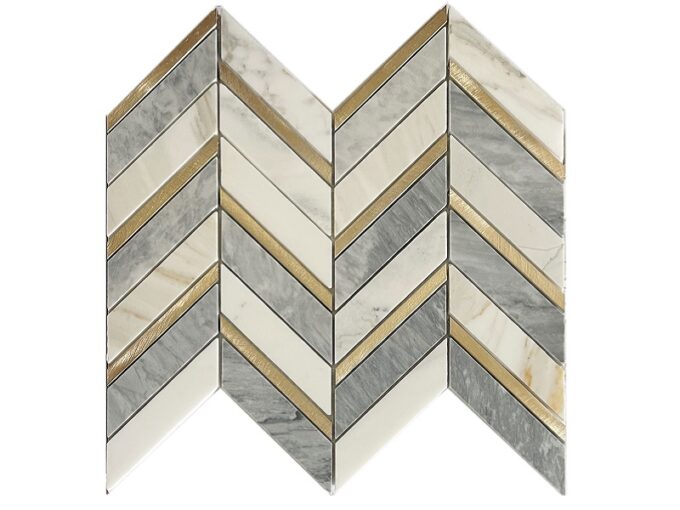
Aluminium sheveron Marble mosaic Tiles, green mosaic tile
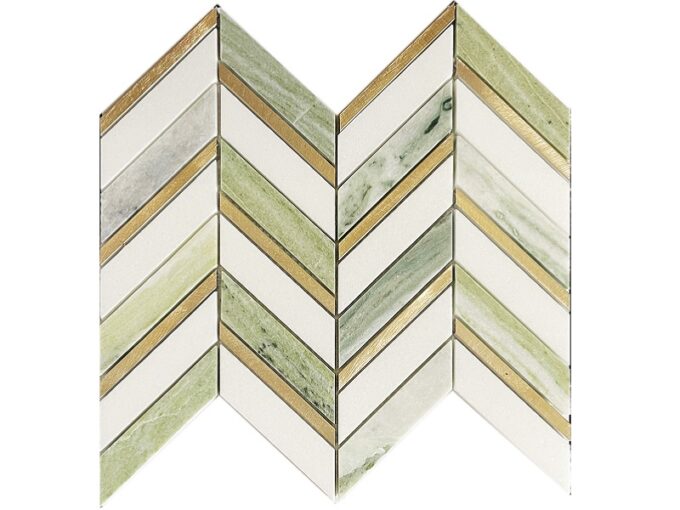
Aluminium sheveron Marble mosaic Tiles, blue mosaic tile
aluminium hexagon Marble mosaic Tiles, Thassos marble hexagon mosaic tile
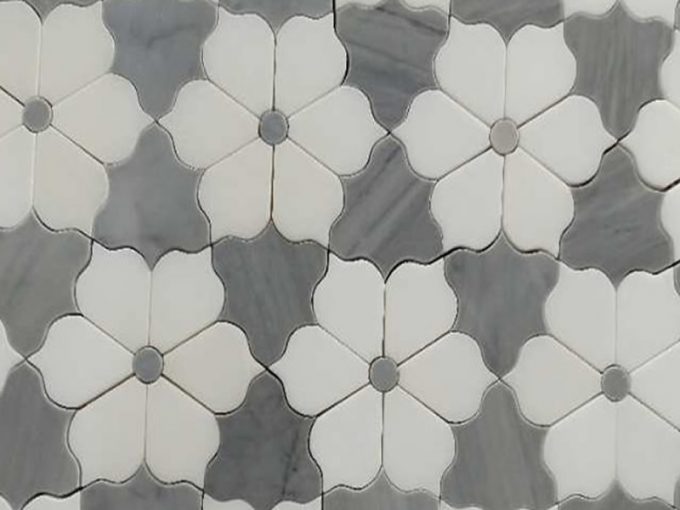
Artistic Marble Mosaic Flower mosaic waterjet mosaic Copy
aluminium hexagon Marble mosaic Tiles, Calacatta marble hexagon mosaic tile
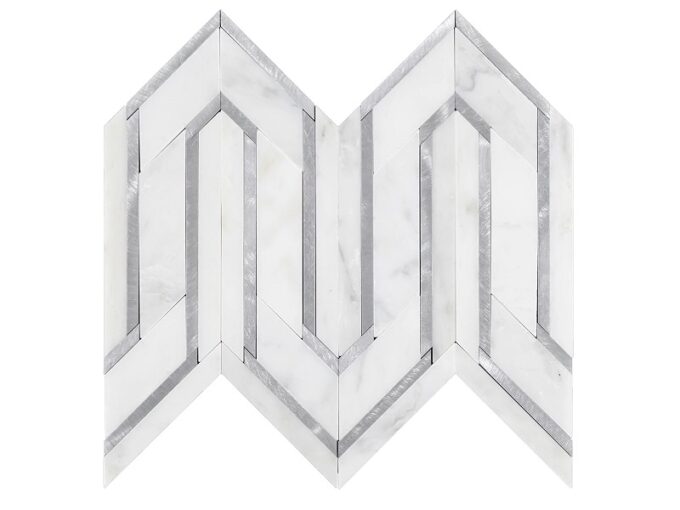
aluminium Marble mosaic Tiles, marble mosaic tile
Artistic Marble Mosaic Flower mosaic waterjet mosaic
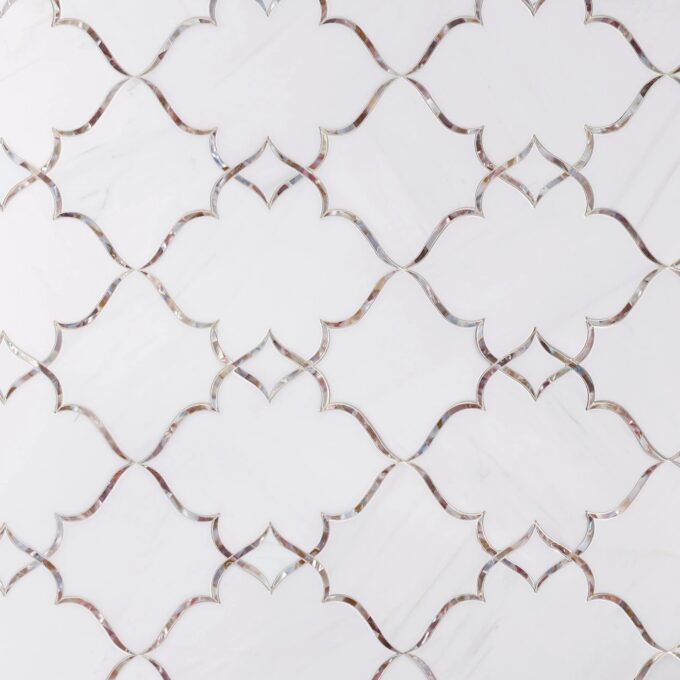
Arabesque Mosaic, artistic tile, Fashionable Waterjet White Marble Mosaic Tile For Wall
aluminium hexagon Marble mosaic Tiles, Thassos marble hexagon mosaic tile
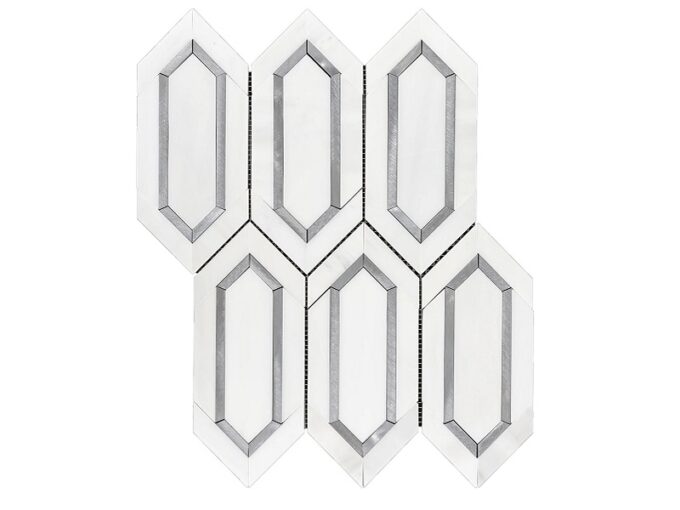
Aluminium hexagon Marble mosaic Tiles, Thassos marble hexagon mosaic tile with silver
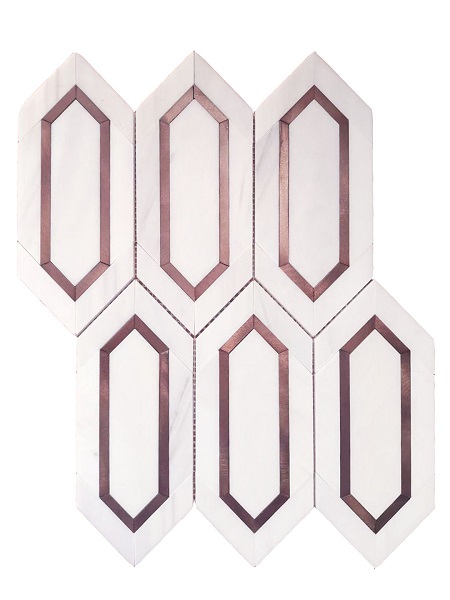
Aluminium hexagon Marble mosaic Tiles, Black marquina marble hexagon mosaic tile
aluminium hexagon Oriental white Marble mosaic Tiles, marble hexagon mosaic tile
Field Marble mosaic Tiles, Black&white marble mosaic tile
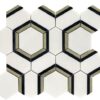
Double Ring hexagon mosaic, Thassos white hexagon Marble mosaic Tiles
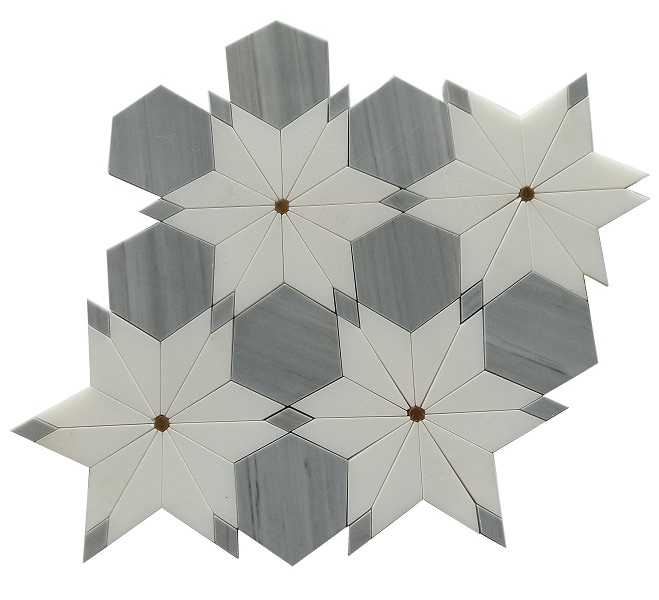
Artistic tile, Fashionable Waterjet Marble Mosaic Tile
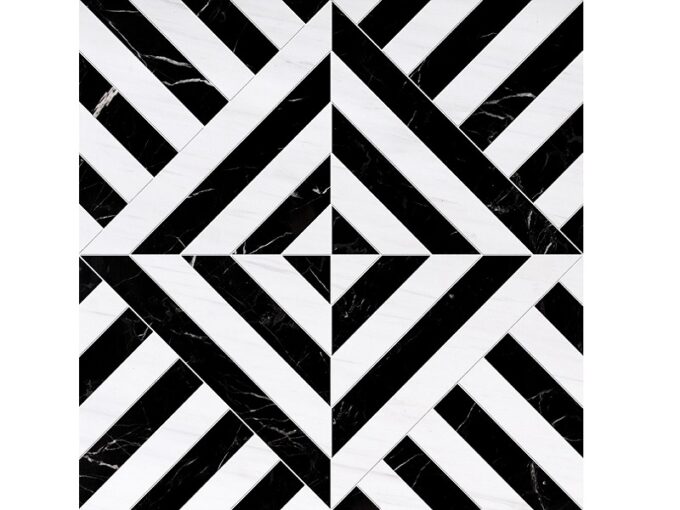
Field Marble mosaic Tiles, Dolomite marble mosaic tile dolomite
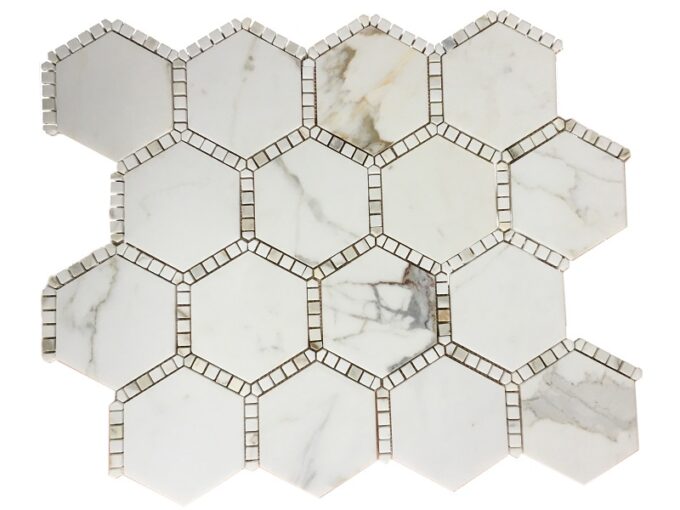
hexagon calacatta Marble mosaic Tiles, Calacatta white marble hexagon mosaic tile
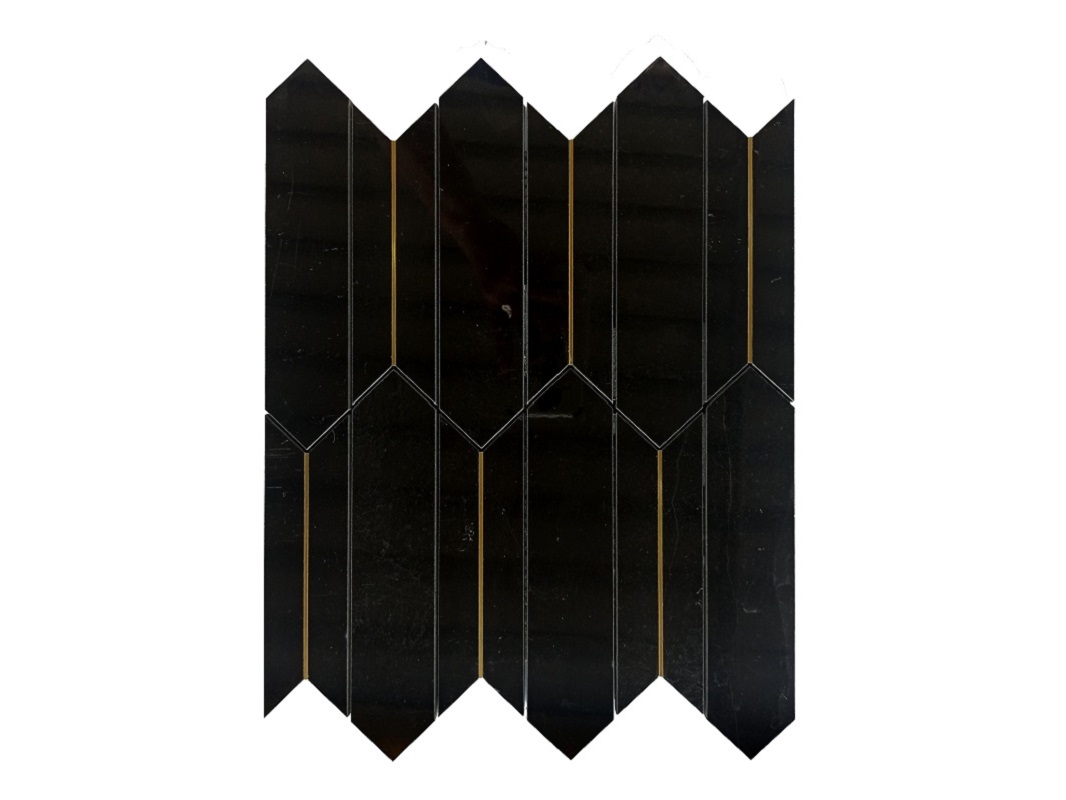
Artistic tile, Hexagon mosaic, Fashionable Waterjet Marble Mosaic Tile
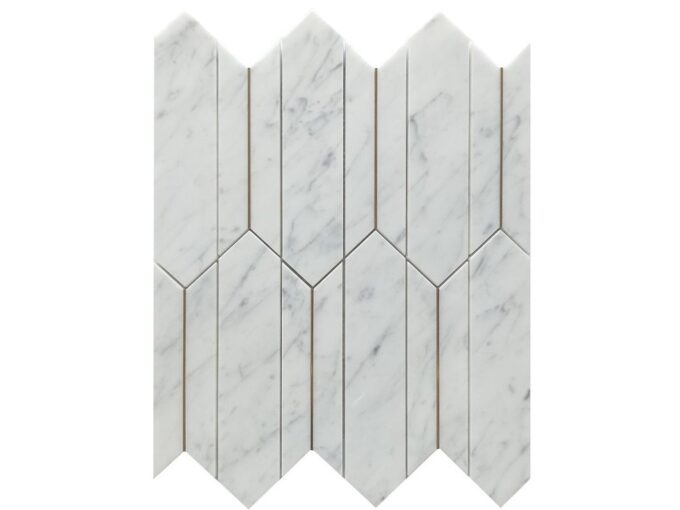
Artistic tile, Hexagon mosaic, Fashionable Waterjet, oriental white Marble Mosaic Tile
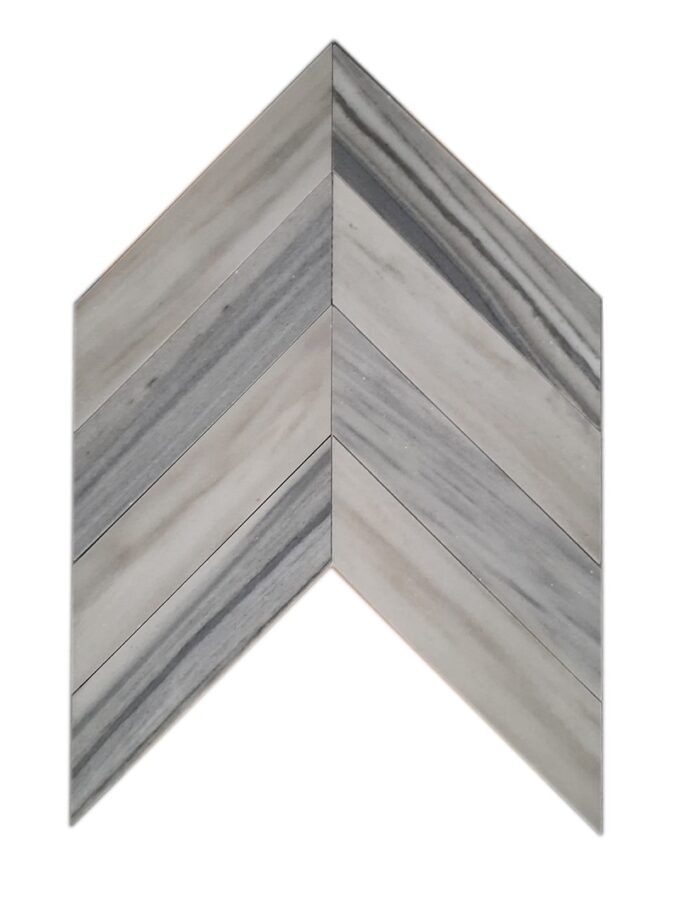
Big sheveron Skyline bluetone Marble mosaic Tiles
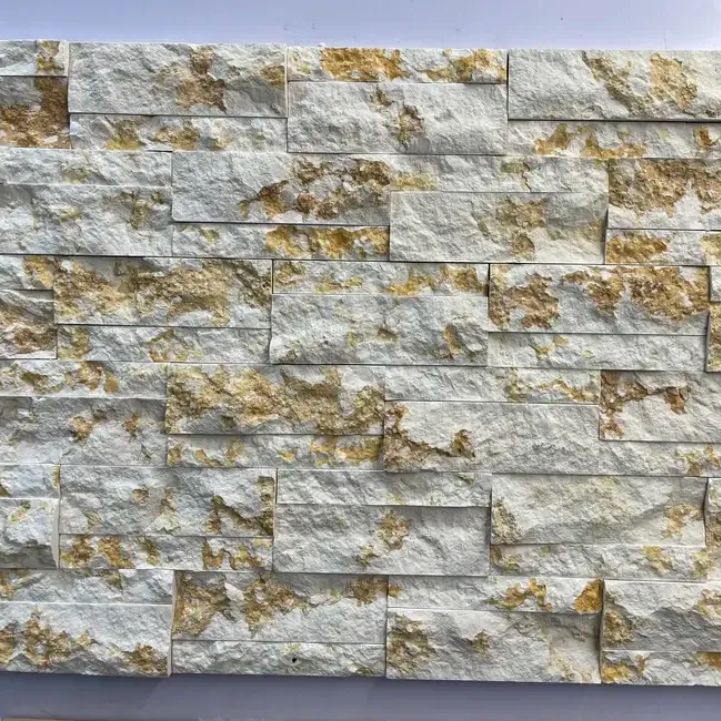
Exterior Outdoor Villa Garden Wall Tile Convex Natural Stone Cultural Stone Wall Panel
Field Marble mosaic Tiles, Blue&grey marble mosaic tile
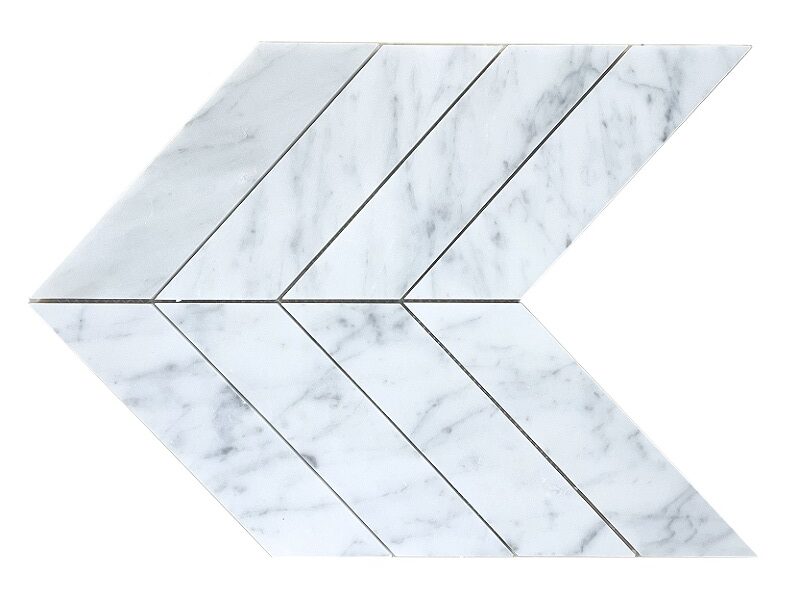
Big sheveron carrara white Marble mosaic Tiles
Field Marble mosaic Tiles, Bardiglio marble mosaic tile
mother of pearl Capiz White Mosaic Tile For Wall, furniture
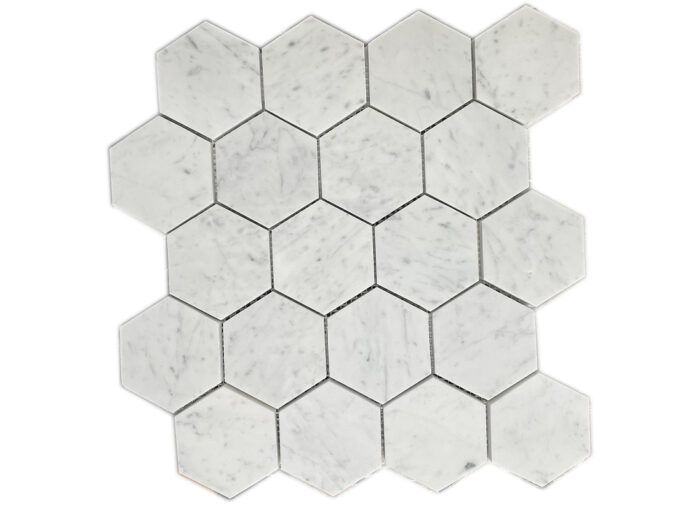
hexagon Carrara Marble mosaic Tiles, white marble hexagon mosaic tile