The Challenge of Choosing Stone Colors
Stone color selection is the process of matching a natural stone's color family, veining pattern, and surface finish to a project's light, cabinetry, and application — while confirming that the material can be supplied consistently, in the required quantity, from the same quarry block.
Walk into any stone yard and you will face hundreds of slabs in dozens of colors. The sheer variety is overwhelming. Unlike paint, you cannot simply repaint if you choose wrong. And unlike furniture, you cannot move it. The stone you choose will be part of your home for decades.
★ Key Takeaways
- Supply depth decides risk, not beauty. Greys and beiges (G603, G654, G682, Crema Marfil) are cut year-round by hundreds of factories; blues, greens, and reds come from a handful of quarries.
- Finish changes color as much as color does. Specify the two together in the RFQ, never separately.
- Batch variation is a contract problem. Reserve the block, approve a dry-lay photo, sequence container loading.
- Neutrals resell; statement colors do not. Buy blue, green, red, and premium white against confirmed orders, not for stock.
- Verify before committing. A retained physical sample plus batch ASTM C97 data settles most color disputes before they start.
This guide organizes stone colors into clear categories, shows what works with different cabinet and floor colors, and shares lessons from designers and fabricators who match stone to interiors every day.
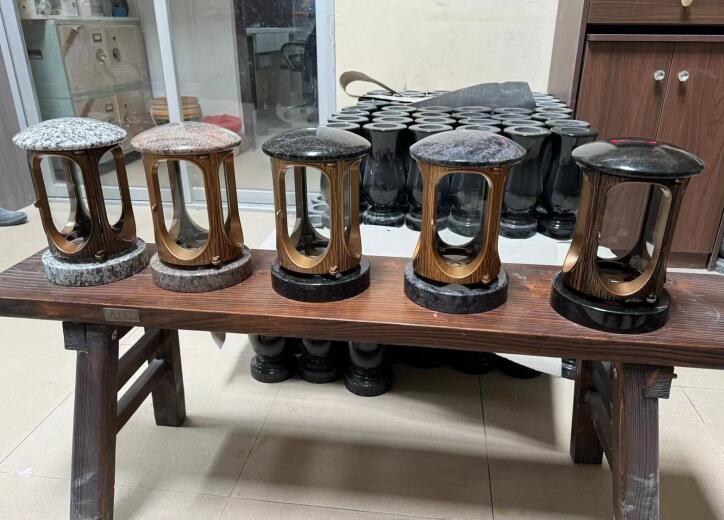
Natural stone colors range from pure blacks to vibrant golds — each creates a completely different atmosphere.
The Stone Color Spectrum: A Working Classification
For procurement purposes, natural stone colors fall into nine working families. The classification is commercial rather than aesthetic: the family determines how many quarries can supply the color, how much variation to expect between blocks, and how the material behaves across hundreds of square meters rather than on one sample tile.
| Family | Most-Traded Names | Main Origins | Supply Depth |
|---|---|---|---|
| Black | Absolute Black, Shanxi Black, Nero Marquina | India, China, Spain | Deep for solid; thin for veined |
| White | Carrara, Calacatta, Statuario, Thassos | Italy, Greece, Turkey, China | Deep at entry level, thin at premium |
| Grey | G603, G654, Bianco Sardo, Pietra Grey | China, Italy, Iran | Deepest of all families |
| Beige & Cream | Crema Marfil, G682, Travertine | Spain, China, Turkey | Deep |
| Gold | G682 Yellow Rust, Giallo Ornamental, Tan Brown | China, Brazil, India | Deep to moderate |
| Blue | Blue Pearl, Emerald Pearl, Azul Macaubas | Norway, Brazil | Thin |
| Green | Verde Ubatuba, Verde Alpi, Amazon Green | Brazil, Italy | Thin |
| Red | G562 Maple Red, Rojo Alicante, Rosso Verona | China, Spain, Italy | Moderate |
| Brown | Emperador Dark, Emperador Light, Olive Marron | Spain, Turkey, India | Deep |
Three effects separate a sample from a project. Veining is amplified by area: a bold marble that looks elegant at 60×120cm can look chaotic across a 4-meter island. Dark colors gain visual weight with area, adding formality — an asset in a hotel lobby, a liability in a small apartment. Light colors show dirt, dark colors show dust. Anchor inventory in the deep-supply families, and buy blues, greens, reds, and premium whites only against a confirmed order.
Black Stones: Absolute Black, Nero Marquina, G654, and Black Galaxy
Popular varieties: Absolute Black Granite, Black Galaxy, Nero Marquina Marble, Black Slate.
Design effect: Dramatic, modern, sophisticated. Black countertops create striking contrast against white cabinets — the most popular two-tone kitchen scheme. On floors, black stone creates a formal, gallery-like atmosphere.
| Stone | Origin | Character | Where It Works |
|---|---|---|---|
| Absolute Black | Andhra Pradesh, India | Uniform near-black dolerite; absorption 0.05-0.15% | Countertops, floors, paving, memorials |
| Shanxi Black | Shanxi, China | Coarser gabbro, occasional gold flecks | Facades, cladding, monuments |
| Nero Marquina | Basque Country, Spain | Black ground, sharp white calcite veins | Feature walls, vanities; $60-120/m² |
| G654 Sesame Black | Changtai, Fujian, China | Fine even speckle, very consistent | Paving, kerbstones, cladding |
| Black Galaxy | Andhra Pradesh, India | Black with metallic gold-copper flecks | Islands, bar tops, vanities |
Pairing: White or light grey cabinets (classic contrast); warm wood cabinets (mid-century modern); gold/brass hardware (luxe accent).
Watch out for: Black polished surfaces show every fingerprint, water spot, and dust particle. If you are particular about visible smudges, choose a honed or leathered black granite. Black stone outdoors can reach painful temperatures in direct sun.
Solid Black vs. Veined Black
Solid blacks are specification products: buyers care about consistency, absorption, and hardness, and can re-order the same color for years. Veined blacks are appearance products — the value sits in one block's vein pattern. One caution: dyed and waxed black stone is common, and the treatment can fade under UV and heat, so for exterior work ask whether the surface is untreated. See our Chinese granite overview and Absolute Black Granite.
White Stones: Carrara, Calacatta, Statuario, and Thassos
Popular varieties: Carrara White Marble, Calacatta Gold Marble, Statuario Marble, Thassos White Marble, Guangxi White Marble.
Design effect: Clean, elegant, timeless. White stone creates a sense of space and light, making rooms feel larger and brighter. It is the classic choice for luxury kitchens and bathrooms.
| Stone | Origin | Character | Typical Price (FOB China, 2cm) |
|---|---|---|---|
| Carrara (commercial) | Carrara, Italy | Soft white with light grey veining | $45-90/m² |
| Carrara (select) | Carrara, Italy | Cleaner ground, tighter veining | $90-160/m² |
| Calacatta | Apuan Alps, Italy | White ground, bold grey veining | $120-220/m² |
| Calacatta Gold | Apuan Alps, Italy | Gold and grey veining, scarce | $200-400+/m² |
| Statuario | Apuan Alps, Italy | Bright white, dramatic grey veins | $150-300/m² |
| Thassos | Thassos, Greece | Pure white, no veining, very hard | $90-180/m² |
| Guangxi White | Guangxi, China | White to off-white, grey veining | $25-50/m² |
| Panda White | Sichuan, China | White with bold black veining | $40-80/m² |
Pairing: Navy or charcoal cabinets (high contrast); natural oak (warm balance); black hardware (modern edge).
Watch out for: White marble stains and etches easily. It requires sealing and careful maintenance, and is not ideal for high-use kitchen countertops unless you accept visible patina.
The largest price driver in white stone is not whiteness but vein character — whether the veins run grey or gold. Grey-veined material (Carrara, Calacatta) is the mainstream luxury look and is widely imitated by quartz and porcelain; gold-veined material is genuinely scarce and sits at the top of the market. The B2B trap is substitution: several Chinese and Turkish quarries sell white marbles under Italian-sounding trade names, legitimate at their own price points but never to be quoted against Carrara or Calacatta. Where provenance matters, specify origin in writing.
Grey Stones: G603, Bianco Sardo, Bardiglio, and Pietra Grey
Popular varieties: G654 Sesame Grey Granite, Silver Cloud Granite, Pietra Grey Marble, G684 Pearl Black (dark grey).
Design effect: Understated, versatile, professional. Grey is the most flexible stone color — it works with virtually any cabinet color and design style from traditional to ultra-modern. Grey stone is the safest choice when you are unsure.
| Stone | Origin | Character | Indoor / Outdoor |
|---|---|---|---|
| G603 | Quanzhou and Changtai, Fujian, China | Light grey, medium grain, very uniform | Both; global paving standard |
| G654 Sesame Grey | Changtai, Zhangzhou, Fujian, China | Medium to dark grey, fine grain, consistent | Both; top Chinese paving export |
| Bianco Sardo | Gallura, Sardinia, Italy | White to light grey, biotite speckle | Both; frost resistant |
| Bardiglio | Carrara district, Italy | Soft blue-grey with darker veining | Indoor; freeze-thaw care needed |
| Pietra Grey | Isfahan, Iran | Charcoal with fine white veining | Indoor; floors, vanities, walls |
Pairing: White cabinets (clean and classic); navy cabinets (sophisticated); warm wood (balanced and natural); black cabinets (bold and contemporary).
Grey granite from China — particularly G654 (Sesame Grey) from Fujian — is one of the most popular paving and cladding stones globally, valued for its consistent medium-grey color, fine grain, and competitive pricing.
Grey granite is where volume stone business lives: G603 and G654 are quarried in the largest blocks and the widest range of finishes, which is why they dominate municipal paving, airport cladding, and large residential developments. Flamed and bush-hammered finishes deliver the wet slip resistance that exterior horizontal surfaces require and polished stone cannot provide. See our Natural Stone Paving Guide.
Beige, Cream, and Gold Stones: Crema Marfil, G682, and Travertine
Popular varieties: Tan Brown Granite, G682 Yellow Rust Granite, Santa Cecilia Granite, Crema Marfil Marble, Emperador Marble.
Design effect: Warm, inviting, traditional. Gold and brown stones create a natural, grounded feeling that synthetic materials cannot replicate. They work beautifully in Mediterranean, Tuscan, and traditional American homes.
Pairing: Cream/off-white cabinets (warm harmony); medium wood cabinets (traditional elegance); black accents (grounding contrast).
Note: Brown and beige granites are generally among the most affordable granite colors due to abundant supply. They offer excellent value for budget-conscious projects.
Beige and cream read as neither a trend nor a statement, which is why they dominate developer housing, rental portfolios, and hotel refurbishment specifications. The price ladder is wide: Crema Marfil quotes $35-65/m² FOB China, travertine $19-43/m², and Emperador Light $25-62/m², with G682 Yellow Rust and Giallo Ornamental in the value-to-mid granite tier. See our Chinese marble overview.
Blue Stones: Blue Pearl, Swan Blue, and Labradorite
Popular varieties: Blue Pearl Granite, Labradorite Blue, Azul Macaubas Quartzite, Sodalite Blue Granite.
Design effect: Unique, luxurious, conversation-starting. Blue stone is rare in nature, making it one of the most prized and expensive stone categories. A blue granite or quartzite island makes an unforgettable statement.
Pairing: White cabinets (lets the blue be the star); light grey (subtle backdrop); brass/gold fixtures (warm contrast against cool blue).
Cost note: Blue and exotic granites typically cost 2-4x standard colors. Budget accordingly — this is statement stone, not background stone.
Blue Pearl and Emerald Pearl are trade names for larvikite, quarried around Larvik in southern Norway since the 1880s; its shimmer is labradorescence, an optical effect inside microscopic feldspar lamellae rather than a pigment. It is directional and strongest on polished surfaces, so a honed Blue Pearl reads as a quiet grey stone, and photographs are unreliable from the wrong angle. Norwegian block production is concentrated in roughly twenty quarries, so availability of a specific grade can tighten without warning; Chinese and Brazilian alternatives (Swan Blue, Azul Macaubas quartzite) form a second price tier.
Green Stones: Verde Ubatuba, G562, and Verde Alpi
Green is the most polarising family in natural stone — strong in bar tops, libraries, and dark kitchens, avoided in volume residential work. Verde Ubatuba is a Brazilian charnockite traded as granite, quarried near Ubatuba in Sao Paulo state; the original quarrying was curtailed by protection of the Serra do Mar reserve, and material now reaches the market as Verde Bahia, Uba Tuba, and Amazon Green. Verde Alpi, also sold as Verde Aver, is a dark green serpentinite from the Aosta Valley in Italy, classified as serpentinite rather than marble under European standards though widely traded as "green marble." Note the naming trap: G562 is not a green stone — it is Maple Red, a brown-red granite from Cenxi in Guangxi. Green works as a jewel rather than a field: a Verde Alpi reception desk reads as deliberate and expensive, while a green residential floor carries hard-to-resell 1980s associations.
Red and Brown Stones: Rosso Verona, G562, Emperador, and Olive Marron
Red and brown are the most regionally specific families in the trade. They sell strongly in Southern Europe, the Middle East, Latin America, and traditional North American interiors, and poorly in Nordic and minimalist markets — which makes them strong project materials and poor speculative inventory. G562 Maple Red is quarried at Cenxi in Guangxi, China, and supplies paving, cladding, and monuments at value-tier pricing. Rojo Alicante from Spain is a deep red limestone with white calcite veins, still strong in Spanish and Gulf markets, while Rosso Verona from northern Italy is a warm brick-red nodular limestone for traditional flooring. On the brown side, Dark Emperador (Spain and Turkey) at $40-80/m² FOB China remains one of the most consistently re-ordered countertop browns, and Emperador Light at $25-62/m² makes hotel corridor flooring viable. Olive Marron is an olive-brown marble sold under loosely applied trade naming — confirm the block origin in writing. Red is the family most resistant to color standardization, so block reservation and dry-lay approval are not optional on multi-container work. See Granite vs Marble vs Quartz.
How Color Interacts with Light and Space
Stone color is not a fixed property; it is a relationship between the material and the light falling on it. The same slab reads grey under fluorescent yard lighting, blue in north-facing daylight, and nearly black under warm interior lighting. Five variables explain most of the surprises. Reflectance: honed and leathered surfaces read one to two shades darker than polished, so in a small room choose a lighter color or a polished finish — never both dark and matte. Room size: dark shrinks a small room, light expands it, and the effect reverses in very large spaces. Light direction: north light is cool and blue-shifted, amplifying greys; south light is warm and amplifies beiges. Orientation: horizontal surfaces read brighter while vertical surfaces show veining more strongly, so view slabs upright as well as flat before approving a book-match. Color temperature: 2700-3000K warm light pushes greys toward brown and 4000K+ pushes beiges toward grey, so approve stone under the lighting of the finished space.
Two rules prevent most color complaints. Never approve a stone from a single photograph — images cannot reproduce the way polished stone shifts with viewing angle. And always view the shortlist in the lighting where it will live: take the sample to site and look at it beside the cabinet door and floor sample at the same time of day it will be seen.
Color Pairing: Stone with Cabinets, Flooring, and Walls
Color pairing is a discipline of contrast management. The rule most designers apply: choose one element as the focal point, keep the second quiet, and let the third match one of them. In a kitchen the stone is usually the focal point, which means the flooring and walls should be the quiet elements.
| Stone Color | Cabinet Color | Flooring | Best Room |
|---|---|---|---|
| Black (Absolute Black) | White or off-white | Light oak or pale porcelain | Kitchen, bar, bathroom |
| Black veined (Nero Marquina) | Warm walnut, brass trim | Dark timber or black tile | Bathroom, powder room |
| White (Carrara, Thassos) | Navy, charcoal, espresso | Mid-tone timber or grey stone | Kitchen, bathroom, laundry |
| White gold-veined (Calacatta) | Cream, sage, natural oak | Warm limestone or travertine | Kitchen island, feature bath |
| Grey (G603, Bianco Sardo) | Any — white, navy, black, wood | Grey stone, porcelain, timber | All rooms; exterior paving |
| Beige / cream (Crema Marfil) | Cream, off-white, medium wood | Beige travertine or porcelain | Living room, hotel corridor |
| Gold (G682, Giallo Ornamental) | Medium oak or cream | Warm beige tile or stone | Traditional kitchen, staircase |
| Blue (Blue Pearl, Azul Macaubas) | White or pale grey | Pale timber or light grey stone | Island, reception, bar |
| Green (Verde Ubatuba, Verde Alpi) | Dark timber, black, brass | Dark timber or dark stone | Bar, library, reception |
| Red (G562, Rojo Alicante) | Cream, oak, off-white | Warm neutral or terracotta | Traditional kitchen, stairs |
| Brown (Emperador, Tan Brown) | Cream or medium wood | Beige tile, timber, brown stone | Living room, hotel floor |
Two cross-checks make the table usable on a real project. First, match vein scale to room scale: a fine-grained, low-contrast stone (G603, Giallo Ornamental, Crema Marfil) can cover a large floor without visual noise, while a large-pattern stone (Calacatta, Rojo Alicante, Verde Alpi) belongs on a surface read in a single glance. Second, check the hardware: brass pulls warm stones warmer, chrome pushes everything cooler — the cheapest element to change and the fastest way to fix a palette that is nearly right.
Finish Changes Everything: Polished, Honed, Brushed, and Leathered
The same block finished four ways produces four products that read as different colors, carry different slip ratings, and require different maintenance. Finish is specified together with the stone in a professional RFQ — never left to the factory's default.
| Finish | Appearance | Slip Resistance | Best Application |
|---|---|---|---|
| Polished | Glossy, mirror-like; deepens color | Low, around DIN R9; slippery wet | Interior counters, walls, feature floors |
| Honed | Matte to satin; reads one to two shades lighter | Moderate, around R10 | Interior and bathroom floors, counters |
| Brushed | Satin, subtly textured, aged | Moderate to good, around R11 | Interior and exterior floors, paving |
| Leathered | Matte with a dimpled, leather-like texture | Medium-high to high, R10-R11 | Kitchen islands, bar tops, outdoor kitchens |
| Flamed | Rough, rugged, non-reflective | Very high, R11+; wet DCOF above 0.65 | Exterior paving, steps, pool surrounds |
The cost dimension is modest but real. Polished is the default and normally included; honed is usually priced the same; brushed, leathered, and sandblasted add a small per-square-meter charge. Two decisions matter most. Slipperiness: polished stone should never be specified for an exterior horizontal surface or a wet-area floor, regardless of how the color looks on a sample. Color reading: honed dark stone reads softer and less formal than polished, and leathered black granite hides the fingerprints that make polished black a maintenance complaint. See the Outdoor Kitchen Stone Guide and our countertop range.
Batch Variation and Color Consistency
Natural stone color varies between quarry blocks because the geology varies: mineral composition shifts across a deposit, and blocks from different benches can differ measurably in tone. This is normal geology, not a defect. What matters commercially is whether the variation is controlled — whether all material in a project comes from blocks selected, tested, and approved together. Variation compounds: a single block yields roughly 60-100 m² of 2cm slabs, while a mid-size hotel project can consume eight to twelve containers, or 4,000-6,000 m².
How to Specify Color Consistency
Five controls do most of the work. Name the block, not just the stone: ask the supplier to hold the specific blocks reserved for your order. Require dry-lay photographs or video before shipment, with slabs laid out together as a set. Specify grade and face explicitly: Grade A/B/C and the finished face both change apparent color, and an unspecified RFQ invites the cheapest material that fits the description. Approve a sealed reference sample that both parties retain. Sequence container loading in installation order where a project spans several shipments, record the batch number on every packing list, and order 5-8% overage.
Application Guide by Space
The table below consolidates the recommendations in this guide into a per-space specification, written from the perspective of what is supplied, installed, and accepted in volume commercial and residential work.
| Space | Recommended Colors | Finish | Key Constraint |
|---|---|---|---|
| Kitchen countertop / island | Carrara, Calacatta, Absolute Black, Pietra Grey | Polished or honed; leathered for black | Acid resistance — granite over marble |
| Bathroom vanity and floor | Carrara, Thassos, Bardiglio, Crema Marfil | Polished walls, honed floors | Never polished on a wet floor |
| Living room floor | Crema Marfil, travertine, G603, Emperador Light | Honed, brushed, or polished by traffic | Block reservation above ~500 m² |
| Hotel / office lobby | G654, G684, Pietra Grey, Calacatta panels | Polished floors; flamed entrances | Abrasion and entrance slip rating |
| Exterior facade cladding | G603, G654, Shanxi Black, G682 | Polished for rain-screen; flamed for solid | Absorption at or below 0.3-0.5% |
| Exterior paving and steps | G603, G654, G682, G684, G562 | Flamed, bush-hammered, sandblasted | Wet DCOF above 0.60 |
| Staircase and treads | G603, G654, Crema Marfil, Emperador Light | Honed or flamed treads, polished risers | Anti-slip inserts on exterior stairs |
Three constraints dominate acceptance on site: slip resistance on any exterior horizontal surface, absorption in freeze-thaw climates, and color consistency wherever one material spans more than one room. All three are settled by specification before production, not by inspection after delivery.
Designer Tips for Color Selection
- Start with your cabinets, not your stone. Cabinets cover more visual area and are harder to change. Choose cabinets first, then bring a door sample to the stone yard.
- View slabs vertically, not horizontally. Stone looks different when installed on a vertical backsplash vs a horizontal counter. Ask to see slabs propped upright.
- Check in multiple lights. The same granite can look grey under fluorescent yard lights, blue in natural daylight, and nearly black under warm kitchen lighting. View your shortlisted slabs in at least two different lighting conditions.
- Consider the whole room. Your countertop needs to work with cabinets, flooring, backsplash, wall color, and adjacent rooms. Bring samples of all materials to the stone yard.
- When in doubt, go simpler. A dramatic, heavily-veined stone looks amazing in the showroom but can dominate and fatigue in daily life. Simpler stones age better in most homes.
Further Reading
Related articles: Granite vs Marble vs Quartz · Absolute Black Granite: Elegance and Application · Marble Price Guide 2026 · Carrara vs Calacatta Marble · Soapstone Guide: Zero-Maintenance Natural Stone · Marble Tiles: Selection, Installation & Maintenance · Natural Stone Paving Guide · Outdoor Kitchen Stone Guide
Product references: Chinese Granite · Chinese Marble · Countertops · Slabs
External references: ASTM C615 Granite Standard · ASTM C503 Marble Standard
Frequently Asked Questions
How do I keep stone color consistent across multiple containers?
Reserve specific blocks for the whole order and hold them for the duration of production — that is the only control that works. Require a dry-lay photograph or video before each shipment, approve a sealed reference sample that both parties retain, load containers in installation order, and order 5-8% overage.
What is the MOQ for colored granite and marble from China?
The standard minimum is one 20ft container — roughly 400-500 m² of 2cm slabs, or 20-27 tonnes. Trial orders of 20-50 m² are often accepted for stocked colors such as Crema Marfil, Emperador, G603, and G654, and 10×10cm samples are usually free with buyer-paid courier. Blues, greens, and premium whites are frequently quoted only against a full-container commitment.
Which stone colors hold resale value best?
Grey, beige, cream, and white. These families are acceptable across markets, cultures, and design styles, which is why they dominate developer housing, rental portfolios, and hotel refurbishment specifications. Gold, green, and red are strongly regional and period-linked — excellent in the right project, difficult to resell in the wrong market.
How much do colored stones cost compared with standard grey or beige?
Using 2026 FOB China ranges for 2cm polished slabs: granite as a category runs about $25-80/m², Crema Marfil $35-65/m², Emperador Light $25-62/m², Carrara commercial grade $45-90/m², and Calacatta $120-220/m². These are typical industry ranges for guidance only — always request a current quotation with grade, finish, thickness, and format specified.
Can a supplier match stone color from a photo or a physical sample?
A physical sample, yes — with the caveat that natural stone varies between blocks, so a sample establishes family and tone rather than an exact match. A photograph, no: images cannot reproduce how polished stone shifts with viewing angle, and Blue Pearl looks like plain grey granite from the wrong angle. The professional chain is a sample for tone, slab photos or video of the production blocks, then a retained control sample from the shipped batch.
Which stone colors are safest for exterior and freeze-thaw climates?
Light-to-medium grey granites: G603, G654, G684, and G682 are produced in container volumes, hold their color outdoors, and take flamed and bush-hammered finishes that provide the grip exterior surfaces require. Marble is a poor exterior choice in freeze-thaw climates; if it must be used outside, specify water absorption at or below 0.3% and request the ASTM C97 report for the actual batch.