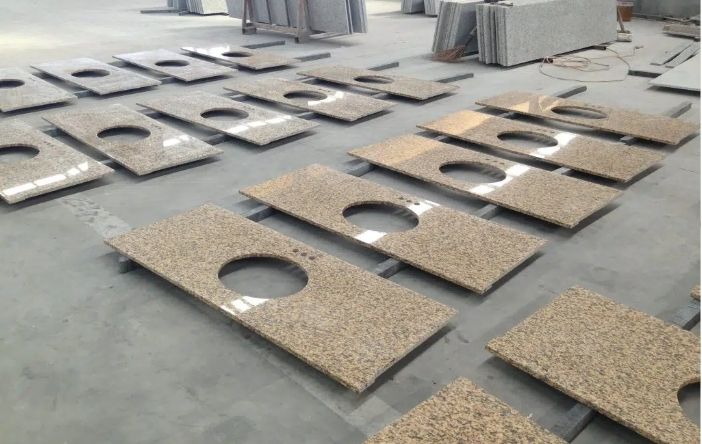
Three countertop materials, three different experiences. Choose based on how you actually use your kitchen.
★ Key Takeaways
- Choose Granite if:You cook frequently, want the best value-to-durability ratio, love natural uniqueness, and don't mind annual sealing. Granite is our top recommendation for 80% of kitchen countertop projects.
- Three countertop materials, three different experiences. Choose based on how you actually use your kitchen.
- Granite's exceptional hardness (6-7 on the Mohs scale) makes it the most durable natural stone countertop option. It resists scratches from knives and daily use, withstands direct heat from pots and p
- No material matches marble's luminous beauty. The way light penetrates slightly into the stone surface creates a depth that photographs can't capture and manufacturers can't replicate. But this beauty
Quick Comparison at a Glance
| Feature | Granite | Marble | Quartz (Engineered) |
|---|---|---|---|
| Type | 100% Natural igneous rock | 100% Natural metamorphic rock | ~93% Quartz + 7% Resin binders & pigments |
| Appearance | Speckled, granular pattern; every slab unique | Dramatic veining; luminous depth; every slab unique | Uniform, consistent pattern; mimics natural stone |
| Color Range | Huge variety: blacks, greys, blues, greens, golds, reds | Whites, creams, greys, blacks, greens, pinks | Virtually unlimited; manufacturer-controlled pigments |
| Heat Resistance | Excellent: withstands 1,200°F; hot pans directly on surface | Good: 350°F+; hot pans should use trivets | Poor: ~185°F limit; hot pans WILL damage surface |
| Scratch Resistance | Excellent: 6-7 on Mohs hardness scale | Poor to Fair: 3-5 on Mohs scale; scratches easily | Very Good: 7 on Mohs scale; difficult to scratch |
| Stain Resistance | Good when sealed; annual sealing recommended | Poor: porous; etches from acids; needs frequent sealing | Excellent: non-porous surface; virtually stain-proof |
| Maintenance | Low: annual sealing; pH-neutral daily cleaning | High: sealing every 3-6 months; immediate spill cleanup; professional polishing | None: wipe clean with mild detergent; no sealing ever |
| Cost (Installed/sq ft) | $40-$100 | $60-$150+ | $65-$100 |
| Lifespan | 50+ years | 20-30 years (high-maintenance); 100+ years (with patina acceptance) | 15-25 years |
| UV/Outdoor Use | Excellent: UV-stable; suitable for outdoor kitchens | Good but weathers over time | Poor: resin yellows and degrades in sunlight |
| Eco-Friendliness | Natural stone; quarrying has environmental impact; extremely long lifespan | Natural stone; limited quarry sources; long lifespan | Contains petroleum-based resins; not biodegradable; shorter lifespan |
Deep Dive: Durability & Maintenance
Granite: The Workhorse
Granite, marble, and quartz represent the three most specified countertop materials in residential and commercial construction, each with fundamentally different properties. Granite is 100% natural igneous stone with superior heat and scratch resistance. Marble is natural metamorphic stone prized for its unique veining but prone to etching and staining. Quartz is an engineered composite (93% crushed quartz + 7% resin binder) offering zero-maintenance uniformity but limited heat resistance.
Marble: The Beauty Queen
No material matches marble's luminous beauty. The way light penetrates slightly into the stone surface creates a depth that photographs can't capture and manufacturers can't replicate. But this beauty comes at a practical cost. Marble is calcium carbonate — chemically similar to chalk — and dissolves on contact with acids. A splash of lemon juice, a drip of wine, or a vinegar-based cleaner will etch the polished surface within seconds, leaving a permanent dull spot. Marble countertops require a philosophical commitment: either you maintain them obsessively, or you accept that they will develop a patina of wear that some consider beautiful and others consider damage.
Quartz: The Pragmatist
Engineered quartz offers the closest thing to a "no-thought-required" countertop. It doesn't need sealing, resists stains, and looks consistently uniform. The trade-offs are significant but often misunderstood: quartz CANNOT handle heat. Placing a hot pan directly on quartz will scorch the resin binder, leaving a permanent yellow-brown mark that cannot be repaired. Quartz also cannot be used outdoors or in direct sunlight — UV exposure degrades the resin, causing discoloration. And when damaged, quartz cannot be refinished like natural stone. For busy households that prioritize low maintenance over heat resistance and authenticity, quartz is the clear winner.
Cost Comparison: Total Project Budget
Material cost is only part of the picture. A complete countertop project budget should include:
- Material: $15-$60/sq ft (granite), $20-$150/sq ft (marble), $40-$80/sq ft (quartz)
- Fabrication: $15-$30/sq ft (cutting, edge profiling, sink/cooktop cutouts)
- Installation: $10-$20/sq ft
- Extras: Sink cutout ($150-$300), cooktop cutout ($100-$200), upgraded edge profile ($10-$30/linear ft), removal of old countertop ($200-$500)
- Typical kitchen total (40 sq ft): Granite $1,600-$4,000 | Marble $2,400-$6,000+ | Quartz $2,600-$4,000
Best Use Cases by Room
- Heavy-use kitchen: Granite (heat + scratch resistance for serious cooking) or Quartz (if low maintenance is priority)
- Show kitchen / minimal cooking: Marble (beauty over practicality) or high-end Quartz with marble-look veining
- Bathroom vanity: Marble (low risk of acids, maximum luxury impact) or Granite (durability on a budget)
- Outdoor kitchen: Granite ONLY — marble weathers, quartz degrades in UV. Choose a flamed or leathered finish for slip resistance.
- Bar / entertainment area: Marble (theatrical, luxurious) — but seal thoroughly and use coasters religiously.
- Laundry / utility room: Granite or Quartz — prioritize durability and stain resistance over aesthetics.
Our Recommendation
Choose Granite if: You cook frequently, want the best value-to-durability ratio, love natural uniqueness, and don't mind annual sealing. Granite is our top recommendation for 80% of kitchen countertop projects.
Choose Marble if: Aesthetics are everything, you're installing in a low-wear area (bathroom), and you either commit to careful maintenance or embrace the lived-in patina. Marble is the most beautiful option — when you understand and accept its nature.
Choose Quartz if: You want zero maintenance above all else, prefer a uniform look, and are willing to trade heat resistance and outdoor compatibility for easy care. Quartz is ideal for busy families who will always use trivets for hot items.
Further Reading
Related articles: Soapstone Guide: Zero-Maintenance Natural Stone for Countertops &Outdoor Use · Marble Tiles: Complete Selection, Installation & MaintenanceGuide · Designing with Black Granite: Tips and Inspiration forYour Home
External references: ASTM C615 Granite Standard · ASTM C503 Marble Standard
No material wins every row — the right choice depends on which rows matter to you. The matrix makes that trade-off explicit.
| Factor | Granite | Marble | Quartz (engineered) |
|---|---|---|---|
| Natural material | ✓ 100% natural | ✓ 100% natural | ✗ ~93% quartz + resin |
| Hardness (Mohs) | 6-7 | 3-4 | 7 |
| Heat resistance | Excellent | Good (thermal shock risk) | Poor (185°F limit) |
| Acid resistance | Good (sealed) | Poor — etches | Good |
| Stain resistance | Good (sealed) | Poor — stains | Excellent |
| Scratch resistance | Excellent | Fair | Excellent |
| Sealing needed | Annual | 6-12 months | Never |
| UV stability | Excellent | Good | Poor — yellows |
| Color range | Widest natural | Whites, beiges, blacks, greens | Every color, perfect consistency |
| Uniqueness | Every slab unique | Every slab unique | Identical slabs |
| Lifespan | 50+ years | 20-30 years (with care) | 15-25 years |
| Resale value | High | Very high (luxury) | Moderate |
| Installed price/sq ft | $45 - $120 | $70 - $250+ | $65 - $100 |
| Outdoor use | ✓ Fully rated | ✗ Limited | ✗ Not recommended |
The full comparison for the three materials across every decision factor a buyer weights:
Head-to-Head: The 2026 Comparison Matrix
Quartz brands: Caesarstone, Silestone, Cambria, and dozens of Chinese brands (which dominate at value pricing). Quartz pricing: $65-100/sq ft installed for standard colors; premium collections higher. The material suits rental properties, low-maintenance homeowners, and designs requiring specific colors unavailable in natural stone.
- Maintenance: Zero — quartz is non-porous and never needs sealing. Daily cleaning with any mild soap. This is quartz primary selling point.
- Consistency: Perfect — every slab of a given color looks identical. Buyers who want exact color matching across a large project find quartz the only option.
- Scratch resistance: Excellent at Mohs 7 — the quartz content is harder than granite.
- Heat resistance: Poor — the resin binder burns or discolors at roughly 185°F. Hot pans on quartz cause permanent damage and typically void the warranty. This is quartz primary weakness.
- UV sensitivity: Poor — prolonged direct sunlight yellows the resin. Quartz is not recommended for outdoor kitchens or sun-exposed window sills.
- Lifespan: 15-25 years — the resin degrades over decades, unlike natural stone which lasts indefinitely. Resale value of quartz is lower than natural stone.
Quartz countertops — properly called engineered stone — are not natural stone but a composite: approximately 90-93% crushed quartz bound with 7-10% polymer resin. The manufacturing process allows consistent color and pattern that natural stone cannot offer. The performance profile:
Quartz (Engineered Stone) Deep Dive: Properties, Brands, and Performance
Marble families: whites (Carrara, Calacatta, Statuario, Thassos), blacks (Nero Marquina), beiges (Crema Marfil), and greens (Verde). Pricing spans $70-250+/sq ft installed — Carrara entry, Calacatta premium. Marble suits bathrooms, fireplace surrounds, and low-acid kitchens where appearance outweighs maintenance.
- Appearance: Unmatched — marble veining is fluid and organic; no two slabs are alike. The translucence under polish is the reason marble has been the luxury building stone for 3,000 years.
- Hardness: Mohs 3-4 — marble scratches more easily than granite. Daily use with cutting boards is essential.
- Acid sensitivity: The critical weakness — marble is calcite, which dissolves in acid. Lemon juice, vinegar, wine, and many cleaners etch marble on contact, leaving dull marks that require professional polishing to remove.
- Stain resistance: Poor to moderate — marble is more porous than granite and stains readily without vigilant sealing (every 6-12 months).
- Heat resistance: Good but thermal shock risk — hot pans can crack thin marble; use trivets.
Marble is a metamorphic rock formed when limestone recrystallizes under deep-earth heat and pressure. The recrystallization produces the interlocking calcite crystals that give marble its luminous, translucent quality — the property that makes polished marble glow with depth that granite cannot match. The performance profile:
Marble Deep Dive: Properties, Types, and Performance
Popular granite families for countertops: the greys (G654 Sesame Grey, G682 Padang), blacks (Absolute Black, Black Galaxy, G684), whites (Alaska White, Kashmir White, White Ice), and exotics (Blue Bahia, Blue Pearl). Granite pricing spans $45-120+/sq ft installed by color tier. The stone suits every room — kitchen, bathroom, outdoor kitchen, fireplace surround — making it the default natural stone for most homeowners.
- Heat resistance: Excellent — formed at temperatures above 1,200°F, granite tolerates hot pans without damage. The best heat performance of any countertop material except soapstone.
- Scratch resistance: Excellent at Mohs 6-7 — knives and daily use will not mark it. Only diamond and carbide scratch granite.
- Acid resistance: Good when sealed — granite does not etch like marble, though acidic liquids can slowly degrade the sealer and, over years of neglect, attack the stone. Annual sealing is the protection.
- Stain resistance: Moderate to good — sealed granite resists most household stains, but oil-based stains can penetrate if sealing lapses.
- Color range: The widest of any natural stone — from white (Alaska White, Kashmir White), through beige, gold, grey, brown, red, blue, to black (Absolute Black, Black Galaxy).
Granite is an igneous rock formed when magma cools slowly underground, allowing large mineral crystals — quartz, feldspar, mica — to interlock. This crystalline structure gives granite its characteristic speckled appearance and its combination of hardness (Mohs 6-7) and durability. For countertops, granite's performance profile:
Granite Deep Dive: Properties, Types, and Performance
- "Which sells best in my area?" Regional preference data shows granite leads in the South and Midwest; quartz leads in coastal metros and the West; marble dominates luxury renovations everywhere. Ask your local fabricator for their actual sales mix — it reflects your local market reality.
- "Can I see the exact slab I will get?" For granite and marble — yes, and you must. Slabs are unique; the sample in the showroom is not the slab in the yard. Reserve your chosen slab by lot number. For quartz — the sample IS the product; every slab matches.
- "Will my fabricator warranty the stone?" Fabricators warrant installation, not the stone itself. Natural stone carries inherent variation — ask about their stone-selection and fabrication warranty terms before signing.
- "What if my stone chips or cracks after installation?" Chips are repairable with color-matched resin ($100-300 per repair). Cracks may indicate structural issues — document with photos and contact the fabricator immediately; most warranty installation issues within the first year.
- "Should I buy from a big-box store or independent?" Big-box stores quote 30-50% higher for the same stone and installation. Independent fabricators with good reviews deliver the same result for less. The exception: big-box installation warranties can be easier to enforce.
Stone yard staff hear the same questions repeatedly. The answers buyers actually need:
Common Questions Buyers Ask at the Stone Yard
The 10-year math is revealing: granite costs about the same as quartz over a decade while lasting twice as long. Marble costs 2-3x more than both over 10 years — its luxury price is real, and buyers should enter with eyes open. The lowest true cost of ownership belongs to granite, and the gap widens every year the surfaces are in service.
| Cost Element (50 sq ft kitchen) | Granite | Marble | Quartz |
|---|---|---|---|
| Initial installed cost | $2,500 - $5,500 | $4,000 - $12,000 | $3,500 - $5,500 |
| Sealer (annual, DIY) | $300 (10 years) | $600 (2x/year) | $0 |
| Professional cleaning / polish | $0 - $500 | $1,000 - $3,000 | $0 |
| Etch repair (marble only) | $0 | $500 - $2,000 | $0 |
| 10-year total (est.) | $2,800 - $6,300 | $6,100 - $17,600 | $3,500 - $5,500 |
| Lifespan | 50+ years | 20-30 years | 15-25 years |
Buyers who compare only the installation quote miss half the picture. The 10-year cost of ownership tells the real story:
Cost of Ownership: 10-Year Comparison
Outdoor use eliminates quartz (UV yellows the resin). Granite is the outdoor standard — UV stable, heat-proof, frost-resistant. Marble is limited to covered outdoor areas in mild climates. The choice outdoors is simple: granite.
Outdoor Kitchens
Bathrooms favor marble — low acid exposure (most toiletries are neutral), high aesthetic value, and the stone elevates the space. Quartz is the zero-maintenance alternative. Granite in bathrooms reads as workaday. For shower surrounds, honed marble or quartz both perform; polished marble is slippery.
Bathroom Vanities
Budget and durability drive the choice. Recommended: Level 1-2 granite ($45-65/sq ft installed) — the best durability-per-dollar, highest resale recognition, and most forgiving of tenant abuse. Quartz is second; marble is wrong for rentals (maintenance-dependent tenants will ruin it).
Rental Property and Flipped Homes
Design-forward kitchens where the countertop is the centerpiece. Recommended: marble (Calacatta, Statuario) or premium granite for the natural luxury look; quartz for perfect pattern consistency. The owner who entertains and can afford maintenance chooses marble for its unmatched beauty. The pragmatic owner who loves the white look chooses quartz in a marble pattern.
The Show Kitchen / Entertaining Home
Daily high-heat cooking, cast iron, constant cleaning. Recommended: granite or quartzite. The cook who places hot pans directly on the counter needs granite heat resistance — quartz burns at 185°F and voids warranty. Granite is the serious cook stone; marble is a beautiful mistake in this kitchen.
The Serious Cook Kitchen
Daily cooking, kids, hot pans, spills. Recommended: granite (best balance) or quartz (zero maintenance). Granite handles the heat and abuse; quartz eliminates sealing. Marble is the wrong choice here — lemon juice, wine, and the chaos of family cooking will etch it within months. Choose granite if you want natural stone at the best value; quartz if zero maintenance matters more than natural material.
The Busy Family Kitchen
Kitchens are where 80% of the granite-vs-marble-vs-quartz decision happens. This room-by-room decision framework applies the material properties to real cooking scenarios:
Kitchen Countertop Selection Guide: Decision Framework
On a strict budget, Level 1 granite ($45-65/sq ft installed) delivers natural stone durability at the lowest cost. Quartz entry colors ($65-85/sq ft) cost more but remove sealing forever. Marble entry (Carrara at $70-150/sq ft) is the luxury stretch — only choose it if you accept the maintenance. The budget rule: granite for value, quartz for zero-maintenance, marble only when the budget follows the aesthetic.
How do I choose between granite, marble, and quartz on a budget?
For small kitchens, light-colored granite or quartz visually enlarges the space — white, cream, and light grey surfaces reflect light. Quartz offers the most consistent light colors and zero maintenance for compact cooking spaces where every inch works hard. Light marble is beautiful but maintenance in a busy small kitchen is demanding. Dark granite in a small kitchen risks making the space feel smaller — use it only as an accent or in well-lit galley layouts.
What is the best countertop for a small kitchen?
Yes — and the mixed approach is increasingly popular. The professional pattern: marble or quartzite on the island (the centerpiece), granite or quartz on the perimeter (the workhorse surfaces). This delivers the luxury statement where it is seen and the practical material where it is used, at a lower total cost than all-marble. Coordinate the colors — a Carrara island with G654 grey perimeter or an Absolute Black island with white quartz perimeter both read as intentional design.
Can I mix granite, marble, and quartz in one kitchen?
All three add resale value, but differently. Granite adds the most consistent value — buyers recognize and expect it in renovated kitchens, and appraisal studies show 3-7% value contribution. Marble adds premium value in luxury markets (where it signals high-end renovation) but can read as high-maintenance to mass-market buyers. Quartz adds moderate value, strongest in markets where it has become the expected standard. The resale rule: match your market — granite for broad appeal, marble for the luxury tier.
Do granite, marble, or quartz add more resale value to a home?
Granite and marble — properly maintained — last 50+ years; granite is essentially lifetime material that outlives the cabinets it sits on. Marble lasts 20-30 years in practical kitchen service before requiring restoration, but restoration returns it to near-new condition repeatedly. Engineered quartz lasts 15-25 years — the resin binder degrades over decades regardless of care. Granite is the durability winner; its 50+ year lifespan at the lowest cost-per-year is the strongest value argument in the countertop market.
Which countertop material lasts the longest?
Granite vs Marble vs Quartz FAQ: Extended Answers
Countertop preference is not uniform — it shifts by region and buyer type. US regional data shows granite strongest in the South and Midwest (where durability and value lead), quartz leading in coastal metros and among younger buyers (who prioritize low maintenance), and marble dominating luxury renovations in the Northeast and West Coast. Demographic patterns: first-time homebuyers choose quartz for zero-maintenance; established homeowners with renovation budgets choose granite for value or marble for statement; rental and flip investors choose granite Level 1-2. International differences are sharper — European kitchens favor granite and engineered surfaces, Middle East luxury projects specify marble heavily, and Asian markets mix granite volume with marble statements. For stone importers and distributors, this regional map determines inventory: a distributor serving Texas flips different stone than one serving coastal luxury renovations.
Regional and Demographic Preferences
Dark countertops — Absolute Black, Nero Marquina-style marbles, and dark quartz — are the 2026 color trend, replacing the white-kitchen dominance of the past decade. Designers pair dark stone with light cabinetry and brass fixtures for contrast. This trend favors granite and marble, whose natural dark tones have depth that engineered dark quartz lacks.
Color Trends: Dark and Dramatic
The "natural is better" movement favors granite and marble over quartz in premium renovations. Buyers increasingly value the uniqueness and authenticity of natural stone, its longer lifespan, and its resale premium. Engineered quartz retains its zero-maintenance audience but has lost the perception battle among design-forward buyers.
Natural Stone Over Engineered
Quartzite is the fastest-growing premium countertop material, taking share from both marble and engineered quartz. Buyers who want the white veined luxury look without marble maintenance are converting to quartzite in volume — fabricators report quartzite now 15-25% of premium countertop installations in major US metros, up from single digits five years ago.
The Quartzite Rise
Market data from industry sources shapes the 2026 countertop landscape. Granite held roughly 31% of the natural stone countertop market in 2025, with marble projecting a 5.78% CAGR through the late 2020s and quartzite the fastest-growing premium category. Three trends define 2026:
Countertop Trends 2026: Where the Market Is Moving
Frequently Asked Questions
What should I know about quick comparison at a glance?
The "Quick Comparison at a Glance" section above covers this topic in detail with specifications and practical guidance for B2B stone buyers.
What should I know about deep dive?
The "Deep Dive" section above covers this topic in detail with specifications and practical guidance for B2B stone buyers.
What should I know about cost comparison?
The "Cost Comparison" section above covers this topic in detail with specifications and practical guidance for B2B stone buyers.
What should I know about best use cases by room?
The "Best Use Cases by Room" section above covers this topic in detail with specifications and practical guidance for B2B stone buyers.