Why Granite is the Best Material for Tombstones
Granite is the definitive material for tombstones and memorial monuments because of its exceptional durability, weather resistance, and timeless appearance. With a hardness of 6–7 Mohs, water absorption typically below 0.3%, and proven 100+ year outdoor longevity, granite headstones withstand decades of rain, snow, sun, and freeze-thaw cycles without cracking, fading, or deteriorating — qualities no other natural or manufactured material matches at comparable cost.
★ Key Takeaways
- Lying flush with the ground, these are the most economical option and the most common in modern cemeteries. Typically 24"×12" or 28"×16" in size, flat markers are simple, dignified, and easy for cemetery staff to maintain (mowers pass directly over t
- A compact upright option with an angled face, typically 16"-24" wide and 6"-12" tall at the back, sloping down to the front. The angled face improves visibility and allows for more detailed engraving than flat markers. Popular when cemetery regulatio
- The classic vertical monument. A single granite die (the upright stone) sits on a horizontal granite base. Standard sizes range from 20"×28" to 36"×60" or larger. This is the most recognizable and popular monument style, offering ample space for engr
- A wider monument designed for two graves, typically featuring both names with individual dates or shared epitaphs. Available in upright, slant, and bevel configurations. Cost: $800-$2,500+.
- If the deceased served in the US military and received an other-than-dishonest discharge, the Department of Veterans Affairs provides a free government headstone or marker. This benefit covers: flat bronze marker, flat granite marker, upright granite
Types of Grave Markers
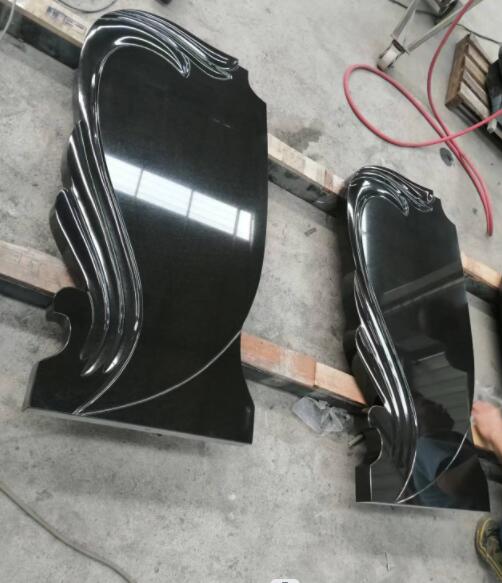
Granite is the standard for lasting memorials. Its durability keeps inscriptions legible for centuries.
Flat / Flush Grass Markers
Lying flush with the ground, these are the most economical option and the most common in modern cemeteries. Typically 24"×12" or 28"×16" in size, flat markers are simple, dignified, and easy for cemetery staff to maintain (mowers pass directly over them). Cost: $100-$1,000 depending on size and engraving complexity.
Slant Markers
A compact upright option with an angled face, typically 16"-24" wide and 6"-12" tall at the back, sloping down to the front. The angled face improves visibility and allows for more detailed engraving than flat markers. Popular when cemetery regulations restrict full upright monuments. Cost: $650-$1,500.
Bevel Markers
Similar to flat markers but slightly raised at the back (2"-4" higher than the front), creating a subtle angle. The raised profile helps shed water and provides better visibility than completely flat markers. Cost: $350-$1,500.
Single Upright Headstone (Tablet)
The classic vertical monument. A single granite die (the upright stone) sits on a horizontal granite base. Standard sizes range from 20"×28" to 36"×60" or larger. This is the most recognizable and popular monument style, offering ample space for engraving, epitaphs, and decorative elements. Cost: $1,000-$3,000 for simple designs, $5,000-$10,000+ for elaborate customization.
Companion / Double Headstone
A wider monument designed for two graves, typically featuring both names with individual dates or shared epitaphs. Available in upright, slant, and bevel configurations. Cost: $800-$2,500+.
Granite Color Options
- Grey Granite: The traditional and most affordable choice. Clean, dignified, and timeless. Available in light, medium, and dark grey varieties.
- Black Granite: The most popular premium option. The deep black surface provides maximum contrast for inscriptions, making text exceptionally legible. Absolute Black and India Black are the most sought-after varieties.
- Blue Granite: A distinctive choice that stands apart. Blue Pearl and similar varieties offer subtle beauty that reveals itself in sunlight.
- Red/Pink Granite: Less common but striking. Ruby Red and Dakota Mahogany are popular in certain regions.
- White Granite: A clean, pure aesthetic. Requires more frequent cleaning to maintain appearance but creates an ethereal presence in the cemetery landscape.
- Green Granite: Rare and distinctive. Often chosen for its connection to nature and Irish heritage.
Customization Options & Costs
- Engraved lettering: Usually the first "X" lines are included in the base price; additional lines cost $15-$50 each. Deep-cut or V-cut lettering lasts longest.
- Laser etching: Photorealistic portraits, landscapes, religious scenes, or hobby imagery etched into the granite surface. $300-$2,000+ depending on size and complexity. Black granite shows laser etching best.
- Ceramic/porcelain photos: A durable color or black-and-white photo bonded to the stone. $100-$400 per photo. Full-color costs more but captures warmth that monochrome cannot.
- Shape carving: Custom shapes — hearts, crosses, books, trees, or personalized forms. $500-$3,000+.
- Sculptural elements: Statuary, carved roses, angel wings, or custom bas-relief. Highly variable cost; budget $1,000-$5,000+.
- Built-in vases: Granite or bronze vases integrated into the base. $150-$500.
- Epitaphs and quotes: Factor the number of characters when budgeting — longer epitaphs cost more. Proofread obsessively; errors are permanent.
Cemetery Rules & Regulations — Read Before You Buy
This is the most critical step that families overlook, and the source of countless heartbreaking stories. Every cemetery has a set of Rules & Regulations (or By-Laws) that dictate exactly what is and is not permitted. Before spending a single dollar, obtain a copy in writing and verify:
- Size restrictions: Minimum/maximum die height, width, and thickness. Some cemeteries restrict upright monuments to specific sections.
- Material restrictions: Many cemeteries mandate granite only and explicitly prohibit marble, sandstone, or limestone. Some allow only bronze markers in certain sections.
- Foundation requirements: Who pours the concrete foundation? The cemetery may require their own crew, or allow your monument company to do it. Foundation costs ($400-$1,200+) may or may not be included in your monument quote.
- Installation timeline: Some cemeteries only allow installations from April through October (freeze-thaw concerns). Many require 30-90 days advance notice.
- Vase, decoration, and planting rules: What can (and cannot) be placed at the gravesite.
VA Benefits for Veterans
If the deceased served in the US military and received an other-than-dishonest discharge, the Department of Veterans Affairs provides a free government headstone or marker. This benefit covers: flat bronze marker, flat granite marker, upright granite headstone, or niche marker. The VA covers the cost of the stone itself and shipping to the cemetery; the cemetery may charge separately for foundation and installation. To apply, submit VA Form 40-1330 (Claim for Standard Government Headstone or Marker). This is one of the most valuable and underutilized veterans benefits — be sure to check eligibility.
Further Reading
Related articles: Marble Tiles: Complete Selection, Installation & MaintenanceGuide · Designing with Black Granite: Tips and Inspiration forYour Home · The Natural and Unique Patterns of BlackGranite
External references: ASTM C615 Granite Standard · ASTM C503 Marble Standard
Frequently Asked Questions
What should I know about why granite is the best material for tombstones?
The "Why Granite is the Best Material for Tombstones" section above covers this topic in detail with specifications and practical guidance for B2B stone buyers.
What should I know about types of grave markers?
The "Types of Grave Markers" section above covers this topic in detail with specifications and practical guidance for B2B stone buyers.
What should I know about granite color options?
The "Granite Color Options" section above covers this topic in detail with specifications and practical guidance for B2B stone buyers.
What should I know about customization options & costs?
The "Customization Options & Costs" section above covers this topic in detail with specifications and practical guidance for B2B stone buyers.