What is Granite?
Granite is an igneous rock formed from slowly cooling magma deep beneath the Earth's surface. Composed primarily of quartz, feldspar, and mica, granite is one of the hardest natural stones available for residential and commercial applications. Its crystalline structure gives it the distinctive speckled appearance that has made it the world's most popular countertop material for decades.
★ Key Takeaways
- This is the #1 advice from seasoned homeowners and contractors. A 4" × 4" sample can look dramatically different from the full slab. Colors, veins, and mineral deposits are distributed across the entire surface. Never commit to a countertop based on
- Granite should be sealed at least once per year. To test if your countertop needs resealing, place a few drops of water on the surface. If the water beads up, the seal is intact. If it absorbs and darkens the stone within 10-15 minutes, it's time to
- Yes. Granite can withstand temperatures up to 1,200°F, making it one of the most heat-resistant countertop materials available. You can place hot pots and pans directly from the stove or oven onto granite without damage. However, using a trivet is st
- With proper care, granite countertops can last 50+ years — often outlasting the kitchen itself. This is one of the primary reasons granite offers such excellent long-term value compared to other materials.
Unlike engineered materials, every granite slab is unique — no two pieces are exactly alike. The mineral composition determines the color, pattern, and overall appearance. Darker granites typically contain more mica and amphibole minerals, while lighter varieties are richer in quartz and feldspar.
Where Does Granite Come From?
Granite is quarried worldwide, with major production centers in China, India, Brazil, Italy, and Norway. Chinese granite — particularly from Fujian and Shandong provinces — accounts for a significant portion of the global supply, offering exceptional quality at competitive prices. At Phoenix Power Stone, we source our granite directly from our own quarries and partner operations in Shandong, ensuring consistent quality and reliable supply.
Granite vs Quartz vs Marble: Complete Comparison
Choosing the right countertop material is one of the most important decisions in any kitchen or bathroom renovation. Here's how granite compares to the other popular options:
| Feature | Granite | Quartz (Engineered) | Marble |
|---|---|---|---|
| Material Type | 100% Natural Stone | 93% Quartz + 7% Resin | 100% Natural Stone |
| Heat Resistance | Excellent (up to 1,200°F) | Poor (~185°F limit) | Good (350°F+) |
| Scratch Resistance | Excellent | Very Good | Poor to Fair |
| Stain Resistance | Good (with sealing) | Excellent (non-porous) | Poor (porous, etches easily) |
| Maintenance | Annual sealing | None required | Frequent sealing (3-6 months) |
| Uniqueness | Every slab unique | Consistent patterns | Unique veining |
| Cost (Installed/sq ft) | $40-$100 | $65-$100 | $60-$150 |
| Lifespan | 50+ years | 15-25 years | 20-30 years (with care) |
| UV Resistance | Excellent | Poor (fades in sun) | Good |
| Resale Value | High | Moderate-High | Very High |
When to Choose Granite
- You cook frequently and need heat resistance
- You want a natural, one-of-a-kind surface
- You're looking for the best value-to-durability ratio
- You plan to stay in your home long-term
- You need UV-resistant surfaces for outdoor kitchens
When to Choose Quartz
- You want zero maintenance (no sealing ever)
- You prefer a perfectly uniform, consistent look
- You don't place hot items directly on counters
- The countertop won't be exposed to direct sunlight
When to Choose Marble
- Aesthetics are your top priority
- You're installing in a low-traffic area (bathroom, fireplace)
- You actively want the natural patina that develops with age
- Budget is not a primary constraint
How to Choose the Perfect Granite Slab
Selecting your granite slab is the most exciting — and potentially stressful — part of the process. Here's what experienced buyers recommend:
1. Always See the Full Slab in Person
This is the #1 advice from seasoned homeowners and contractors. A 4" × 4" sample can look dramatically different from the full slab. Colors, veins, and mineral deposits are distributed across the entire surface. Never commit to a countertop based on a small sample alone. Visit your local stone yard or supplier and inspect the actual slabs that will be used for your project.
2. Understand Color and Pattern Variations
Granite comes in an extraordinary range of colors — from deep blacks and blues to warm golds, greens, and even rare reds.
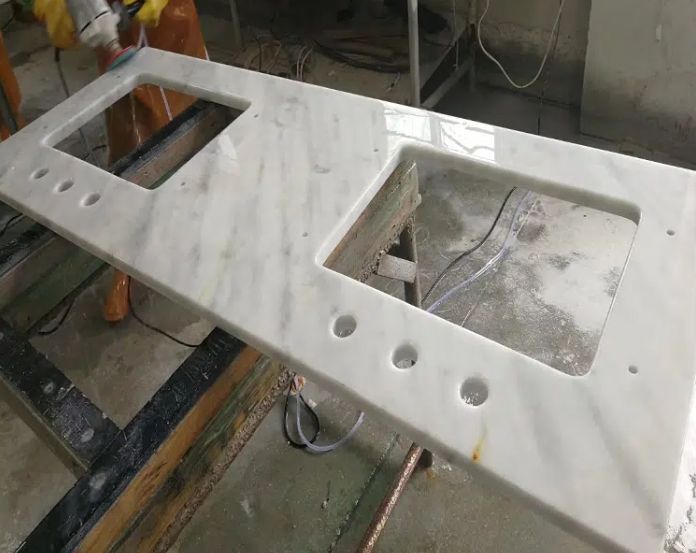
Always inspect slabs in person before buying. Samples can look very different from the full piece.
3. Inspect for Quality Markers
:- Absolute Black — Deep, uniform black; the most versatile and sought-after
- Black Galaxy — Black with gold/silver flecks; dramatic and elegant
- Kashmir White — White/grey with garnet speckles; bright and airy
- Blue Pearl — Deep blue-grey with pearl-like shimmer; luxurious and unique
- Tan Brown — Rich brown/black with consistent pattern; affordable and popular
- Santa Cecilia — Gold/beige with burgundy veins; warm and traditional
3. Inspect for Quality Markers
When examining a slab, check for:
- Surface consistency: Run your hand across the surface. It should feel smooth with no pits, cracks, or rough patches.
- Color uniformity: The color distribution should be consistent across the entire slab (unless you're intentionally choosing a dramatic pattern).
- Structural integrity: Look for natural fissures or cracks — small hairline cracks are normal, but larger structural cracks should be avoided.
- Thickness consistency: Standard countertop slabs are 2cm (3/4") or 3cm (1-1/4") thick. Verify consistent thickness throughout.
4. Match Your Cabinet and Floor Colors
Bring samples of your cabinet finish, flooring, backsplash tiles, and paint colors to the stone yard. Place them against the slabs to see how they interact. Natural and artificial lighting will far affect how the stone's colors appear, so ask to view slabs in both conditions if possible.
Granite Countertop Costs: Complete Breakdown
Understanding the full cost picture helps avoid surprises. Here's a detailed breakdown of what you can expect to pay for granite countertops in 2026:
| Cost Item | Typical Range | Notes |
|---|---|---|
| Granite Slab Material | $15-$60/sq ft | Varies by color rarity and origin |
| Fabrication | $15-$30/sq ft | Cutting, edge profiling, polishing |
| Installation | $10-$20/sq ft | Includes templating and fitting |
| Total (Installed) | $45-$120/sq ft | Most projects fall in this range |
| Sink Cutout | $150-$300 | Per sink opening |
| Cooktop Cutout | $100-$200 | Per cooktop opening |
| Edge Profile Upgrade | $10-$30/linear ft | Bullnose, ogee, waterfall, etc. |
| Seam Placement | Usually included | Fewer seams = better appearance |
| Backsplash (4" matching) | $10-$15/linear ft | Often included in standard install |
| Removal of Old Countertop | $200-$500 | Flat fee depending on size |
Cost-Saving Tips from Industry Professionals
- Choose a common color: Exotic and rare colors command premium prices. Popular colors like Tan Brown or Ubatuba offer excellent value.
- Buy remnants for small projects: Bathroom vanities, laundry rooms, and bar tops can often be fabricated from remnant pieces at significant discounts.
- Go directly to a stone fabricator: Skip the big-box store markup. Local fabricators often offer better prices and superior craftsmanship.
- Use a standard edge profile: A simple eased or beveled edge is usually included in the base price. Upgraded edges can add hundreds to your total.
- Minimize seams: While large islands may require seams, good layout planning can reduce their number — improving both appearance and cost.
Granite Countertop Maintenance & Care
One of granite's greatest strengths is its relatively low maintenance requirements. With proper care, your granite countertops will look beautiful for decades.
Daily Cleaning
Use a soft cloth or sponge with warm water and a mild pH-neutral dish soap. Avoid abrasive cleaners, acidic solutions (vinegar, lemon juice), or anything containing bleach or ammonia — these can break down the sealer over time. Wipe spills promptly, especially oils, wine, and acidic liquids.
Sealing Schedule
Granite should be sealed at least once per year. To test if your countertop needs resealing, place a few drops of water on the surface. If the water beads up, the seal is intact. If it absorbs and darkens the stone within 10-15 minutes, it's time to reseal. Use a high-quality, impregnating sealer specifically formulated for natural stone. Application is a simple DIY process: clean the surface, apply the sealer evenly, let it penetrate for the specified time, and wipe away excess.
What to Avoid
- Sliding heavy objects: While granite is scratch-resistant, sliding heavy ceramic or stone objects can cause micro-scratches over time.
- Standing or sitting on countertops: Granite is strong but can crack under concentrated weight, especially at unsupported overhangs.
- Using as a cutting board: You won't damage the granite — but you will quickly dull your knives.
- DIY repairs on major damage: For chips, cracks, or deep stains, call a professional stone restoration specialist.
Further Reading
Related articles: Soapstone Guide: Zero-Maintenance Natural Stone for Countertops &Outdoor Use · Marble Tiles: Complete Selection, Installation & MaintenanceGuide · Designing with Black Granite: Tips and Inspiration forYour Home
External references: ASTM C615 Granite Standard · ASTM C503 Marble Standard
Frequently Asked Questions
Is granite actually porous? Will it stain?
Yes, granite is naturally porous — but when properly sealed, it is highly resistant to staining. The key is annual sealing and prompt cleanup of spills. Darker granites are generally less porous than lighter varieties.
Can I put a hot pan directly on granite?
Yes. Granite can withstand temperatures up to 1,200°F, making it one of the most heat-resistant countertop materials available. You can place hot pots and pans directly from the stove or oven onto granite without damage. However, using a trivet is still a good practice to protect your sealer and prevent thermal shock over many years.
How long do granite countertops last?
With proper care, granite countertops can last 50+ years — often outlasting the kitchen itself. This is one of the primary reasons granite offers such excellent long-term value compared to other materials.
Does granite increase home value?
Yes. Natural stone countertops are consistently rated as one of the top features home buyers look for. According to the National Association of Realtors, kitchen upgrades — particularly natural stone countertops — offer some of the highest returns on investment of any home improvement project.
Can granite be repaired if damaged?
Yes. Minor chips and scratches can be professionally repaired by a stone restoration specialist. Cracks are more challenging but can often be filled and polished. The good news is that significant damage is rare under normal use.
Frequently Asked Questions
What should I know about what is granite??
The "What is Granite?" section above covers this topic in detail with specifications and practical guidance for B2B stone buyers.
What should I know about granite vs quartz vs marble?
The "Granite vs Quartz vs Marble" section above covers this topic in detail with specifications and practical guidance for B2B stone buyers.
What should I know about how to choose the perfect granite slab?
The "How to Choose the Perfect Granite Slab" section above covers this topic in detail with specifications and practical guidance for B2B stone buyers.
What should I know about granite countertop costs?
The "Granite Countertop Costs" section above covers this topic in detail with specifications and practical guidance for B2B stone buyers.