Setting the Stage: Two Stone Superpowers
Chinese Granite and Italian Marble represent two distinct categories of natural stone serving different market segments. Chinese granite — primarily G654, G682, G684 grades from Fujian and Shandong — dominates the global market for durable, cost-effective dimension stone. Italian marble — Carrara, Calacatta, and Statuario from the Apuan Alps — commands the premium segment for luxury interiors, architectural features, and high-end residential projects.
★ Key Takeaways
- The Fujian stone industry alone processes over 60% of China's granite exports, centered around the Shuitou market — the largest stone trading hub in the world, with thousands of factories and showrooms spanning dozens of square kilometers. Shandong P
- The Carrara region of Tuscany has produced the world's most famous marble for over 2,000 years — the same quarries that supplied Michelangelo still operate today. Italian marble's prestige rests on: the unique geological conditions that produced Carr
- Chinese granite typically offers a 40-60% cost advantage over Italian marble on a total landed cost basis. This differential is driven primarily by lower labor and quarrying costs in China, not by quality differences.
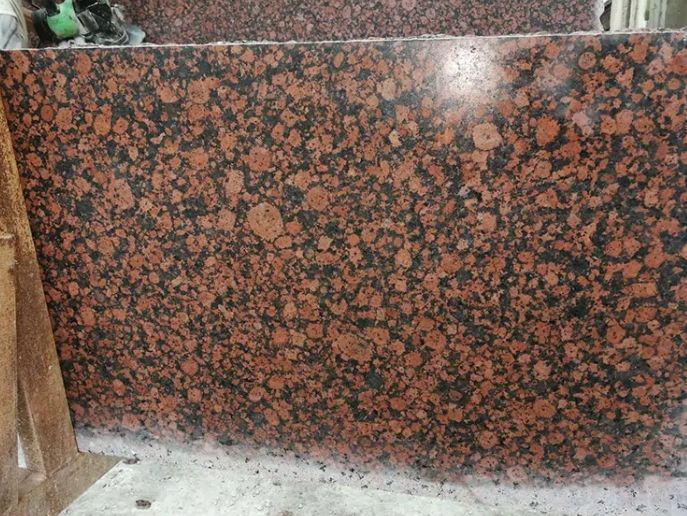
Chinese granite offers durability at competitive prices; Italian marble carries centuries of prestige.
Origin & Quarrying
Chinese Granite: The Scale Advantage
China possesses some of the world's largest and most productive granite quarries, concentrated in Fujian Province (Shuitou, Jinjiang, Hui'an) and Shandong Province (Laizhou, Pingyi, Wulian). Chinese granite quarrying benefits from: massive, high-quality reserves of popular commercial colors; modern quarrying equipment including diamond wire saws and hydraulic splitting; efficient logistics connecting quarries to nearby processing centers; and a skilled workforce with generations of stone-working heritage.
The Fujian stone industry alone processes over 60% of China's granite exports, centered around the Shuitou market — the largest stone trading hub in the world, with thousands of factories and showrooms spanning dozens of square kilometers. Shandong Province, home to Phoenix Power Stone, is known for premium grey granites (G654, G684) as well as unique colored varieties.
Italian Marble: The Heritage Advantage
The Carrara region of Tuscany has produced the world's most famous marble for over 2,000 years — the same quarries that supplied Michelangelo still operate today. Italian marble's prestige rests on: the unique geological conditions that produced Carrara's pure white stone with fine, even grain; centuries of accumulated quarrying expertise and tradition; strict quality grading systems; and a geographical brand identity that carries genuine market value.
Italian marble quarries are generally smaller and more artisanal than Chinese granite operations, focused on extracting the highest-value blocks from limited, precious deposits. Carrara Bianco, Calacatta, Statuario, and Botticino are names that carry immediate recognition and premium pricing in every global market.
Quality Standards & Certifications
- ASTM (American Society for Testing and Materials): The reference standard for North American projects. Covers compressive strength (C170), absorption (C97), flexural strength (C880), and abrasion resistance (C241). Both Chinese and Italian stone can be specified to meet ASTM standards.
- EN (European Norm): The European standard system, mandatory for EU projects. EN 1341-1343 covers paving, EN 1469 covers cladding, and EN 12057-12058 covers flooring.
- CE Marking: Required for construction products sold in the EU. Both Chinese and Italian suppliers serving the European market maintain CE certification.
- ISO 9001: Quality management system certification common among larger Chinese factories and virtually universal among Italian producers.
Key takeaway: Top-tier Chinese granite factories meet or exceed the same international quality standards as Italian marble producers. The quality difference is not inherent to the country of origin — it depends on the specific supplier, the grade of material specified, and the rigor of your quality control process.
Price Comparison: Total Landed Cost
| Cost Factor | Chinese Granite | Italian Marble |
|---|---|---|
| Material cost (FOB origin) | $8-$60/sq m | $30-$250+/sq m |
| Ocean freight (to US East Coast) | $1,500-$3,000/20ft container | $2,000-$4,000/20ft container |
| Customs duty (US) | ~3.7% (HS 6802.93) | ~3.7% (HS 6802.91) |
| Inland transport (destination) | $500-$1,500 | $500-$1,500 |
| Typical total landed cost | $15-$80/sq m | $50-$300+/sq m |
Chinese granite typically offers a 40-60% cost advantage over Italian marble on a total landed cost basis. This differential is driven primarily by lower labor and quarrying costs in China, not by quality differences.
Best Applications: When to Choose Which
- Choose Chinese Granite for: Large-scale commercial flooring, exterior paving and cladding, countertops (value-driven and mid-range), institutional and government projects, infrastructure (curbs, steps, retaining walls), tombstone and monument production, any project where durability and cost-efficiency are primary drivers.
- Choose Italian Marble for: Luxury residential interiors, high-end hospitality (5-star hotels, fine dining), premium retail and boutique spaces, sculptural and artistic applications, projects where the "Italian Marble" name carries marketing value, any application where aesthetics are the primary — or only — consideration.
How to Choose Your Supplier
Whether you choose Chinese granite or Italian marble, the supplier relationship matters more than the country of origin. Look for: transparency about quarry sources (not just "Italian marble" but which specific quarry), willingness to provide client references in your market, consistent quality across multiple orders, clear and responsive communication, and financial stability. The best supplier is not the cheapest — it's the one whose stone consistently arrives on time, on spec, and on budget, order after order.
Further Reading
Related articles: Marble Tiles: Complete Selection, Installation & MaintenanceGuide · Designing with Black Granite: Tips and Inspiration forYour Home · The Natural and Unique Patterns of BlackGranite
External references: ASTM C615 Granite Standard · ASTM C503 Marble Standard
Frequently Asked Questions
What should I know about setting the stage?
The "Setting the Stage" section above covers this topic in detail with specifications and practical guidance for B2B stone buyers.
What should I know about origin & quarrying?
The "Origin & Quarrying" section above covers this topic in detail with specifications and practical guidance for B2B stone buyers.
What should I know about quality standards & certifications?
The "Quality Standards & Certifications" section above covers this topic in detail with specifications and practical guidance for B2B stone buyers.
What should I know about price comparison?
The "Price Comparison" section above covers this topic in detail with specifications and practical guidance for B2B stone buyers.