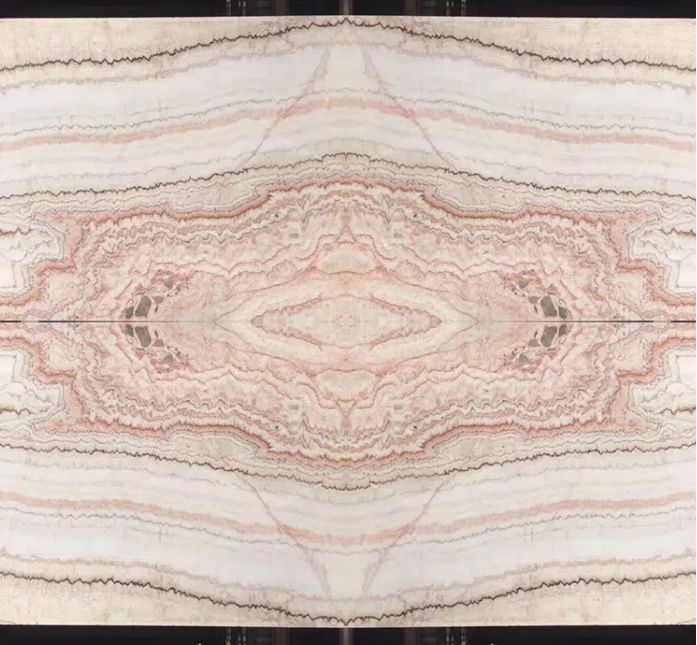
White Marble with Red Vein Wholesale Red Veined Marble: Color & Appearance
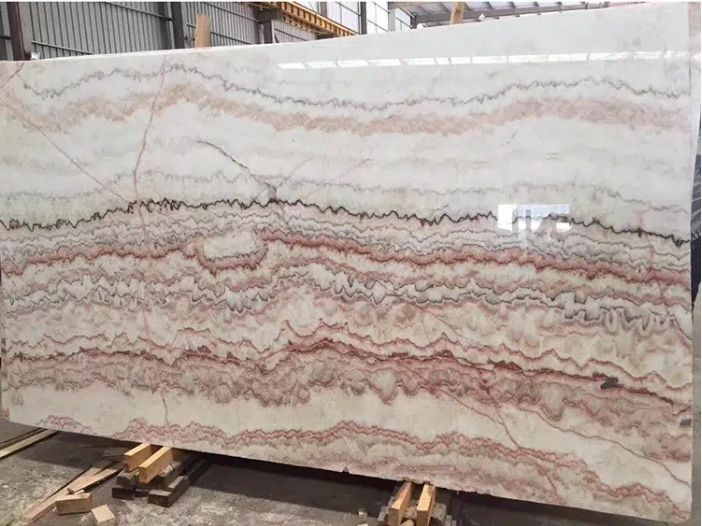
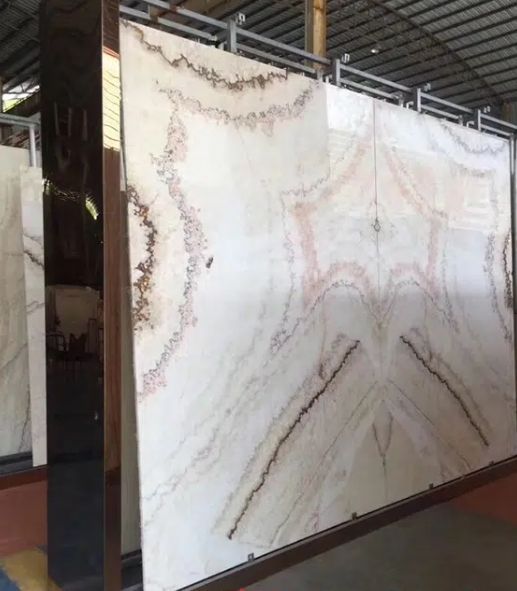
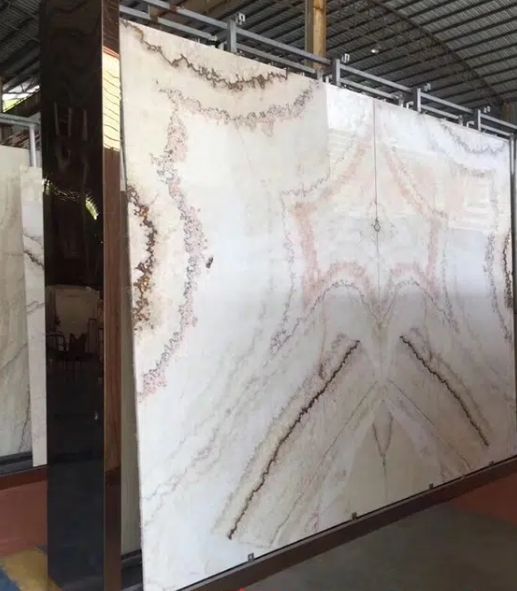
White Marble with Red Vein Wholesale Red Veined Marble from Phoenix Power Stone is a white marble with elegant grey veining patterns. Processed at our 108,000 sqft facility in Laizhou, Shandong, each slab is cut, calibrated, and finished to international standards. Available surface finishes include polished, honed, brushed, tumbled, and sandblasted. Every order receives batch-level inspection to verify color consistency and finish quality before export packaging.
Key Takeaways
- Red and violet veining in marble is mineral, not surface stain. In the Apuan basin, manganese-rich strata produce purple and wine-red veining while iron-rich strata in the same geological body produce the gold.
- Where the colour comes from iron oxide, the stone carries a genuine rust risk: iron plus water plus oxygen produces yellow-to-brown staining that migrates outward from the vein. Seal the back and edges before installation, and never clean with bleach or acid.
- Brecciated, non-directional veining bookmatches well, but book-matched lots typically require 30–50% deposits and 10–14 week lead times, and the wastage factor is higher than for a uniform marble.
White Marble with Red Vein Wholesale Red Veined Marble Technical Properties
Red-veined white marble is a calcite marble with mineral inclusions. Typical published properties for the family: Mohs hardness 3–4, density in the 2,600–2,750 kg/m³ marble range, water absorption in the 0.2–0.5% band (ASTM C97), and compressive strength in the broad marble range of roughly 50–180 MPa depending on variety and porosity. Batch-specific test reports are available on request — ask for them rather than relying on a range.
Two properties actually govern how this stone behaves on a project, and neither appears in a generic marble datasheet:
- It is acid-sensitive. At Mohs 3–4 with a calcium carbonate base, the surface is etched by lemon juice, wine, vinegar and most household descalers. A polished finish shows every etch mark as a dull patch; a honed finish absorbs them into the patina. This is the single reason red-veined marble is usually specified honed for kitchen islands and often ruled out of primary worktops entirely.
- It can carry iron. Where the red or violet colour comes from iron-bearing mineral inclusions, the stone has a rust pathway: iron plus water plus oxygen produces yellow-to-reddish-brown staining that travels through the stone from the inside, not across the surface. See the section below on where this material should and should not be used.
Note also that "flamed" is not a meaningful finish for this material. Flaming is a granite process; on calcite marble it spalls and discolours the surface rather than roughening it evenly. Where slip resistance is needed on marble, the correct options are honed, brushed, sandblasted or a mechanical bush-hammer, with the trade-off in each case being that texture reduces the readability of the veining.
White Marble with Red Vein Wholesale Red Veined Marble Applications
The applications where red-veined white marble performs well are interior, decorative and dry:
- Book-matched feature walls and reception backdrops — the highest-value use, and the one the material's non-directional veining is best suited to. See stone wall cladding design and hotel lobby marble design.
- Vanity tops and bathroom walls in low-splash positions, sealed on the face, back and edges.
- Countertops and islands in a honed finish, accepting a patina rather than fighting for a mirror surface.
- Reception desks, boardroom tables, fireplace surrounds, joinery and furniture — pieces where the stone is protected from standing water and from acid attack.
- Interior flooring in low-traffic residential settings, in a honed or brushed finish for slip resistance.
Applications where it should be specified with real caution, or avoided:
- Steam showers, wet rooms and unsealed shower floors — constant moisture plus iron-bearing minerals is the exact combination that produces rust bleed.
- Exterior cladding and paving in high-rainfall or freeze-thaw climates — water ingress plus thermal cycling. If the design requires it, use a drained mortar bed rather than direct bonding, and seal the back and edges.
- Pool surrounds, copings and waterlines.
- Primary kitchen worktops where the client will not accept etching and will not maintain the surface.
- High-traffic commercial flooring — at Mohs 3–4 the stone abrades and loses polish in doorways and circulation routes.
If your project is one of the second group, price the mitigation (back-and-edge sealing, reduced maintenance cycles, replacement reserve) honestly into the tender rather than discovering it after handover.
White Marble with Red Vein Wholesale Red Veined Marble Sourcing — China Wholesale
White Marble with Red Vein Wholesale Red Veined Marble is available from Phoenix Power Stone in standard slab sizes (240×120cm to 300×200cm), tile formats (305×305mm to 600×600mm), and custom cut-to-size dimensions. Thickness options range from 10mm to 30mm. Standard packing: ISPM-15 fumigated wooden crates with protective interleaving between finished surfaces. FOB Qingdao port. Minimum order: one 20ft container. Payment terms: T/T 30% deposit, 70% before shipment; L/C at sight. Delivery: 15–25 days after deposit confirmation. Contact Phoenix Power Stone for current FOB China pricing and block availability for White Marble with Red Vein Wholesale Red Veined Marble.
What Red Veining in White Marble Actually Is
The colour in a red-veined white marble is mineral, locked into the stone — it is not a surface stain and it cannot be sanded out. Red and violet tones come from iron and manganese concentrated in the calcium carbonate. The best-documented case is the Apuan basin in Tuscany: Calacatta Viola, historically called Breccia Medicea and quarried in the Vagli area alongside Arabescato Vagli and Calacatta Vagli, draws its purple, plum and wine-red veining from manganese-rich strata, while iron-rich strata in the same geological body produce the gold and rust tones. Same quarry, different layer, different stone. Chinese red-veined marbles follow the same principle with different chemistry: at Cangshan in Dali, Yunnan, copper-bearing intrusions produce red patterning while iron produces the grey and black.
Two consequences follow, and both are commercially relevant.
The veins are usually healed fractures. In brecciated stones the veining is the trace of where the rock broke and re-cemented, with mineral-rich fluids depositing colour along the break. That is exactly what makes these stones bookmatch so well — and it is also why they are more fragile than uniform white marble along those lines. Premium slabs are normally resin-treated with fibreglass mesh backing; the fabrication implication is the same as for Arabescato, with reduced feed rates and shallow step passes at vein transitions.
The iron is still iron. Where the colour derives from iron oxide, the stone carries the same rust risk as any iron-bearing marble: iron plus water plus oxygen produces yellow-to-reddish-brown staining that migrates through the stone from within. On a red-veined material this is harder to catch early, because reddish-brown spreading outward from a vein looks like more veining rather than like a defect.
Because the colouring mineral differs between Calacatta Viola (manganese), Chinese red-veined white marble (which may be copper- or iron-derived depending on origin) and other red-veined varieties, ask your supplier which one you are buying. The answer tells you how much rust risk the specification is carrying, and it is not something you can determine from a photograph.
Where Red-Veined White Marble Works — and Where It Should Not Be Used
This is the section a product datasheet will not give you. If your project is a wet area or a rain-exposed facade, the moisture pathway matters more than the veining. The mitigations are specific and they work, but they have to be in the specification from the start.
If the stone is going into a wet or humid environment:
- Seal the back and edges, not just the face, with a penetrating impregnator before installation. This is the step that actually intercepts water before it reaches the iron. It is frequently skipped, and it is the one that matters.
- Never seal wet stone. Trapped moisture causes the very yellowing the sealer was meant to prevent. Allow grout to cure fully — around 72 hours — before sealing, and for shower installations apply two coats with 24 hours between them.
- Choose the right impregnator. A solvent-based fluoropolymer or silane impregnator penetrates deeply and lasts roughly 3–5 years; a water-based impregnator carries no yellowing risk but lasts 2–3 years. Cheap generic water-based sealers penetrate shallowly and last 6–12 months — a false economy on an expensive stone.
- Do not use topical film-forming sealers on white marble. They look good briefly, then yellow, and they can trap moisture underneath.
- Use dry-hanging rather than wet bedding where the design allows it, avoid high-alkali cement, and keep the stone out of direct contact with iron, acids and alkalis.
- Detail for drainage. Expansion joints every 10–12 ft (roughly 3–3.7 m); for exterior work in high-rainfall climates use a mortar bed with a drainage mat rather than direct bonding; and inspect joint sealant annually, because failed sealant is the primary entry point for subsurface water.
- Never clean with bleach or acid. Bleach accelerates iron oxidation. Acids dissolve iron minerals and spread the stain rather than removing it.
If staining has already started, the correction is a poultice with an iron-specific reducing agent: applied 6–8 mm thick, covered, left 24–48 hours, then rinsed. Multiple applications are often needed, and the stone needs at least 72 hours to dry before it is resealed. Ongoing maintenance is a pH-neutral cleaner and a microfiber cloth — aggressive cleaners strip the sealer and push moisture into the stone. See sealing natural stone and the stone maintenance guide for the full routine.
Bookmatching, Seam Planning and Buying the Actual Slab
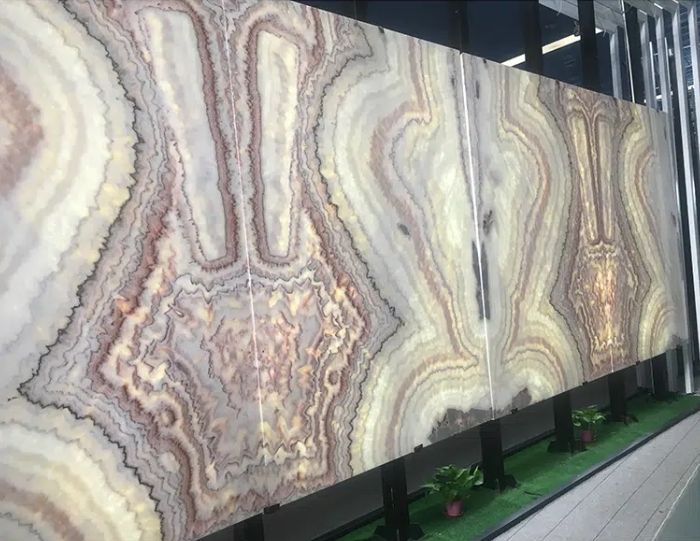
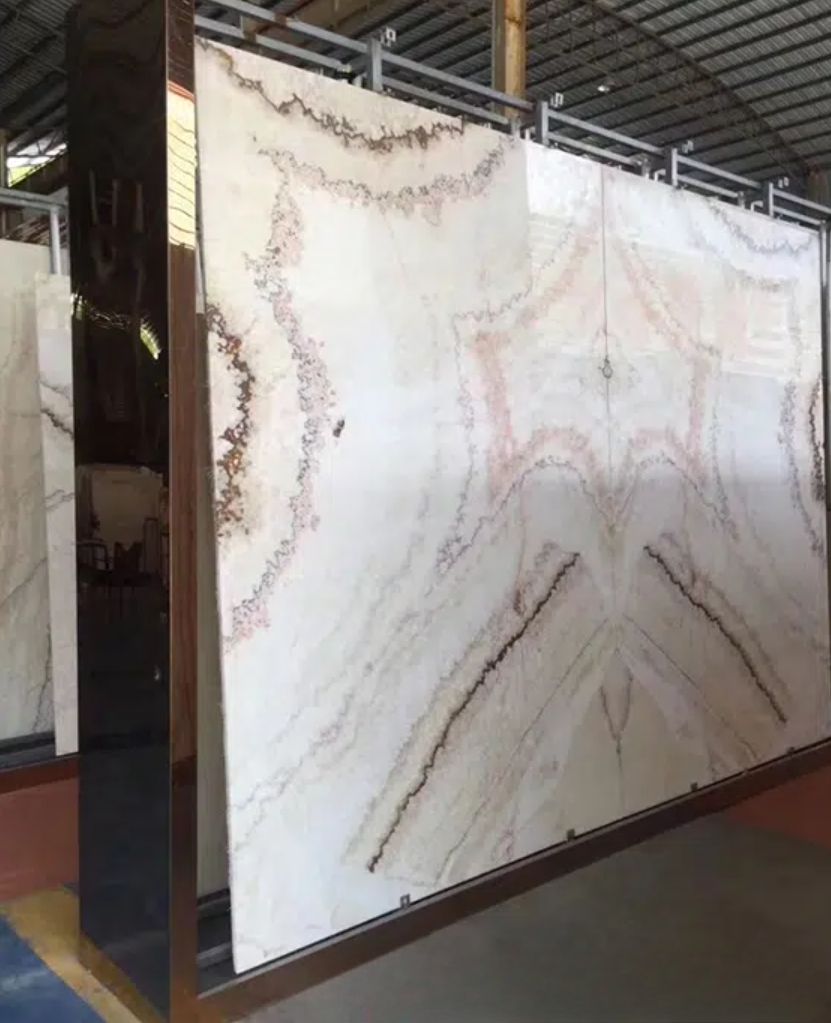
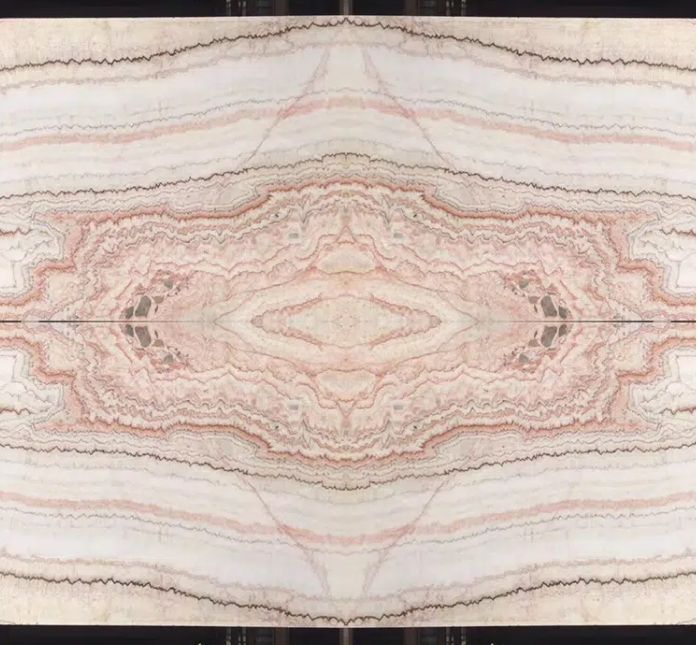
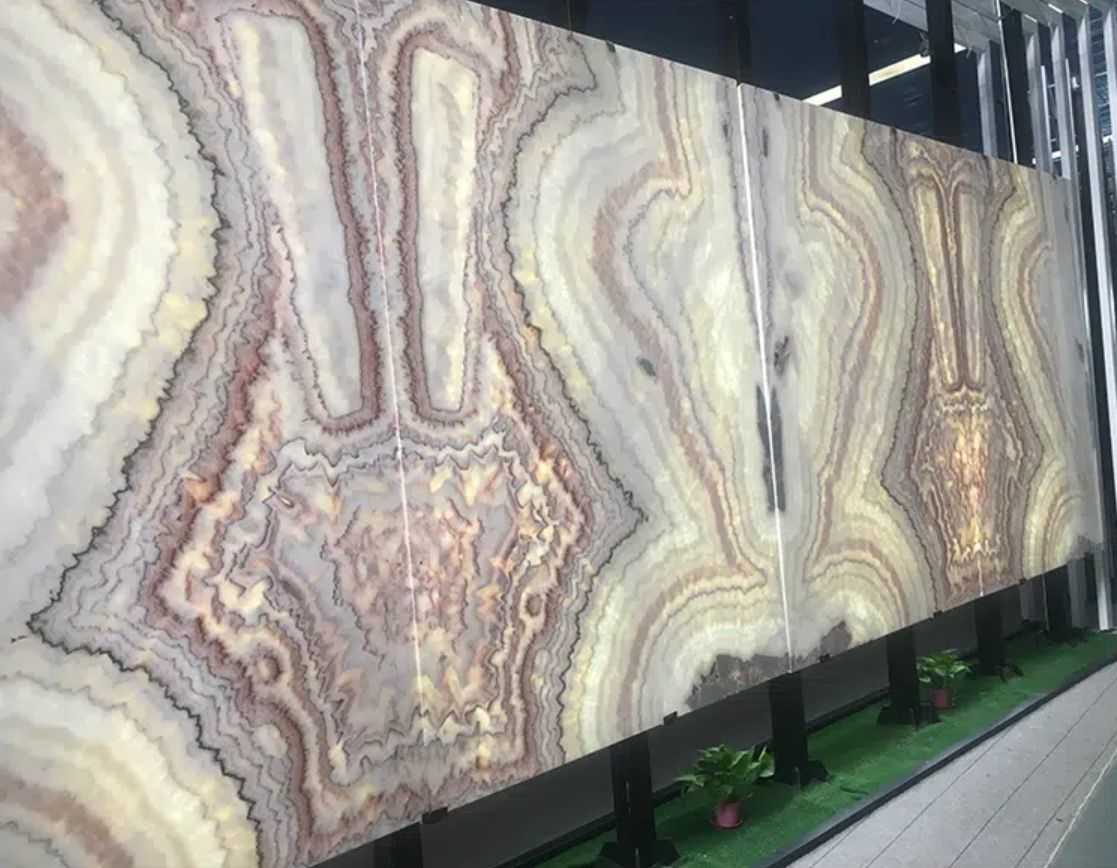
Because the veining in these stones is typically brecciated and non-directional rather than linear, sequential slabs mirror into a butterfly or diamond composition without needing a vein to run in a particular direction. That is why the red-veined families are among the most-specified book-matched stones in the trade, and it is the strongest argument for choosing this material over a printed porcelain imitation.
What that means for the purchase, in practical terms:
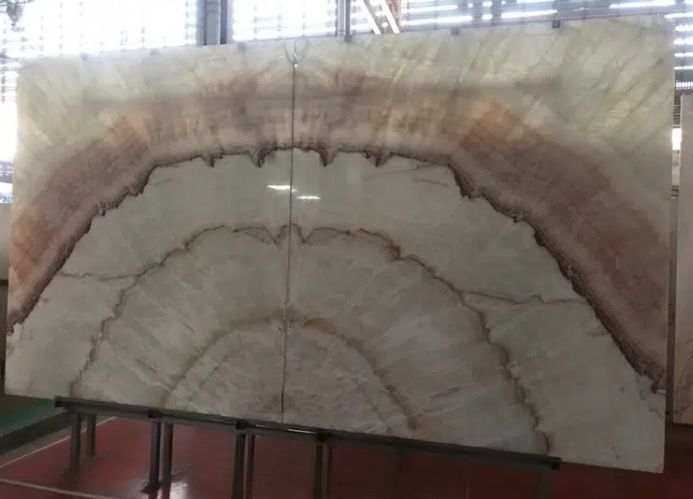
- Buy from photographs of the actual slabs. Lot-to-lot variation in these stones is extreme — across a single quarry face, background can shift from bright white to cream, and vein colour from violet through plum to burgundy. A generic sample tells you nothing about the lot you will receive. Treat the slab set as the unit of purchase.
- Expect to reserve. Suppliers commonly require 30–50% deposits to hold a specific block for bookmatching, because holding it removes it from general sale.
- Expect a longer lead time. Specific book-matched lots commonly run 10–14 weeks rather than the standard 15–25 days for stock material. Build that into the programme, not into the contingency.
- Expect more waste. Fabricators cut around defects to keep the veins aligned, so the wastage factor is higher than for a uniform marble. Budget accordingly and plan the elevation on usable area.
- Plan the seam before you plan the layout. Where the mirror line falls — centred on a lift lobby wall, offset to a door reveal, hidden behind a joinery return — is a design decision, and it has to be made before the slabs are cut, not on site.
- Confirm the A/B pairing in the dry-lay. The most common book-match failure is not a colour mismatch, it is a pair that was polished in the wrong sequence and mirrors the wrong way. Dry-lay photographs in production order catch it while replacement is still possible.
Specifying and Inspecting a Red-Veined White Marble Order
Finish. Polished saturates the red and violet — the strongest colour, and the least forgiving of etching. Honed mutes the colour slightly and masks etch marks and small resin fills; it is usually the right choice for kitchen islands and any surface that will see food or drink. Leathered tames the colour further and adds texture, which is useful on large surfaces where a mirror polish would overwhelm a room. There is a full comparison in stone finishes compared.
Order specification.
- Thickness tolerance: ±1 mm standard, ±0.5 mm premium — state which applies in the purchase order and attach the tolerance sheet as an annex.
- Shade range: approve a documented range from production samples before the run starts. Natural variation is not a defect; a container assembled from unrelated blocks is, and it installs as a visible patchwork.
- Dry-lay: require dry-lay photographs of the full set, in sequence, under natural light, before packing, with release of the balance payment tied to your review. This is the highest-return inspection step in the whole import process.
- Wastage: budget 10–15% over the finished area for cuts, sorting and future batch matching.
- Sealing schedule: write the back-and-edge sealing requirement into the installation specification, not into a maintenance note. If the installer is not told, it will be skipped.
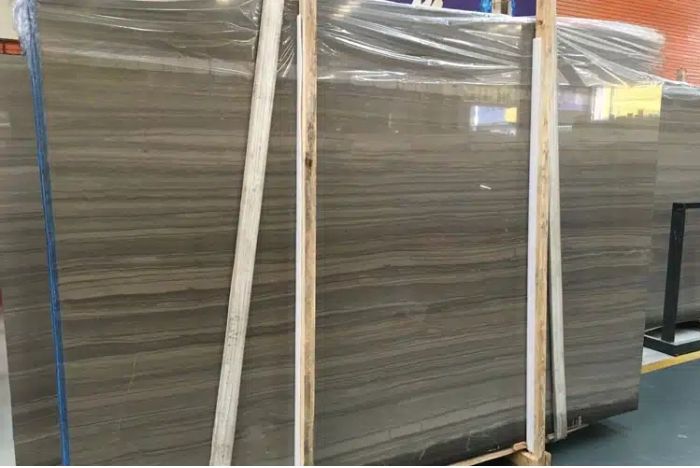
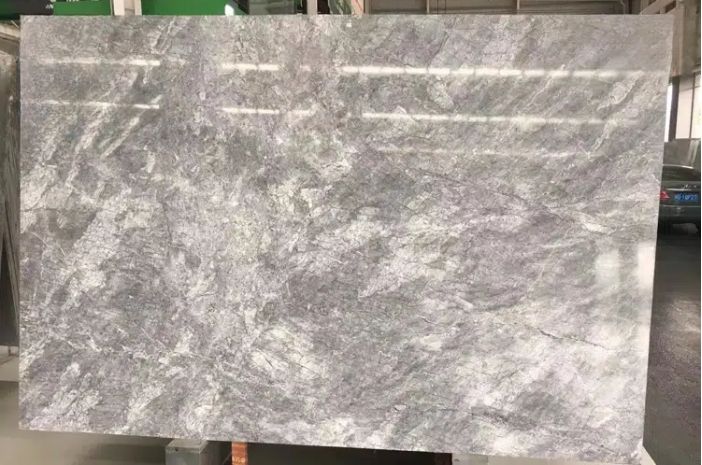
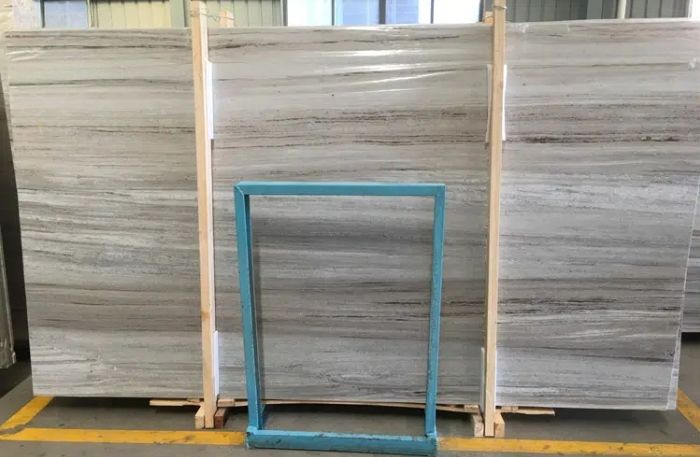
A note on naming and catalogue text. Older catalogue copy for this listing describes the veining as grey. The material supplied under this product line is a white marble with red to red-brown veining. Where a supplier's own written description and their photographs disagree, the photographs of the actual block face govern — ask for them before you order, and ask for the block number they belong to. Related reading: stone installation best practices and the stone defects and inspection guide.
Further Reading
Related guides: Marble Tiles Buying Guide · Chinese Granite Vs Italian Marble
Standards & references: ASTM C503 Marble Standard · EN 1469 Natural Stone Cladding
Frequently Asked Questions
Is white marble with red veins suitable for a bathroom or kitchen?
It is suitable for bathroom walls, vanity tops and low-splash positions, and for kitchen islands in a honed finish. It is not the right choice for a steam shower, a wet room floor or a pool surround, because constant moisture combined with iron-bearing mineral inclusions can produce rust staining that migrates outward from the vein. It is also acid-sensitive at Mohs 3–4, so lemon juice, wine and vinegar etch a polished surface. If you specify it wet, seal the face, back and edges with a penetrating impregnator before installation.
Will the red veins bleed or stain over time?
The veins themselves are mineral and do not bleed. What can happen is different: where the red colour derives from iron oxide, water reaching the iron triggers oxidation and produces yellow to reddish-brown staining that spreads from the vein outward. Reddish-brown spreading away from a vein is the visual signal. Prevention is back-and-edge sealing before installation, dry-hanging where possible, avoiding high-alkali cement and direct iron contact, and cleaning only with pH-neutral products. Never use bleach or acid — both make it worse.
What is the difference between Calacatta Viola and Chinese red-veined white marble?
Calacatta Viola is Italian, quarried in the Apuan Alps in the Vagli area, and its purple and wine-red veining comes from manganese-rich strata. Chinese red-veined white marbles are quarried in China and the colouring mineral varies by deposit — at Cangshan in Yunnan, for example, copper-bearing intrusions produce red patterning. Calacatta Viola is the rarer and more expensive material with far greater lot-to-lot variation, and it is normally resin-treated with fibreglass mesh backing. Both bookmatch well. Ask which colouring mineral your stone carries, because it determines the rust risk.
Can red-veined marble be bookmatched?
Yes, and it is one of the best materials for it. The veining in these stones is typically brecciated and non-directional rather than linear, so sequential slabs mirror into a butterfly or diamond composition without needing the vein to run in a particular direction. Expect to place a 30–50% deposit to reserve a specific block, expect 10–14 weeks lead time on a specific book-matched lot, and budget a higher wastage factor because the fabricator cuts around defects to keep the veins aligned.
What finish should I choose for red-veined white marble?
Polished gives the strongest colour and the sharpest definition, and is right for wall panels, fireplace surrounds and furniture. Honed mutes the colour slightly and hides etch marks and small resin fills, and is the usual choice for kitchen islands and any surface that will see food or drink. Leathered softens the colour further and adds texture, which works well on large surfaces. Do not specify flamed — flaming is a granite process and on calcite marble it spalls and discolours rather than producing an even texture.
How do I check the shade of a red-veined marble order before shipment?
Approve a documented shade range from production samples rather than a catalogue photo, because background tone and vein colour shift substantially between blocks. Then require dry-lay photographs of the full set, laid out in production order under natural light, before the container is packed, and tie release of the balance payment to your review of them. For book-matched sets, confirm in the dry-lay that each A/B pair actually mirrors the correct way — wrong-sequence polishing is the most common book-match failure and it is invisible until the panels are on the wall.
Specifications
| Specification | Value |
|---|---|
| Material | Natural marble (calcite), with red / violet veining from iron and manganese mineral inclusions. Typically brecciated (healed-fracture) structure |
| Colour | White to cream ground with red, burgundy, wine-red, plum or violet veining. Non-directional and highly lot-variable — approve a shade range from production samples |
| Standard Sizes | Slabs: 2400×1200mm to 3200×1800mm | Tiles: 305×305mm to 600×600mm | cut-to-size on drawing |
| Thickness | 10mm / 12mm / 15mm / 18mm / 20mm / 30mm (custom on request) |
| Thickness Tolerance | ±1mm (standard), ±0.5mm (premium — specify in the PO) |
| Surface Finish | Polished (saturates the colour), Honed (masks etching and small fills), Leathered, Brushed. Not flamed — flaming is a granite process and spalls calcite marble |
| Mohs Hardness | 3–4 |
| Acid Resistance | Acid-sensitive. Lemon juice, wine, vinegar and descalers etch the surface. pH-neutral cleaners only |
| Water Absorption | 0.2–0.5% typical marble range (ASTM C97). Batch-specific test report on request |
| Rust risk | Where the colour derives from iron oxide, ingress of water can produce yellow-to-brown staining migrating outward from the vein. Seal face, back and edges with a penetrating impregnator before installation in wet areas |
| Specify with caution | Steam showers, wet rooms, pool surrounds and copings, exterior cladding and paving in high-rainfall or freeze-thaw climates, high-traffic commercial flooring, primary kitchen worktops |
| Well suited to | Book-matched feature walls, reception backdrops, vanity tops, honed kitchen islands, fireplace surrounds, joinery and furniture, low-traffic interior flooring |
| Book-match sets | Sequential A/B mirror-polished slabs from one block. Expect 30–50% deposit to reserve a block and 10–14 weeks lead time on specific book-matched lots |
| Packing | ISPM-15 fumigated wooden crates. Mesh-backed polished slabs interleaved with foam. Book-match sets strapped in a single A-frame bundle |
| MOQ | 1 × 20ft container (approx. 400-500 m² slabs or 500-900 m² tiles) |
| Delivery Time | 15-25 days after deposit confirmation for stock material; 10–14 weeks for book-matched lots cut to a specific block |
| Payment Terms | T/T (30% deposit, 70% before shipment), L/C at sight |
Related Resources
- Quality Control Standards — ASTM / EN testing and 6-stage inspection process
- Container Loading Guide — Maximize your shipment efficiency
- Request a Quote — Get pricing and availability for this product
Related Products
Inquire About This Product
Contact us for pricing, samples, or custom specifications.
Get a Quote