Detailed Specifications
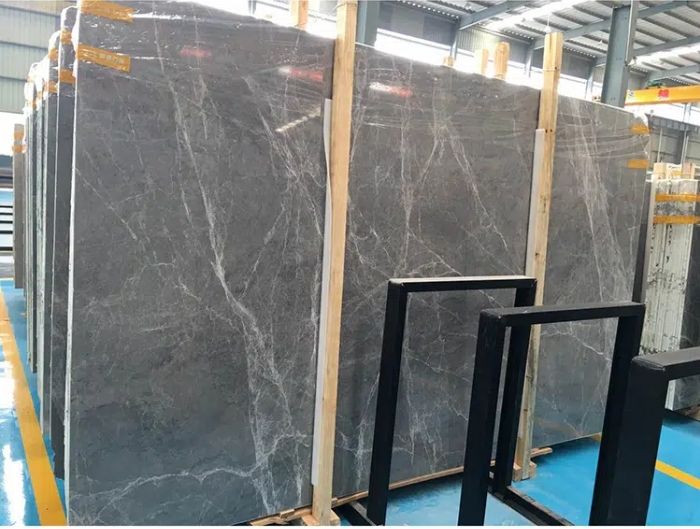
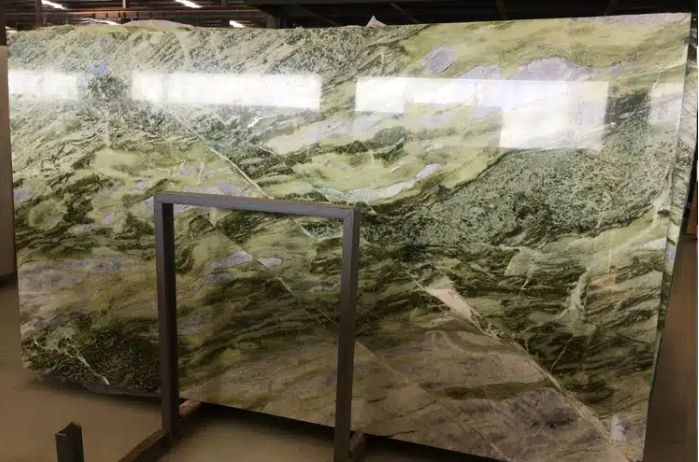
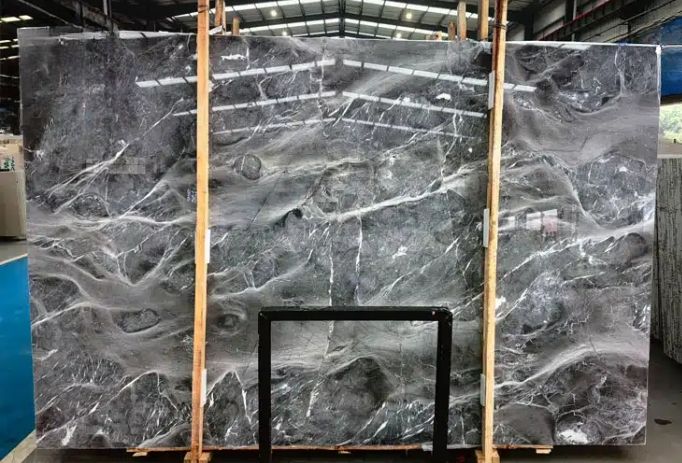
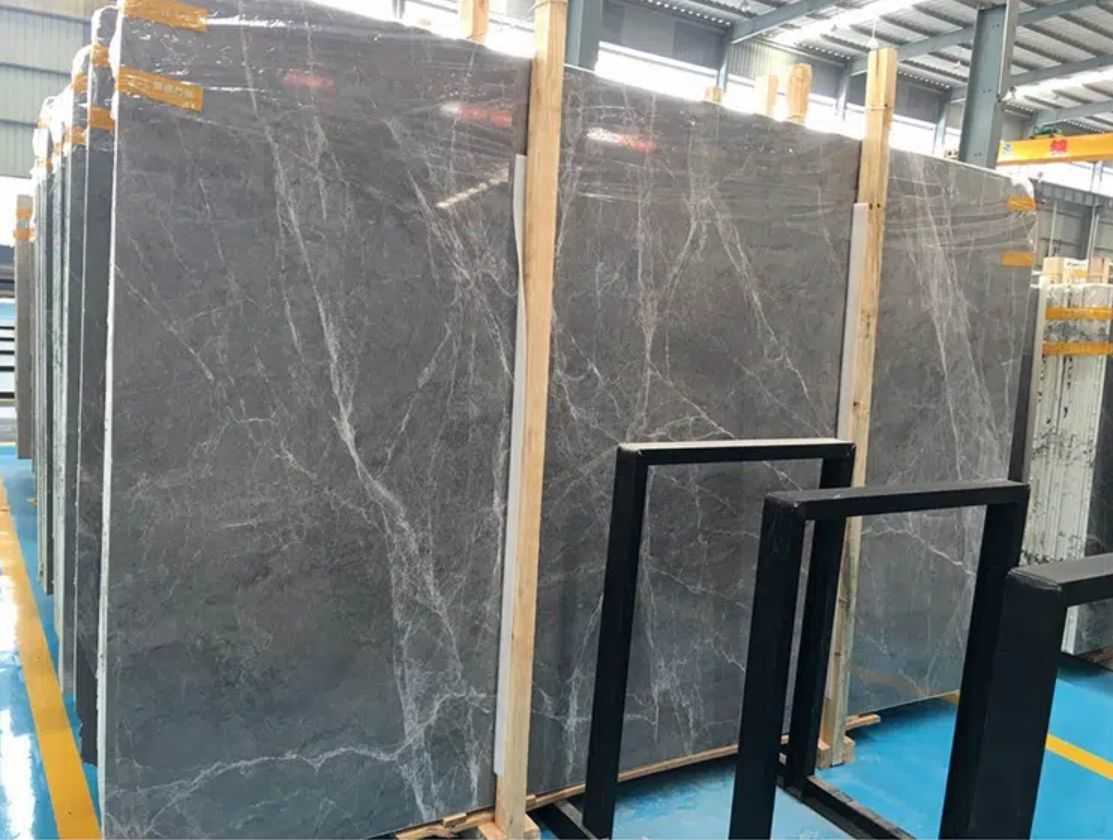
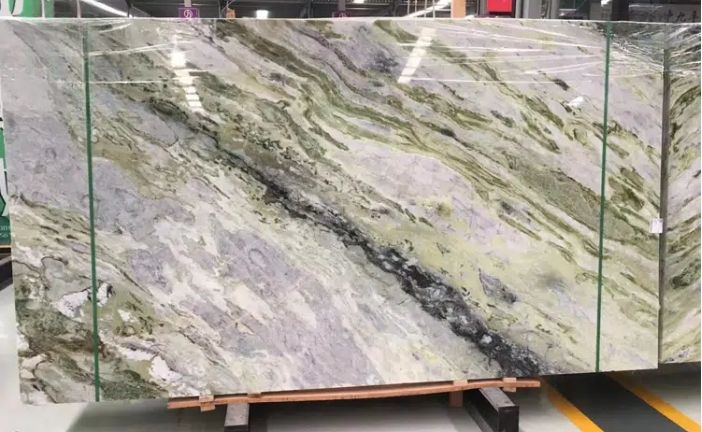
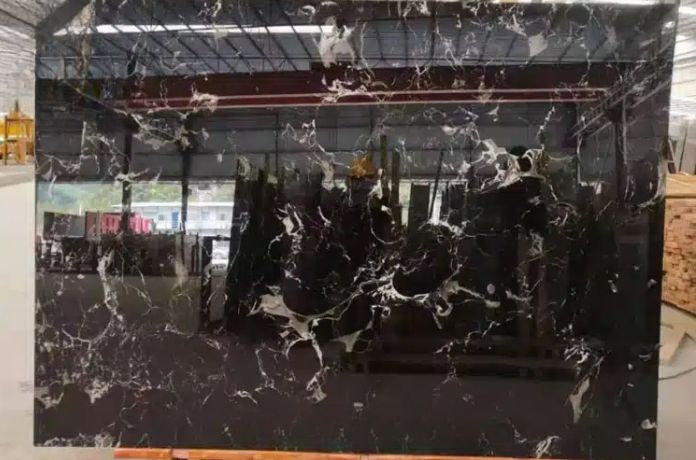
This marble slab can be used in a variety of applications, including countertops, tabletops, or as a stand alone sculpture.This is a beautiful slab of exotic marble. Its reddish-grey color adds a nice touch to your floors and walls, while the veined pattern adds an elegant design element that’s sure to make your home or office stand out.
What "Exotic Marble" Actually Means in the Trade
"Exotic" is a commercial label, not a geological one. It is applied to marbles whose colour or figure is rare enough that the stone works as a feature rather than as a field, and it overlaps with the older trade category of "coloured marble." It tells you nothing about how the rock will behave on site — because in commercial usage any carbonate that takes a polish is sold as marble. A slab marketed as exotic marble may be a true metamorphic marble, a limestone, a breccia, a serpentine-bearing stone, or an onyx. Those four behave differently in a kitchen, in a wet area and outdoors.
A reddish-grey slab with a strongly veined figure, like the material on this page, can be any of the following, and the difference is not cosmetic:
- A genuine marble or breccia — carbonate, acid-sensitive, Mohs 3–5, etches from citrus and vinegar.
- A limestone traded as marble — also carbonate, often with higher water absorption than the marble average; sealing becomes a specification item rather than an option.
- A serpentine-bearing stone — moisture-sensitive, with its own adhesive rules (epoxy, never water-based thin-set) because it can cup after installation.
- An onyx or a quartzite — very different porosity, hardness and handling; onyx is translucent and fragile, quartzite is hard and acid-resistant.
So the first question on any exotic slab is not "how does it look" but "which rock is it, and what are the measured properties of my batch?" Ask for density, water absorption to ASTM C97 and flexural strength on the lot you are buying. If the answer is a brochure figure rather than a batch-specific test report, treat it as marketing. Our stone finishes comparison covers the other half of the specification — the same exotic stone polished, honed, brushed or leathered reads as four different materials and behaves differently underfoot.
Is the Colour Natural? Checks You Can Run Before You Import
Colour is the product on an exotic slab, which is precisely why it is the thing most often altered. Two practices get conflated by buyers, and the distinction matters:
- Legitimate stabilisation. Resin impregnation and fibreglass mesh backing on fragile, brecciated or heavily veined stone is standard factory practice. It does not change the colour, and on a genuinely fragile exotic material you should expect it.
- Colour enhancement. Dyeing, staining, tinting or chemical whitening changes what the stone looks like. It may be disclosed, it may not be — and it changes how the stone ages.
Field checks that need no laboratory
- Look at a cut edge or the side of the slab. This is the most direct test available: dyed stone shows a darker "skin" at the surface with a lighter core beneath it.
- Water-drop test. On dense untreated stone a drop soaks in slowly and evenly. Patchy, uneven absorption suggests resin-filled microcracks; water beading unnaturally suggests a film coating rather than an impregnator.
- Ink drop on the back. Ink that spreads and bleeds indicates loose grain or internal cracking; ink that stays put indicates a dense, sound slab.
- Acetone swab and 20× magnification. Dye frequently concentrates in fractures and pores, and colour can lift onto the swab. This is not conclusive — modern dyes and sealers resist — but a positive result is decisive.
- Sound. A crisp ring indicates sound stone; a dull thud indicates internal cracks or weathering.
- Weight. A heavily resin-filled slab is lighter than a sound one of the same dimensions.
- Sunlight. Dyed and chemically brightened stones fade. Trade reports describe yellowing within roughly 3–12 months for chemically treated white material, and visible fading within one to two years for dyed stone.
Then ask the question directly and in writing: is this stone colour-enhanced, and if so how? A supplier who will not answer that on the proforma invoice is telling you something. Documented origin and batch papers are the backstop — see our supplier verification checklist.
Why Exotic Slabs Cannot Be Bought From a Sample Chip
With a quarry-run granite, a 10 × 10 cm chip is a reasonable proxy for the container. With an exotic marble it is close to worthless, because the figure is the product and the figure changes block to block — sometimes slab to slab. Two supplier commitments follow from that:
- Approve the actual lot, not a reference sample. Ask for photographs of the specific bundle, wet and dry, with a colour reference card in frame, plus a short video walk along the stack.
- Put the approved lot photograph in the contract. On a stone whose value is its appearance, a clause such as "colour and veining to match approved lot photograph dated ___" protects you. Generic "natural stone variation accepted" language protects only the supplier.
Sequencing, matching and overage
- One block per viewing plane. Never mix blocks in a single wall or floor area; it is the most common reason a feature installation gets rejected.
- Bookmatch requires sequential slabs from one gang-saw run, with every second slab flipped at polishing. A bundle missing one slab breaks the mirror. Instruct the supplier in writing not to cherry-pick from a sequenced bundle.
- Budget published industry overage figures: 12–20% wastage for bookmatched layouts against 5–8% for standard ones, and a 20–30% overage allowance against 10–15% for running match. Bookmatched fabrication commonly runs 20–40% above a running-match order, with material reaching 1.5–2× a plain layout.
- For layout-critical work, require a numbered dry-lay photograph before the crates are sealed. "No photo, no payment release" is normal trade practice on feature stone, not an unusual demand. Our inspection guide lists what to record.
If the project involves cut-to-size pieces — vanity tops, stair treads, window surrounds — give the factory the cutting list before it selects slabs, not after. Slab selection on a strong exotic figure is a nesting problem: the pieces that need the best figure must be mapped onto the slabs that carry it, and that decision cannot be reversed once the slabs are sawn. Our procurement timeline guide shows where those approval points sit.
The Importer's Risk: Repeatability, Capital and Lead Time
Exotic stone is a good margin business and a poor inventory business, and it should be priced accordingly.
- You cannot reorder it reliably. When a client returns in twelve months for another 40 m², the block may be exhausted. Either reserve the balance of the block at the time of the original order — and price the reservation into the job — or state in writing that the material is a single-lot purchase with no repeat guarantee.
- Sequenced, bookmatched lots take longer. Industry sourcing guides put specific bookmatched lots at around 10–14 weeks, frequently with a 30–50% deposit to secure the block. Build that into the programme rather than discovering it after the client has signed.
- Slow-moving stock ties up capital. Calculate return on the sellable area, not the gross slab area. A 20% trim allowance plus a reserve slab for on-site damage is real money, and a stone that sells at a high price per m² but sits for eighteen months is not a better business than a mainstream marble that turns four times a year.
- Manage the client's expectation explicitly. The most expensive exotic-stone dispute is not a defect — it is a buyer who expected the second slab to look like the first.
When the mainstream alternative is the better recommendation
Say so when it is true; that is what separates a supplier from a seller.
- Repeatability matters more than uniqueness — a phased hotel, a chain roll-out, any project with a reorder horizon. Specify a well-documented mainstream marble, or a porcelain or engineered slab that reproduces the look. See granite vs marble vs quartz.
- The surface is exterior or hard-use. Exotic carbonates are usually the wrong answer; go to granite or quartzite. Natural stone versus porcelain outdoors sets out the trade-off.
- The budget is fixed and the lead time is short. An exotic stone is a schedule risk as much as a cost risk, and the sequencing requirement cannot be compressed.
- The client genuinely wants a one-off. Then exotic stone is the right answer, and the whole job should be planned around reserving and documenting the lot. Our guide to negotiating with stone suppliers covers how to structure that reserve.
Specifications
| Specification | Value |
|---|---|
| Material | Natural Marble |
| Color | As shown — each slab features unique natural veining |
| Standard Sizes | Slabs: 2400×1200mm to 3000×2000mm | Tiles: 305×305mm to 600×600mm (custom available) |
| Thickness | 10mm / 12mm / 15mm / 18mm / 20mm / 30mm (custom on request) |
| Thickness Tolerance | ±1mm (standard), ±0.5mm (premium, specify in order) |
| Surface Finish | Polished, Honed, Brushed, Tumbled, Sandblasted |
| Water Absorption | 0.3-1.5% (ASTM C97) |
| Compressive Strength | ≥80 MPa (varies by variety) |
| Packing | ISPM-15 fumigated wooden crates. Polished slabs interleaved with protective foam. |
| MOQ | 1 × 20ft container (approx. 400-500 m² slabs or 500-900 m² tiles) |
| Delivery Time | 15-25 days after deposit confirmation |
| Payment Terms | T/T (30% deposit, 70% before shipment), L/C at sight |
Key Takeaways
- Natural marble — density 2,600–2,750 kg/m³, water absorption ≤0.2%, compressive strength ≥52 MPa
- Hardness: 3–5 Mohs, suitable for both interior and exterior applications when properly specified
- Phoenix Power Stone factory-direct supply — 108,000 sqft facility, Shandong, China, 24+ years of export experience
Further Reading
Related guides: Marble Tiles Buying Guide · Chinese Granite Vs Italian Marble
Standards & references: ASTM C503 Marble Standard · EN 1469 Natural Stone Cladding
Frequently Asked Questions
How can I tell whether an exotic marble slab has been dyed or colour-enhanced?
No single test is conclusive, so combine several. The most direct is to look at a cut edge or the slab side: dyed stone shows a darker skin at the surface with a lighter core beneath. Run a water-drop test - dense untreated stone absorbs slowly and evenly, while patchy absorption suggests resin-filled microcracks and unnatural beading suggests a film coating. An ink drop on the back that spreads and bleeds indicates loose grain or internal cracking. An acetone swab inspected at 20x magnification can lift dye out of fractures, though modern dyes often resist, so a positive result is decisive and a negative one is not. Finally, ask the supplier in writing whether the stone is colour-enhanced and how. Legitimate resin and mesh stabilisation is normal on fragile exotic stone and does not change the colour; dyeing does.
Can you guarantee that the slabs I receive will match the sample I approved?
We guarantee the lot, not a chip. On an exotic stone the figure changes block to block and sometimes slab to slab, so a small reference sample is not a meaningful promise. What we do instead is send photographs and video of the exact bundle you are buying, wet and dry, with a colour reference card in frame, and we put the approved lot photograph into the order documents. Slabs are then numbered by block and sequence and those numbers carry onto the crate labels. For layout-critical projects we will produce a numbered dry-lay photograph before the crates are sealed, and we will not release a sequenced bundle for cherry-picking, because removing one slab breaks the match.
How much extra material should I order for a bookmatched exotic marble wall?
Published industry sourcing guides give consistent figures: 12-20% wastage for bookmatched layouts against 5-8% for standard layouts, and a 20-30% overage allowance against 10-15% for running match. Fabrication for bookmatched work commonly runs 20-40% above a running-match order, and material cost can reach 1.5-2 times a plain layout. The extra area is consumed cutting around natural defects so the vein pattern stays continuous across the seam. Reserve the balance at order time rather than trying to buy a spare slab later, because a slab from a different block will not match, and on a highly individual stone the mismatch is immediately visible.
What lead time should I expect for bookmatched exotic marble slabs?
Plan on longer than a standard slab order. Industry sourcing guides put specific sequenced, bookmatched lots at roughly 10-14 weeks, often with a 30-50% deposit required to secure the block. Two factors drive that: the block has to be reserved and sawn in sequence, and the bundle has to be dry-laid and photographed for your approval before crating. Add ocean freight and inland delivery on top. If the project programme is shorter than that, the honest advice is to specify a mainstream marble or a porcelain look-alike rather than to compress the sequencing, because a rushed bookmatch is where the money is lost.
Is exotic marble suitable for kitchen countertops?
Usually not as a primary work surface, though it depends on which rock the slab actually is. Most exotic marbles are carbonate stones - acid-sensitive, Mohs 3 to 5 - so citrus, vinegar, wine and tomato etch the polish, and a honed finish will show patina over time. If your client accepts that maintenance regime, specify a honed finish with a breathable impregnating sealer and pH-neutral cleaners only. Where the stone is onyx, serpentine-bearing or heavily fissured, a kitchen worktop is a poor risk regardless of sealing. For a working kitchen, quartzite, granite or an engineered surface is the more honest recommendation, and we will say so.
Related Resources
- Quality Control Standards — ASTM / EN testing and 6-stage inspection process
- Container Loading Guide — Maximize your shipment efficiency
- Request a Quote — Get pricing and availability for this product
Related Products
Inquire About This Product
Contact us for pricing, samples, or custom specifications.
Get a Quote