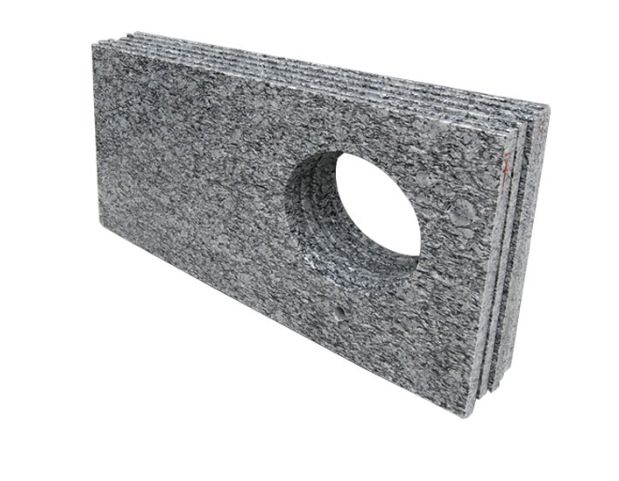
Where Sea Wave Sits in the Grey Range — and How It Reads in Place
This family occupies the light end of the Chinese granite range: lighter than G614 Sesame Grey, considerably lighter than G654 Sesame Black, and generally warmer than the blue-grey cast some G603 lots carry. That position is what makes it useful. It reads as a pale grey with visible movement, at a fraction of the price of a white marble and without marble's sensitivity to acids. On a facade or a large floor it lifts a space without the flatness of a plain light grey and without the restlessness of a boldly veined stone.
Because the base colour is light, the surface shows everything the stone does. Block-to-block shading, the difference between a polished and a honed face, and the joint pattern all read more strongly than they would on a dark granite. Two consequences are worth planning for: buy the whole project from one block lot wherever you can, and approve colour from a panel-sized mock-up rather than a 10cm sample — a small sample hides exactly the variation that matters.
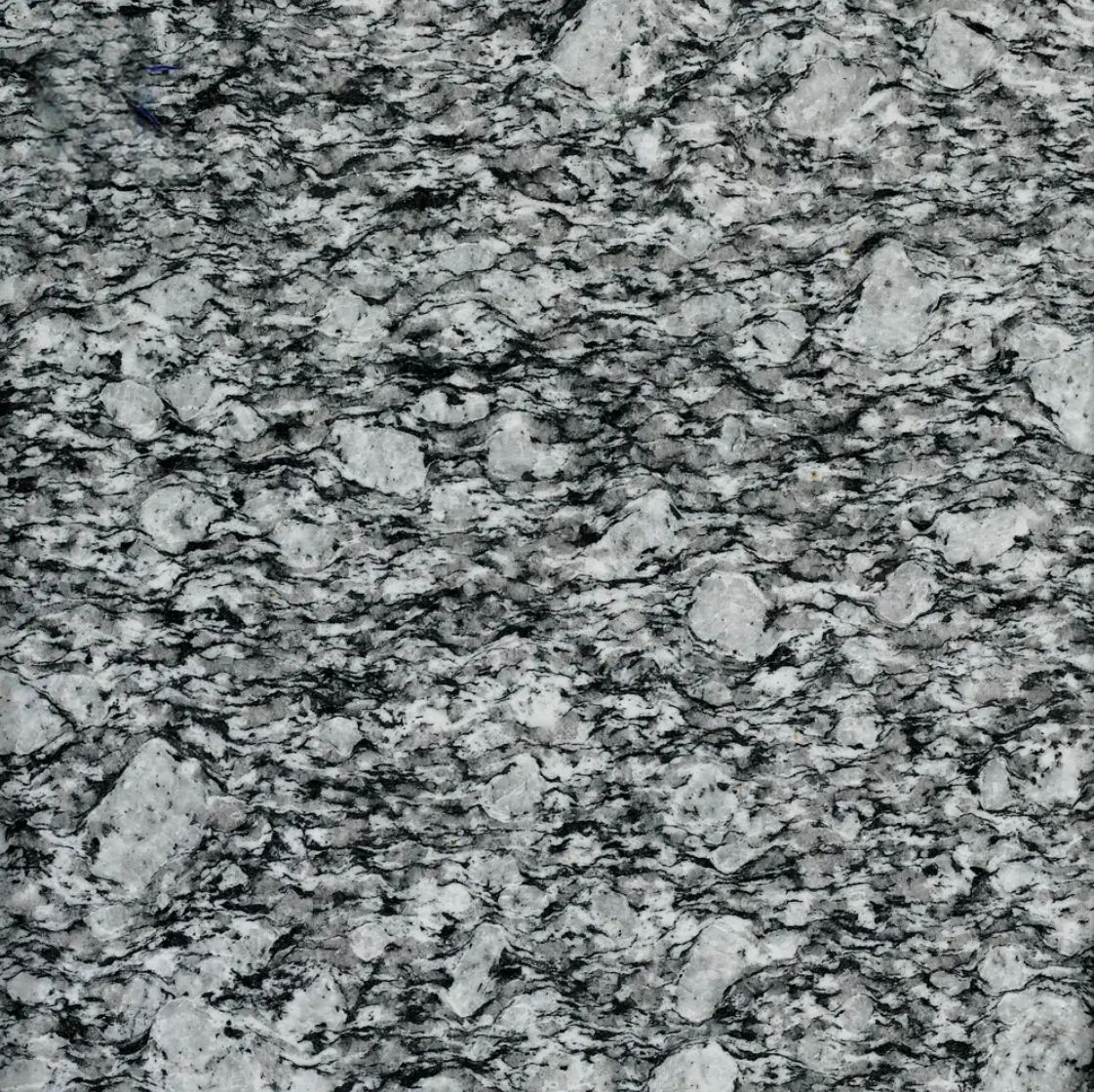
The light base also makes the crystalline grain visible. Polished, the surface has a slight sparkle under direct light, which is an advantage on interior floors and reception areas; honed, it goes quiet and even, which is usually what a large exterior elevation wants.
Key Takeaways
- Spray White and Sea Wave are English trade names for one visual family of wavy light grey Chinese granite, and published sources place them at two different quarries — Mengyin in Shandong (G377) and Xinyi in Guangdong (G4418) — with different measured properties
- Water absorption is published at 0.11% and 0.22% for those two variants, low enough for wet areas and exterior work; the figure is directional, so fix the laying direction on the shop drawing before production
- Both are low-absorption granites that resist acid etching — if a light "granite" sample fizzes under lemon juice it contains calcite and is not granite, which changes its maintenance and sealing requirements entirely
Technical Data: What Has Actually Been Measured on These Variants
Because one English trade name covers more than one quarry, published test data is the only reliable way to know which stone you are specifying — and the two documented variants differ. The Mengyin (Shandong) material is published with water absorption of 0.11%, density 2,690 kg/m³, flexural strength 20.2 MPa and compressive strength 204.7 MPa. The Xinyi (Guangdong) material is published at 0.22% absorption, 2,680 kg/m³, 20.1 MPa flexural and 149.1 MPa compressive.
Read those figures against the application rather than against each other. For flooring, cladding and countertops both are comfortably adequate: a flexural strength around 20 MPa is a strong number for a decorative granite, and absorption below 0.25% is what makes the family usable in wet areas and outdoors. The compressive figures differ by roughly a third, which matters only in a load-bearing or heavily loaded position — and in that case you should be testing the lot you are buying rather than relying on any published figure.
Two practical notes. Water absorption is the number that decides freeze-thaw performance, so in a cold climate ask for frost resistance results on the same lot instead of extrapolating from a brochure. And flexural strength is the number a facade engineer needs; it should be measured to EN 12372 or ASTM C880, because a compressive figure is not a substitute.
Formats and Finishes Available for This Family
Sea Wave and Spray White are produced across the usual Chinese granite formats: tiles from 305×305mm up to 600×600mm and larger, slabs from 240×120cm up to 300×200cm, and cut-to-size pieces to a drawing. Thickness generally runs from 10mm to 30mm depending on the application, with 20mm the mainstream export thickness for floors and paving and 30mm the choice for cladding, stair treads and heavy-duty work. Standard finishes are polished, honed, flamed, bush-hammered, flamed-and-brushed and sandblasted; less common finishes such as tumbled or sanded can usually be produced on request.
Two format decisions are worth settling before you ask for a price, because both change the yield and therefore the price. The first is the size grid — a non-standard tile size costs more because it cuts against the factory's usual plan. The second is the thickness, and if you need one the factory does not hold in stock, the lead time moves with it. Confirm both in writing, along with the finish and the tolerance, before comparing quotes from different suppliers.
The Figure Is Directional — and That Changes How You Lay It
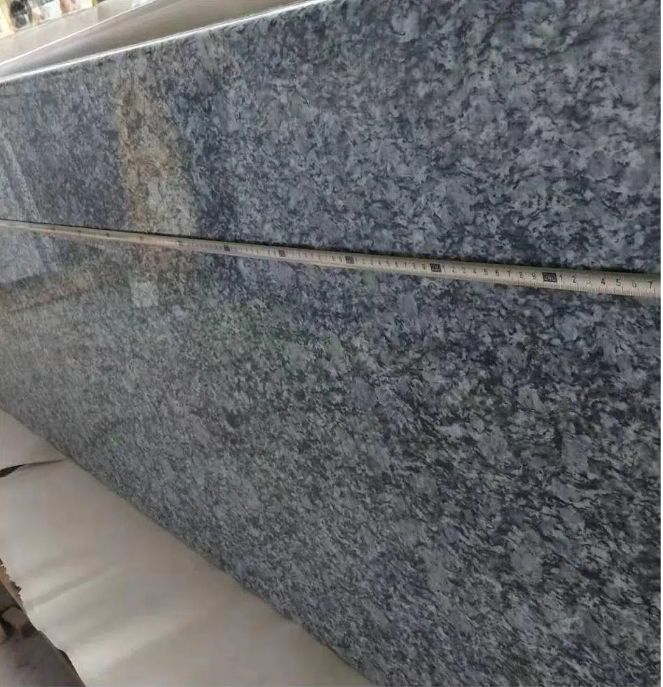
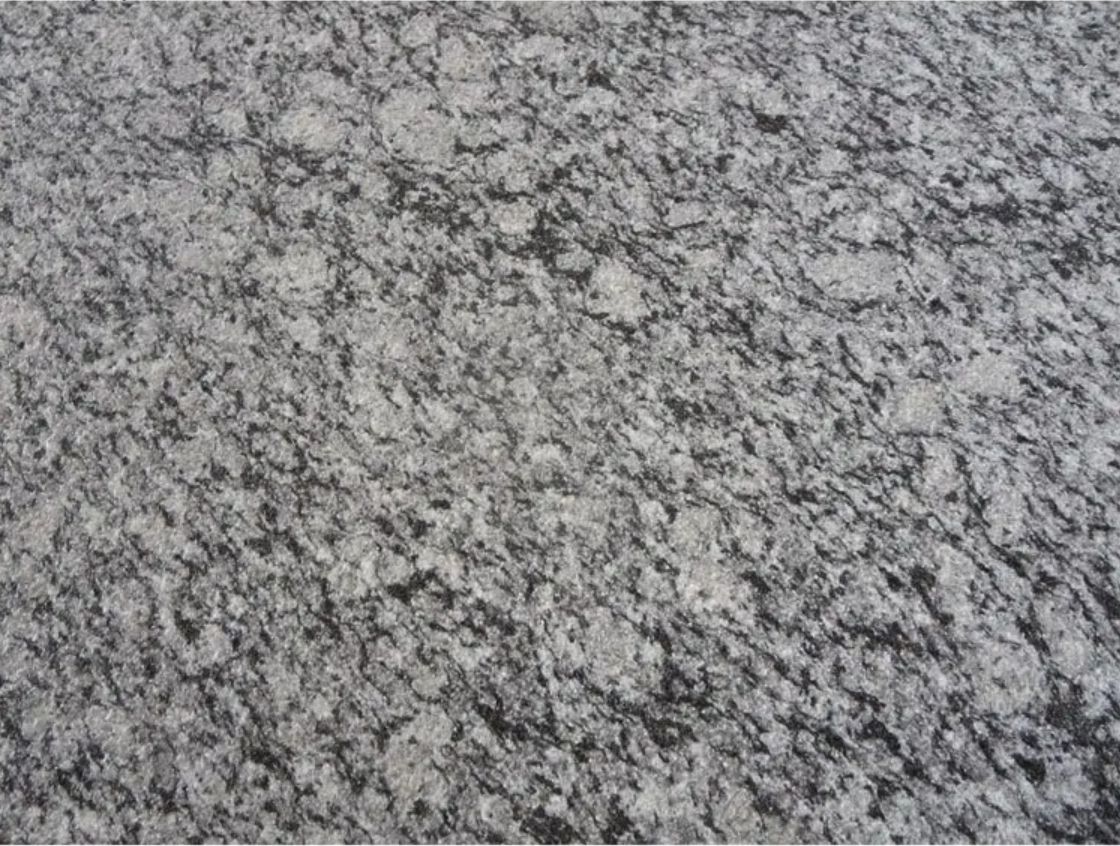
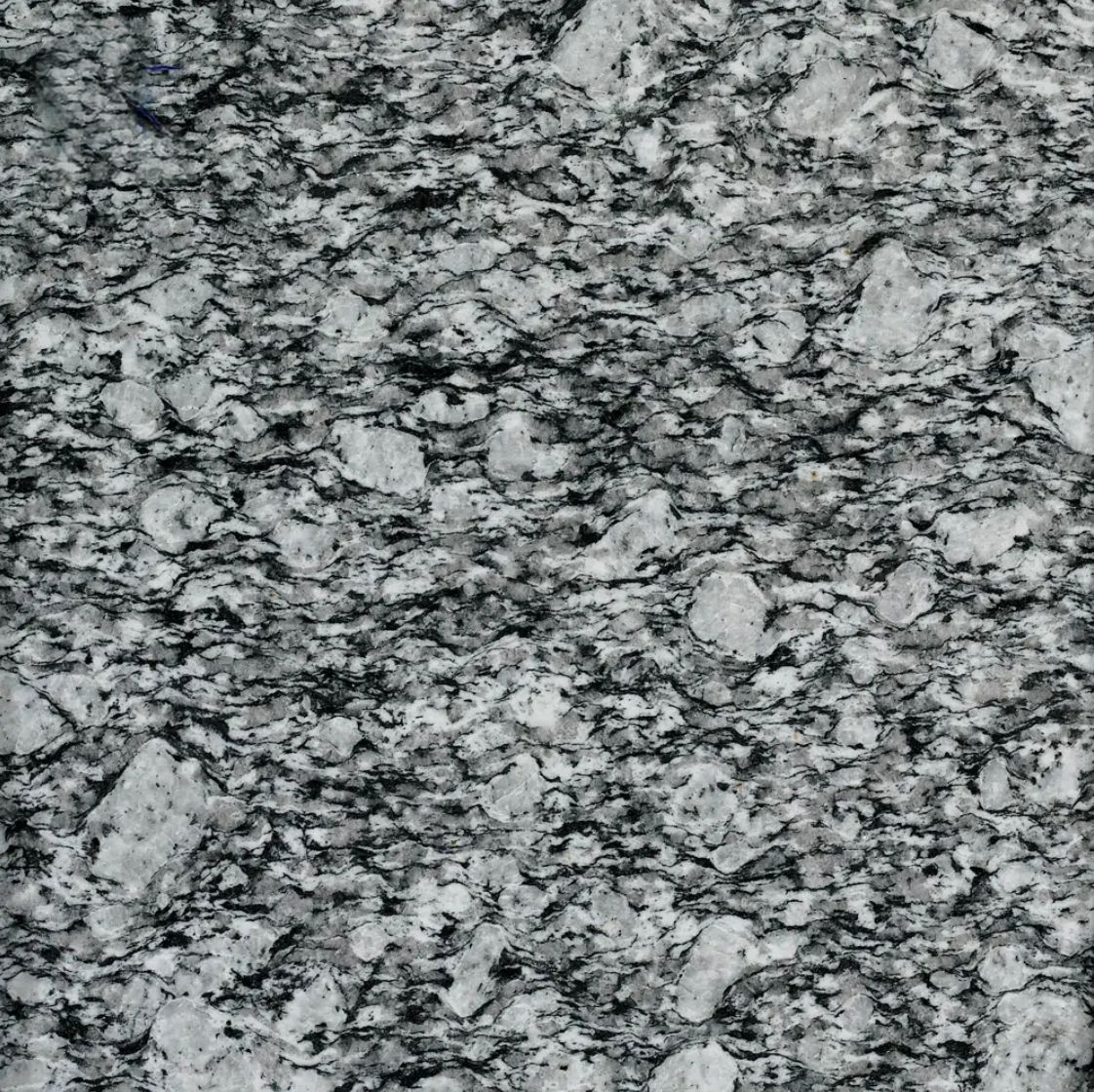
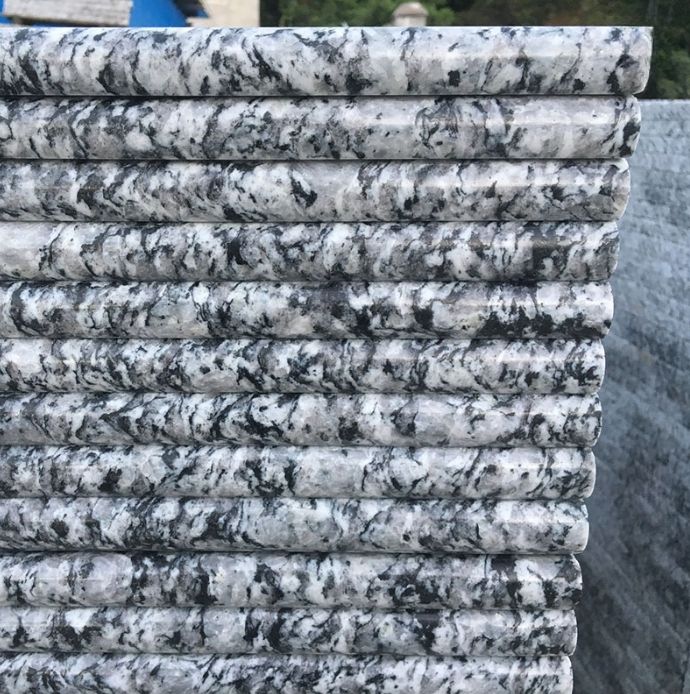
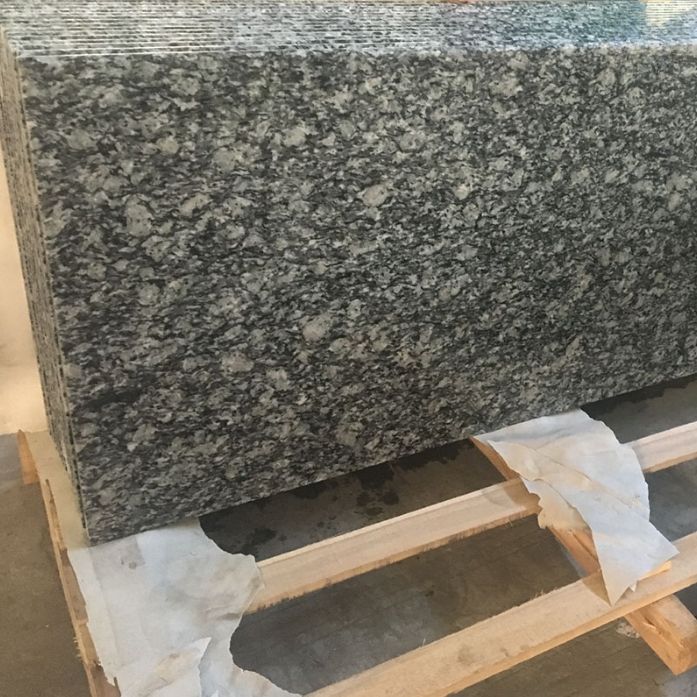
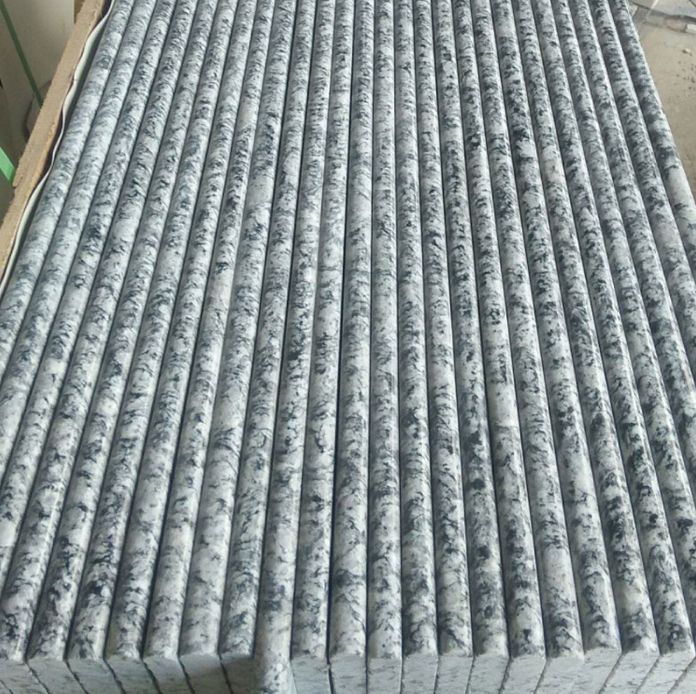
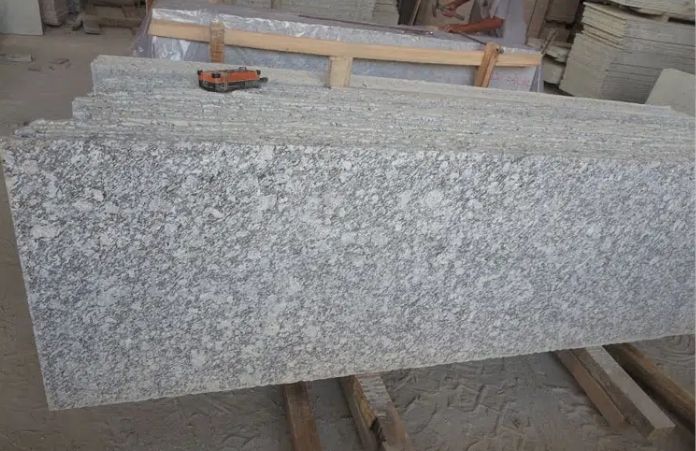
Visually, this family reads as a light grey base carrying wavy veins of lighter and darker grey, sometimes with black and occasionally with hints of beige or cream, in a medium-grained, densely packed texture whose crystalline grains catch raking light. Compared with a boldly veined marble, the wave is subtle: at 600×600mm or 600×1200mm the pattern does not repeat in an obvious way, which is exactly why this colour family works at large format. A strongly veined stone would look restless across a large floor; this one reads calm.
The practical consequence is easy to miss until the floor is laid: the wave runs in one direction. Unless the laying direction is fixed on the layout drawing, tilers will rotate tiles to suit the room as they work, and the finished floor will show waves crossing each other at 90° — a patchwork that no amount of cleaning or sealing will fix. Before production:
- Mark the laying direction on the shop drawing, and specify it in the order.
- Ask the factory to confirm the tiles are cut so the figure runs the same way across the batch.
- On a facade, be consistent: run the wave horizontally across panels, or vertically over the full height, and never mix the two on one elevation.
- For a continuous or near book-matched effect, ask for consecutive slabs from the same bundle. The figure comes from the block, so sequence matters here far more than it does with a plain granite.
Choosing a Finish for a Light Grey Granite
Finish matters more on a light grey stone than on a dark one, because light surfaces show water marking, fingerprints and fine scratches that a mid-tone or dark granite would hide.
- Polished is the most common finish for this family and the one that brings out the grain and the crystalline sparkle. It is also the least forgiving: on a light grey countertop or lobby floor, water spots and everyday marks are the main long-term complaint.
- Honed gives the same stone a flat matte surface that hides water spotting and everyday scuffing and is markedly easier to keep clean on a light floor. For large interior floor areas in this colour family, honed is the specification that ages best.
- Flamed and bush-hammered open the surface and produce the slip resistance exterior work needs. A flamed finish is the normal choice for paving, pool surrounds and exterior steps, where a polished surface would be unsafe when wet.
- Brushed or leathered sits between honed and flamed: a slight texture with a matte read, useful on floors where a little more grip is wanted without going fully textured.
On sealing, the honest position is that these are low-absorption granites — the published figures for the two variants above are 0.11% and 0.22% — so many interior installations need little or no sealer, and a very dense slab may not take sealer at all. Test rather than assume: put a drop of water on the surface. If it beads, any existing sealer is still working; if it darkens the stone within a few minutes, seal it. Remember that a penetrating sealer delays staining, it does not waterproof the stone, and on granite it is not protecting against acid attack the way it would on marble.
One identification check is worth running the moment a sample arrives: a genuine granite will not fizz when a drop of lemon juice or vinegar sits on it. If a light "granite" fizzes or leaves a dull etched mark after about a minute, it contains calcite and is marble, or a marble-bearing blend being sold under a granite trade name — which changes everything about how it must be handled, sealed and maintained.
Applications, Practical Limits and What to Confirm Before You Order
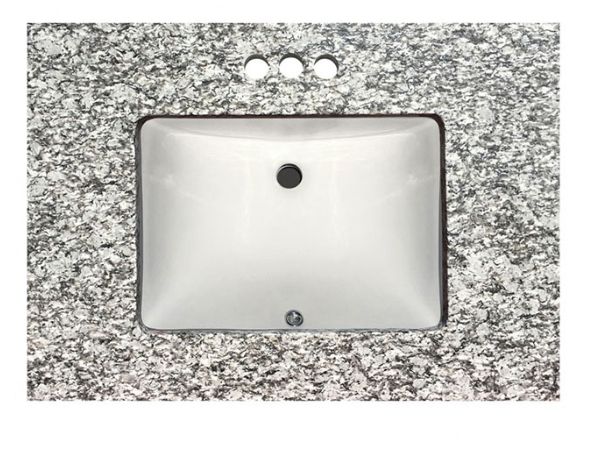
Where this family fits well: kitchen and bathroom countertops, vanities, interior and exterior flooring, wall cladding, stair treads, window sills, pool coping and wall capping, paving and cobbles, and monument work. Its low absorption and medium grain make it one of the better light greys for wet areas and for exterior exposure, without the freeze-thaw risk a porous limestone would carry in the same position.
Where to be deliberate:
- Joint lines. Light grey stone shows joints far more than dark stone does. Choose the grout colour deliberately against a sample panel rather than accepting whatever the contractor has on site, and consider a tight joint with a grout matched to the stone.
- Exterior use. Specify a textured finish for paving, steps and pool surrounds. Polished light grey outdoors is both a slip risk and a surface that dulls over time.
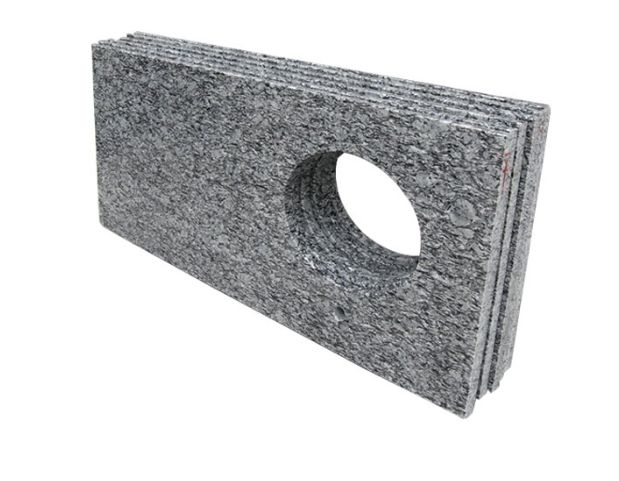
- Countertops. Discuss edge profile and overhang with your fabricator before ordering. The 20mm versus 30mm decision applies here: 30mm gives a solid edge without lamination and is more forgiving around sink and hob cutouts.
Treatment disclosure is the one thing buyers most often forget to ask about. Light stones are frequently resin-treated at the factory to fill natural pitting and reinforce microfissures, and slabs are often mesh-backed for stability in transit and during fabrication. Both are legitimate manufacturing steps, not defects, but they change behaviour in ways that show up later: a resin-treated slab takes up less sealer than an untreated one of the same stone, resin can yellow under prolonged UV exposure on light-coloured material, and it softens with strong solvents such as acetone. Ask for the treatment to be stated in writing on the order. If it is not disclosed, assume the slabs have been treated and set your sealer and cleaning regime accordingly.
Finally, the order checks that prevent most disputes: confirm that the samples you approve and the production lot will be shade-matched; ask for bundle photographs before the container is closed; specify the tile size grid and the laying direction on the layout drawing; and state the thickness tolerance you expect. Thickness is the most common quiet downgrade on a light-coloured tile order, because it is invisible in a photograph and only shows up as lippage on site.
Where to read next
- Pearl White granite and grey and white veined granite for other light-toned options
- White granite counter and floor supply and G603 light granite countertops
- Granite countertops guide — thickness, edges and fabrication
- Stone colour selection guide — how light stones read in different spaces and light
- Stone maintenance guide — sealing, cleaning and stain removal
Further Reading
Related guides: Granite Slabs Wholesale · Granite Countertop Cost Guide
Standards & references: ASTM C615 Granite Standard · EN 12057 Natural Stone Tiles
Frequently Asked Questions
Is Sea Wave granite the same as Spray White granite?
Not necessarily, even though the names are used interchangeably for the same visual family - a light grey granite with a wavy lighter and darker grey figure. Published supplier data traces Spray White to Mengyin County in Shandong (quoted under the code G377) and Sea Wave Flower to Xinyi in Guangdong (G4418). The two have different measured properties: water absorption of 0.11% versus 0.22%, and compressive strength of 204.7 MPa versus 149.1 MPa. Both are capable stones for tile, slab and countertop work, but because the names do not identify a single quarry, buy on the Chinese name and the G-code written on the proforma invoice, and on a physical sample from the production lot.
Does the wave pattern need to be laid in a particular direction?
Yes. The figure is directional - the wavy veins run one way - and if the laying direction is not fixed in advance, tilers will rotate tiles to suit the room and the finished floor will show waves crossing at 90 degrees to each other. That patchwork cannot be corrected afterwards. Mark the direction on the shop drawing, specify it on the order, and ask the factory to confirm that the tiles are cut so the figure runs the same way across the batch. On a facade, be consistent across the whole elevation: either horizontal across panels or vertical over the full height, never mixed.
Is Spray White granite suitable for kitchen countertops?
Yes. Water absorption is published at 0.11-0.22% depending on the variant, which is low, and like other granites it is not acid-sensitive, so it will not etch when lemon juice or vinegar is spilled on it - unlike marble or limestone. For a light-coloured countertop, honed is usually the more practical finish because it hides water spotting and everyday scuffing better than polished. Before you order, confirm with your fabricator whether 20mm or 30mm thickness suits your edge profile and overhang, and ask the supplier in writing whether the slabs have been resin-treated, since a resin-treated slab takes up less sealer than an untreated one.
Should Spray White or Sea Wave granite be sealed?
Test it rather than assuming. These are low-absorption granites, so many interior installations need little or no sealer, and a very dense slab may not accept sealer at all. Put a drop of water on the surface: if it beads, existing sealer is still working; if it darkens the stone within a few minutes, seal it. With a penetrating sealer, remember that it delays staining rather than waterproofing the stone, and that it will not prevent acid etching or scratching. If the slabs have been resin-treated at the factory, they will absorb less sealer than untreated stone of the same type, so the reapplication interval will differ.
How can I tell a light 'granite' is not actually marble?
Run the fizz test. Put a drop of household acid - lemon juice, vinegar or a soft drink - on an inconspicuous spot and leave it for about a minute. Marble and limestone are calcium carbonate, so they fizz and leave a dull etched mark; granite does not react. Because the test can dull a polished surface, use a sample offcut or the back of a tile. This matters because a stone sold as light grey granite but containing calcite needs a completely different maintenance regime: it must be sealed more often, must not be cleaned with acidic products, and will etch rather than stain when acid is spilled on it.
Specifications
| Specification | Value |
|---|---|
| Material | Natural Granite |
| Color | As shown — multiple color options available |
| Standard Sizes | Slabs: 2400×1200mm to 3000×2000mm | Tiles: 305×305mm to 600×600mm (custom available) |
| Thickness | 10mm / 12mm / 15mm / 18mm / 20mm / 30mm (custom on request) |
| Thickness Tolerance | ±1mm (standard), ±0.5mm (premium, specify in order) |
| Surface Finish | Polished, Honed, Flamed, Bush-Hammered, Flamed + Brushed, Sandblasted |
| Water Absorption | ≤0.4% (ASTM C97) |
| Compressive Strength | ≥130 MPa (ASTM C170) |
| Packing | ISPM-15 fumigated wooden crates / pallets. Polished faces interleaved with protective sheets. |
| MOQ | 1 × 20ft container (approx. 400-500 m² slabs or 500-1,100 m² tiles) |
| Delivery Time | 15-25 days after deposit confirmation |
| Payment Terms | T/T (30% deposit, 70% before shipment), L/C at sight |
Related Resources
- Quality Control Standards — ASTM / EN testing and 6-stage inspection process
- Container Loading Guide — Maximize your shipment efficiency
- Request a Quote — Get pricing and availability for this product
Related Products
Inquire About This Product
Contact us for pricing, samples, or custom specifications.
Get a Quote