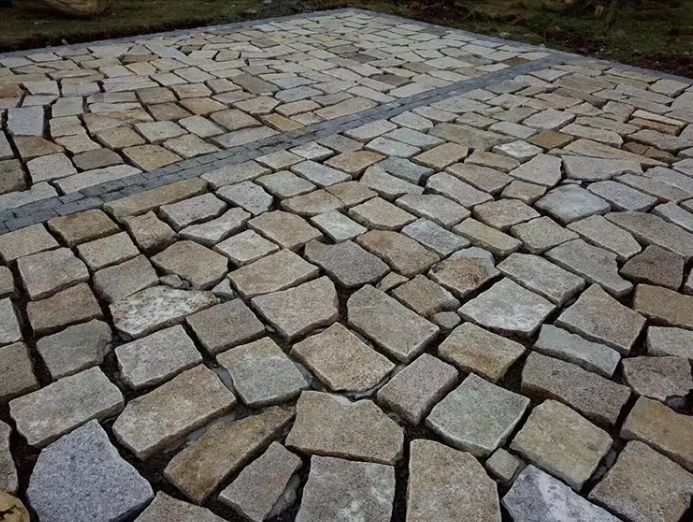
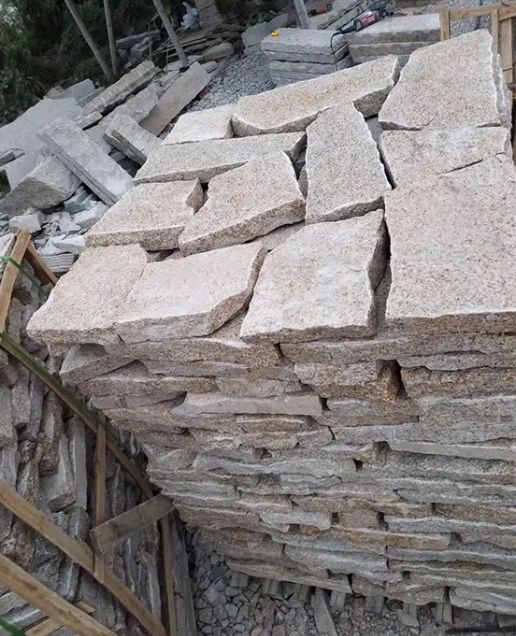
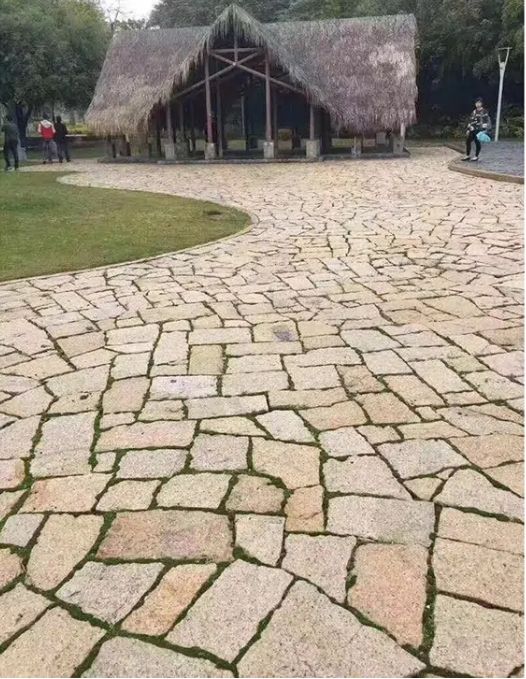
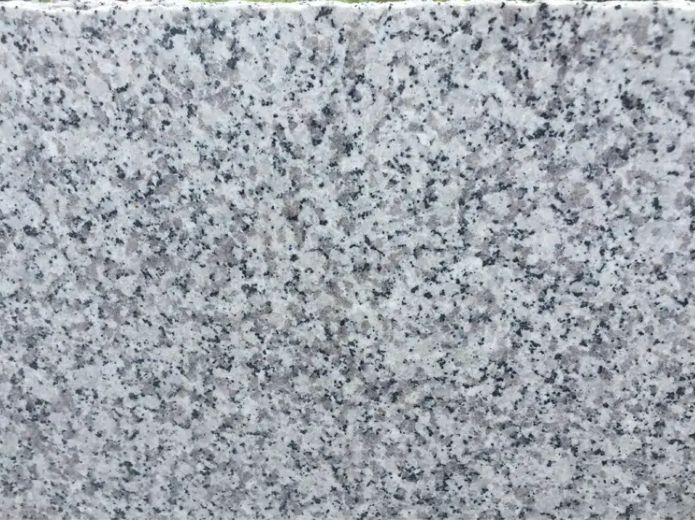
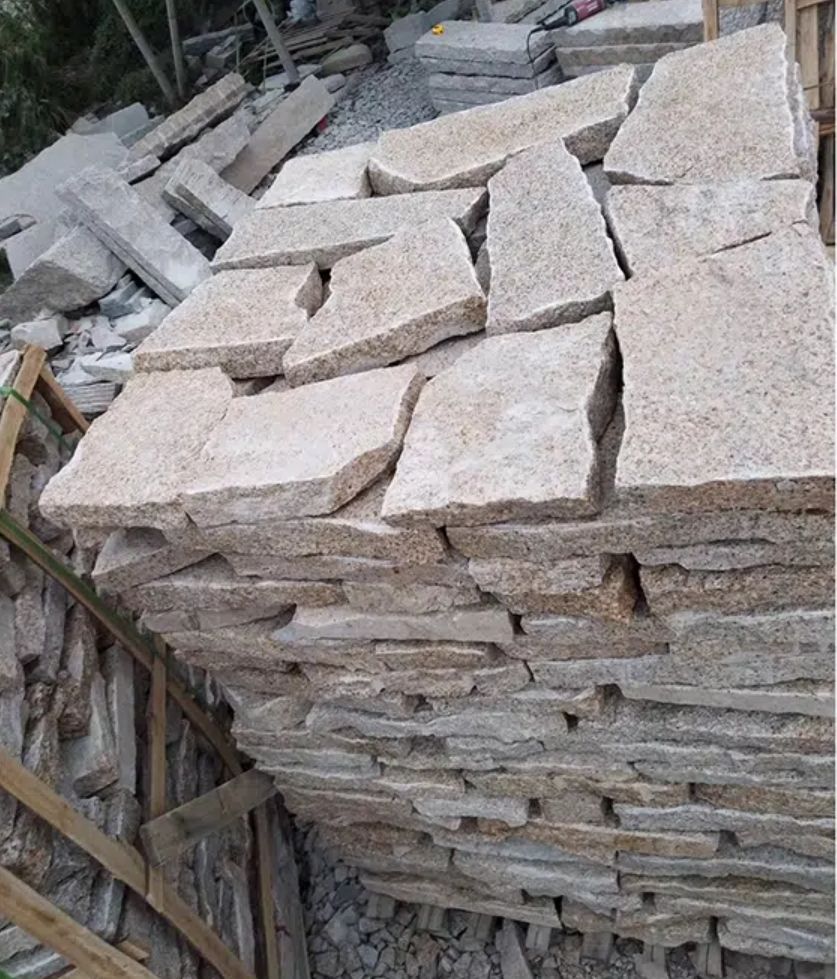
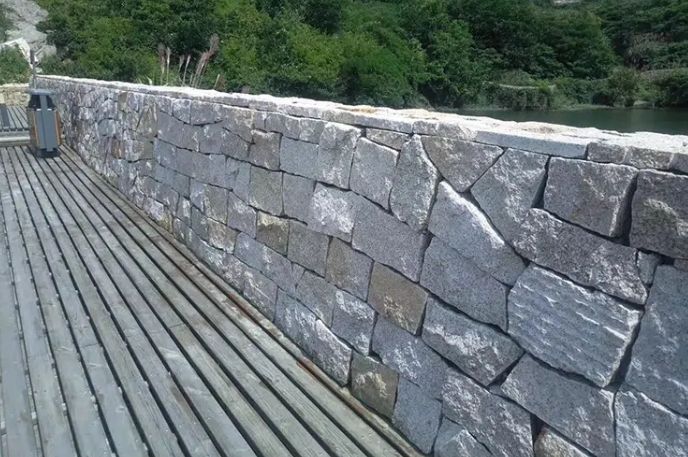
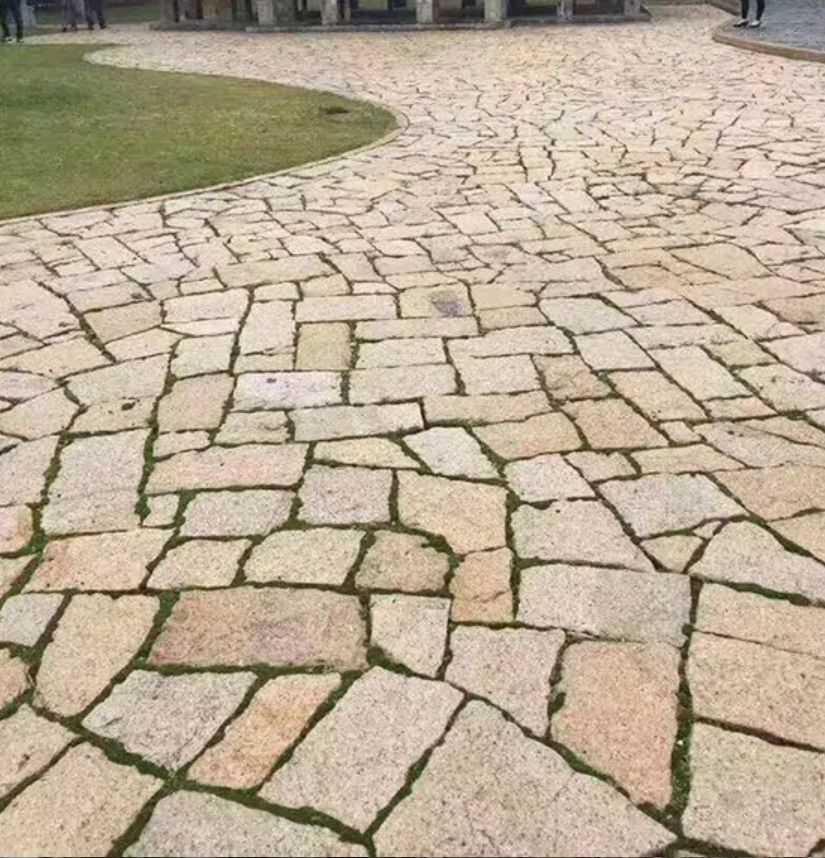
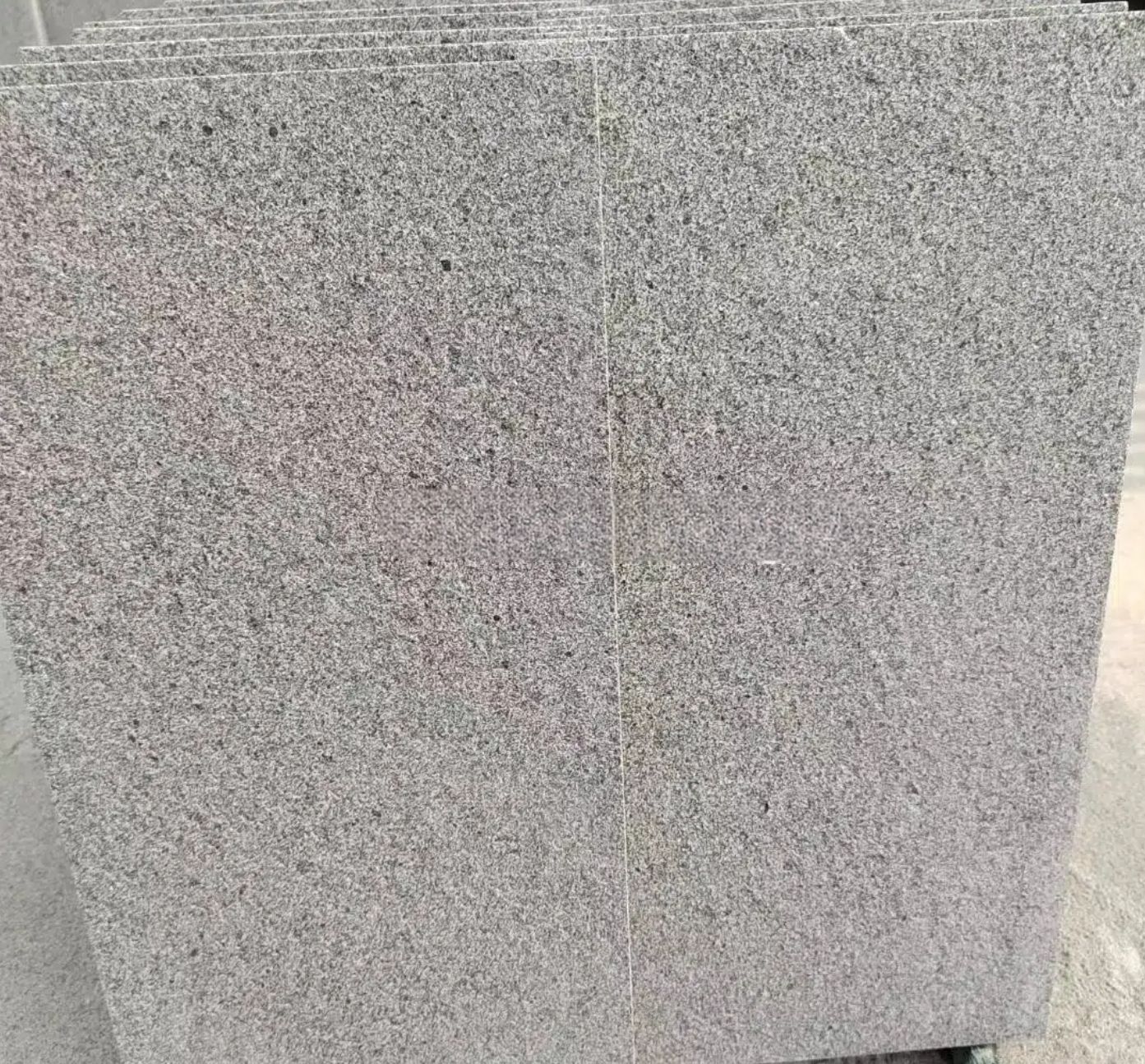
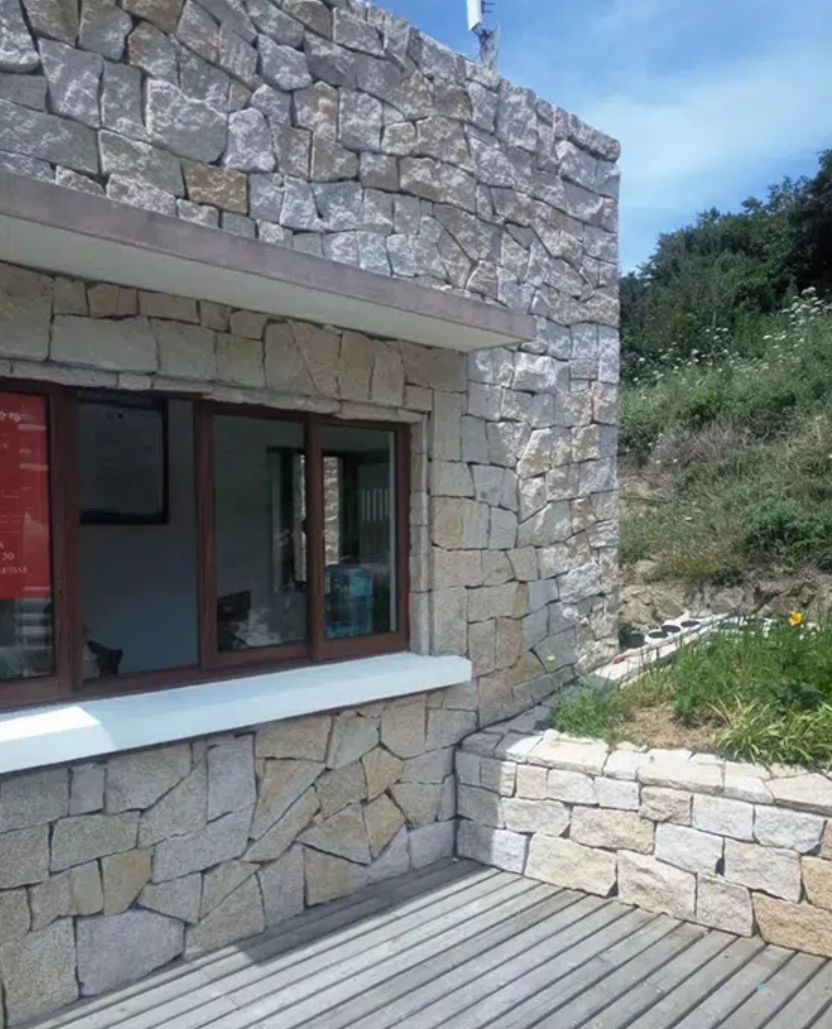
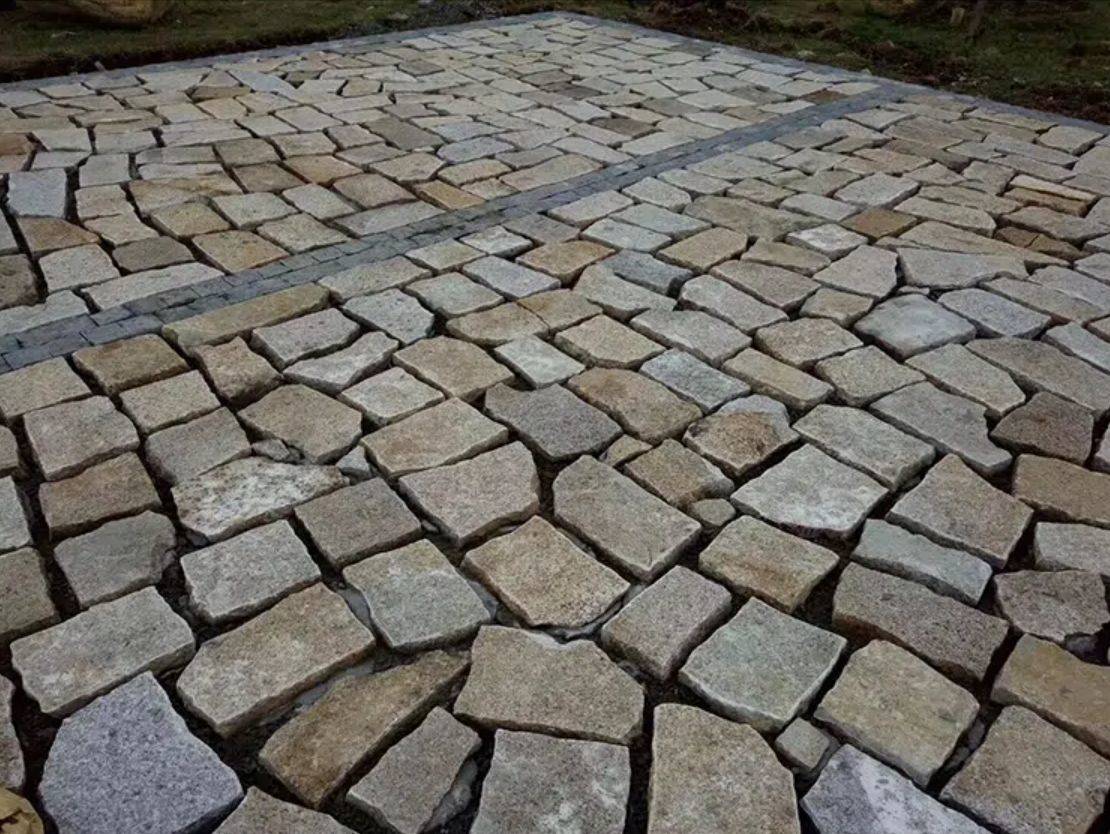
Detailed Specifications
One of the key benefits of natural stone paving is its durability. Natural stone is incredibly strong and can withstand heavy foot traffic, harsh weather conditions, and other forms of wear and tear. This makes it an ideal choice for high-traffic areas such as walkways, driveways, and patios.
Key Takeaways
- Natural granite paving — density around 2.6–2.8 t/m³ (2.7 typical), water absorption ≤0.4% (ASTM C97), compressive strength ≥130 MPa. Values vary by variety; confirm per batch.
- Thickness and sub-base decide how long a driveway lasts, not the stone. 60 mm setts for cars, 80 mm where vehicles turn, over 150 mm compacted MOT Type 1.
- Flamed or bush-hammered finishes only for vehicle areas — polished stone is not suitable outdoors.
What "Cheap" Actually Means in Driveway Paving
In this category the low price comes from the format, not from a lesser stone. Cube setts and thin calibrated pavers are cut in very large volumes from quarry blocks and offcuts, and a 30 mm calibrated paver costs less per square metre than a 60 mm sett in the same granite simply because it contains half the cubic metres of a material sold by weight and volume. Buying the cheap format is a rational choice for a driveway — provided the thickness still matches the load.
What is not rational is economising on what goes underneath. Published trade guidance on paving failure is unusually unanimous: the sub-base and bedding decide how long a driveway lasts, and a premium surface laid on a shallow or poorly compacted base will fail within 5–10 years whatever it cost. Three variables decide the outcome — paver thickness matched to the traffic, sub-base depth and compaction, and edge restraint on at least three sides. Cut any one of them and the saving is paid for twice.
Driveway Build-Up: Sub-Base, Bedding, and Load Class
The figures below are the build-ups commonly specified in the UK and Irish markets, which follow the same principles used elsewhere. Where your local specification differs, the ratios still hold: thicker, better-compacted base for heavier traffic, full mortar bedding for anything with wheels on it, and restraint at the edges.
| Traffic | Paver thickness | Sub-base (compacted) | Bedding |
|---|---|---|---|
| Pedestrian paths, patios | 30–50 mm | 100 mm graded crushed stone | 30 mm sharp sand or mortar |
| Cars and light vans | 60 mm (80 mm at turning zones) | 150 mm Type 1 (some guides specify 200 mm) | 30–40 mm semi-dry 4:1 mortar |
| Regular heavier vehicles | 80 mm | 200 mm Type 1 | 30–40 mm semi-dry mortar |
| Commercial, refuse trucks, HGV access | 80–100 mm; 100 mm cubes at turning zones | 200–250 mm Type 1, or a 150 mm reinforced concrete slab | Full wet mortar bed |
Note the spread in the depth column: most UK guidance puts a domestic driveway at 150 mm compacted, while at least one published guide specifies a 200 mm minimum laid in two lifts. Where the ground is soft or the loading uncertain, the deeper figure is the safer specification.
The sub-base. MOT Type 1 is the reference material: a graded crushed aggregate from 40 mm down to fine dust, specified to Clause 803 of the UK Specification for Highway Works. Equivalent 0/40 graded crushed stone, crusher run or G5 does the same job. Type 1 gains its strength through particle interlock, so it must be laid in lifts no deeper than about 100 mm and fully compacted before the next lift goes down — compacting a single 200 mm layer is the classic cause of later settlement. Compaction reduces loose depth by roughly 20%, so allow about 180 mm loose to finish at 150 mm compacted. Compact the subgrade first, and on soft clay (CBR below about 2%) lay a geotextile membrane to stop fines migrating upward.
Bedding and restraint. Dry sharp sand is acceptable under pedestrian paving only. Anything carrying vehicles needs a 30–40 mm semi-dry mortar bed — typically four parts sharp sand to one part cement — laid full, not spot-dabbed, which is the most common defect behind rocking and cracked pavers. Edge restraint is not optional: a concrete-hauled kerb or edge course on at least three sides stops the pavement spreading under turning loads. Keep falls at 1:60 to 1:80 away from the building and finished paving at least 150 mm below the damp-proof course. Total excavation for an 80 mm sett over 150 mm of Type 1 and a 35 mm bed is roughly 260–280 mm below finished level.
If the drive has to be permeable. Type 1 contains fines, so it is not free-draining — do not specify it under a permeable surface. A fully permeable build substitutes an open-graded 4–20 mm aggregate (Type 3 in the UK), permeable bedding and open joints. BS 7533-103:2026 covers the design and installation of modular permeable pavements in natural stone setts to BS EN 1342, for axle loads up to 11,000 kg; BS 7533-3 covers block paving installation generally. In England, paving a front garden of more than 5 m² requires either a permeable surface or drainage to a SuDS-compliant area, otherwise planning permission is needed. Rules differ in other countries — check locally before you quote.
Lifecycle Cost: Natural Stone vs Concrete, Asphalt, and Resin-Bound
Basis for these figures: the installed costs are the ranges published in UK trade cost guides for 2025–26, converted at the time of writing. They are indicative, and the sources themselves vary by up to a factor of two — one guide notes a 20–30% uplift in South-East England alone. Your local material and labour costs will differ. What transfers between markets is the pattern: the ordering of the options, the design lives, and the maintenance rhythm.
| Material | Installed cost / m² | Design life | Recurring maintenance |
|---|---|---|---|
| Asphalt / tarmac | £40–90 | 15–25 years | Reseal every 3–5 years at £3–6/m², plus £30–100/yr |
| Concrete (incl. pattern-imprinted) | £40–120 | 25–40 years | Minimal — crack repair, optional sealing |
| Resin-bound | £45–135 | 10–25 years, base-dependent | £30–80/yr; requires a solid base beneath it |
| Natural stone | £80–180+ | 30+ years to a lifetime; one UK council whole-life appraisal assigns granite pavers a 100+ year design life | £40–100/yr, plus re-pointing around 10–15 years |
The honest conclusion. On day-one cost, natural stone loses, and no amount of lifecycle framing changes that. On a straight 25-year whole-life calculation, published analysis generally puts concrete ahead, because concrete rarely needs replacing inside its design life and stone's annual maintenance is higher.
That comparison assumes the pavement is never opened up. Add one utility dig-up or drainage repair and the ranking changes, because stone setts can be lifted, cleaned and relaid while concrete and asphalt are broken out and replaced. Resin-bound is the option to treat with most caution: it is the most sensitive of the four to the base beneath it and repairs are hard to patch invisibly. Asphalt looks cheapest on day one and usually is not — resealing every three to five years erodes most of its upfront advantage over a 15–25 year life.
So: specify stone where the pavement must survive being dug up, where loading is heavy and repeated, or where the appearance has to hold for decades without replacement. Specify concrete where the budget is genuinely tight and the ground underneath will not be touched.
Specifying and Maintaining the Stone Itself
Which granite. A driveway does not need a premium colour-matched granite. The workhorses are G654 (Padang Dark), G562 (Maple Red), G603 (Padang Light) and G684 black basalt — all supplied flamed or bush-hammered for grip. Polished stone is never appropriate outdoors: it carries no exterior slip rating and becomes dangerous when wet. Darker stone conceals tyre marks and moss better; lighter stone runs measurably cooler under strong sun, which matters on an unshaded drive in a hot climate where dark paving can reach 130–145°F (54–63°C) at midday.
Joints. Polymeric jointing sand resists washout and weeds far better than plain sand and helps lock the setts together through freeze-thaw. Inspect annually and top up when the joint falls below about two-thirds of the paver thickness or a probe drops more than roughly 12 mm — typically every three to five years. Re-sand in spring, sweep diagonally, compact with a foam-padded plate, sweep again and mist lightly to activate.
Sealing. Use a breathable penetrating sealer, not a film-forming acrylic, which traps moisture and can cause spalling and cloudiness. Do not seal for at least a year after installation: sealing too early traps salts and efflorescence appears as white patches later. Allow 24 hours before foot traffic and 48–72 hours before vehicles. Reapply every two to four years — if water no longer beads, it is time.
Winter. Avoid sodium chloride rock salt. It accumulates in the pores and joints, discolours the stone and drives scaling and efflorescence. Clear snow first, then apply calcium chloride, magnesium chloride or CMA sparingly; plain sand or granite grit gives traction with no chemical load, but sweep it up afterwards so it does not grind into the joints. When pressure washing, stay at or below 2,000 psi with a wide fan tip and never direct the jet hard at the joints.
Specifications
| Specification | Value |
|---|---|
| Material | Natural Granite |
| Color | As shown — multiple color options available |
| Standard Sizes | Slabs: 2400×1200mm to 3000×2000mm | Tiles: 305×305mm to 600×600mm (custom available) |
| Driveway Formats | Setts 100×100mm, 200×100mm, 200×200mm | Cobbles on mesh | Kerbs and edging | Custom cut to drawing |
| Driveway Thickness | 30mm / 50mm (pedestrian) · 60mm (domestic vehicles) · 80mm (turning and heavier vehicles) · 100mm cubes (commercial) |
| Thickness | 10mm / 12mm / 15mm / 18mm / 20mm / 30mm (custom on request) |
| Thickness Tolerance | ±1mm (standard), ±0.5mm (premium, specify in order) |
| Surface Finish | Polished, Honed, Flamed, Bush-Hammered, Flamed + Brushed, Sandblasted |
| Water Absorption | ≤0.4% (ASTM C97) |
| Compressive Strength | ≥130 MPa (ASTM C170) |
| Packing | ISPM-15 fumigated wooden crates / pallets. Polished faces interleaved with protective sheets. |
| MOQ | 1 × 20ft container (approx. 400-500 m² slabs or 500-1,100 m² tiles) |
| Delivery Time | 15-25 days after deposit confirmation |
| Payment Terms | T/T (30% deposit, 70% before shipment), L/C at sight |
Further Reading
Related guides: Natural Stone Paving Guide · Stone Installation Best Practices · Stone vs Porcelain Outdoors · Stone Maintenance Guide · Natural Stone Price Guide 2026
Related products: Granite Pavers, Cheap Driveway Paving · G562 Maple Red Driveway Paving · G654 Granite Paving Bricks · Volcanic Lava Stone Paving · G654 Granite Kerbstone
Standards & references: ISO 9001 Quality Management · ASTM C97 Water Absorption
Frequently Asked Questions
What thickness of paving stone do I need for a driveway?
For cars and light vans, 60 mm is the standard, rising to 80 mm where vehicles turn or heavier vehicles use the drive. Pedestrian paths and patios take 30–50 mm; commercial traffic and refuse trucks call for 80–100 mm, with 100 mm cubes at turning zones. Thickness only performs with the right build-up: 150 mm of compacted sub-base for a domestic drive, 200–250 mm for commercial traffic, and a full mortar bed rather than spot bedding.
What sub-base does a natural stone driveway need?
For a domestic driveway, 150 mm of compacted MOT Type 1 (0/40 mm graded crushed stone, UK SHW Clause 803; crusher run or G5 equivalents elsewhere) is the commonly specified depth, rising to 200–250 mm for commercial traffic. Lay it in lifts no deeper than 100 mm and compact each fully — a single 200 mm layer will settle later. Allow about 180 mm loose to finish at 150 mm compacted, use a geotextile on soft clay, and restrain the edges on at least three sides.
Is natural stone cheaper than concrete or asphalt over its life?
On day-one cost, no — natural stone is the most expensive of the four options, and concrete is generally ahead on a straight 25-year whole-life calculation. Stone wins when the pavement has to be opened up: setts can be lifted and relaid, while concrete and asphalt are broken out and replaced. Asphalt's low upfront price is usually eroded by resealing every three to five years, and resin-bound is the most sensitive to the quality of the base beneath it.
Do I need planning permission, or permeable paving?
In England, paving a front garden of more than 5 m² requires a permeable surface or drainage to a SuDS-compliant area, otherwise planning permission is required. A fully permeable build needs an open-graded sub-base rather than Type 1, which contains fines and does not drain, plus permeable bedding and open joints, detailed to BS 7533-103:2026. Rules differ by country and by municipality, so confirm locally before quoting.
How do I clear snow and ice without damaging the stone?
Avoid sodium chloride rock salt — it collects in the pores and joints, discolours the stone and drives scaling and efflorescence. Clear snow first, then use calcium chloride, magnesium chloride or CMA sparingly. Plain sand or granite grit gives traction without chemicals, but sweep it up afterwards so it does not grind into the joints. If you pressure wash, stay at or below 2,000 psi with a wide fan tip, never aimed hard at the joints.
How much area does a container of driveway setts cover?
A 20 ft container carries roughly 25 t of net stone after allowing 1.5–2 t for crates and pallets. At about 2.7 t/m³ that is 9–9.5 m³ of solid stone — roughly 150 m² as 60 mm setts, 115 m² as 80 mm, or 300 m² as 30 mm pavers before any allowance for packing voids, so treat those as upper figures. If your market caps road weight below the ocean limit, we will plan the load to the lower figure.
Related Resources
- Quality Control Standards — ASTM / EN testing and 6-stage inspection process
- Container Loading Guide — Maximize your shipment efficiency
- Request a Quote — Get pricing and availability for this product
Related Products
Inquire About This Product
Contact us for pricing, samples, or custom specifications.
Get a Quote