Basalt Stone Paver Lava: Color & Texture
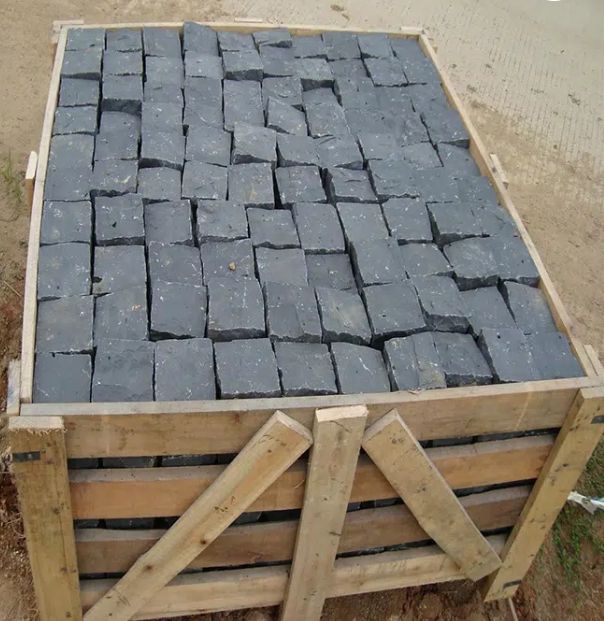
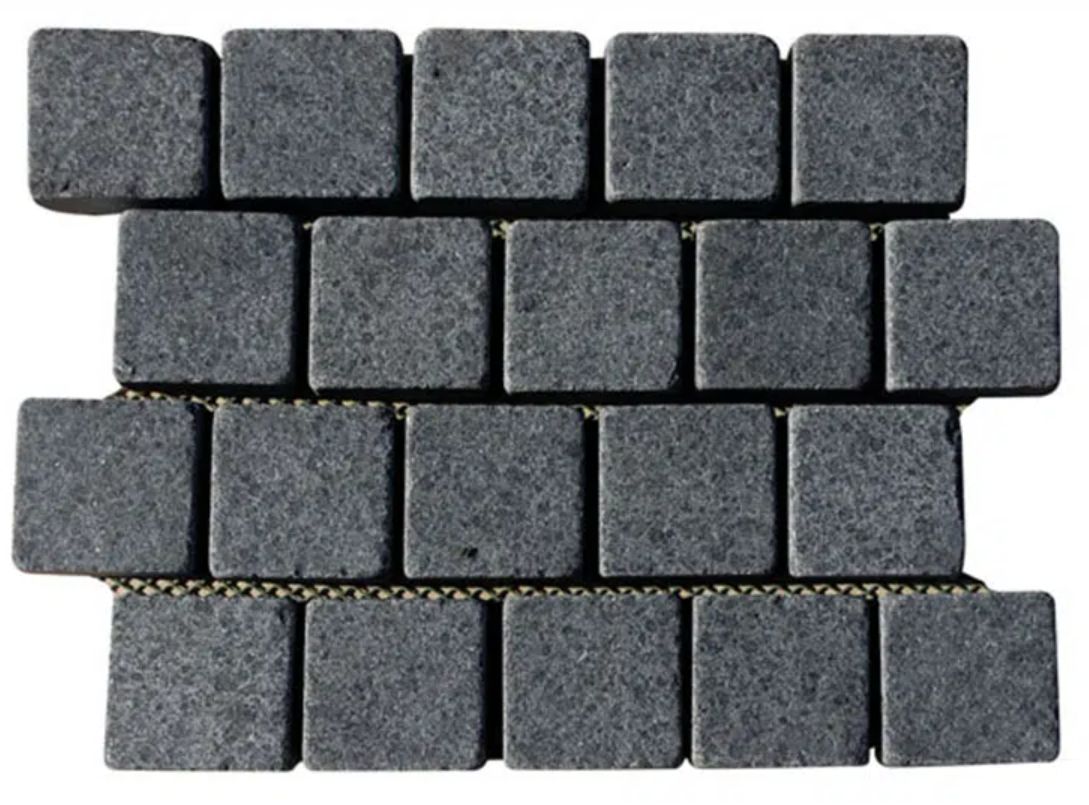
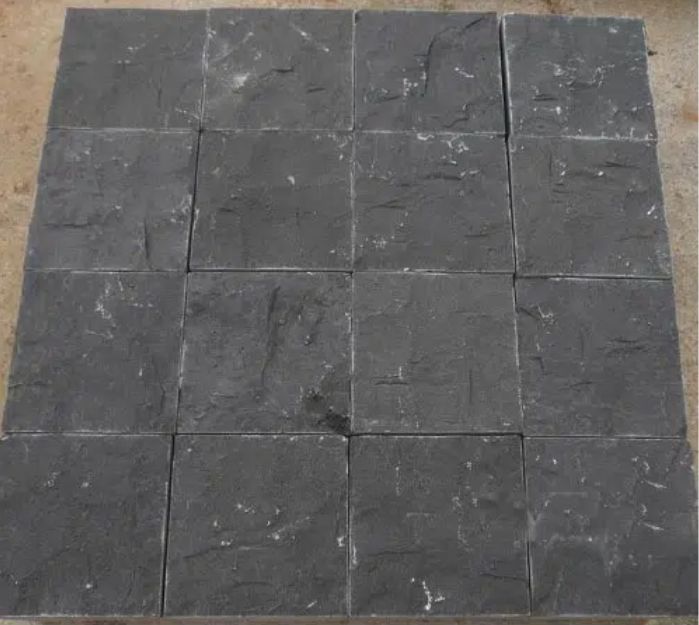
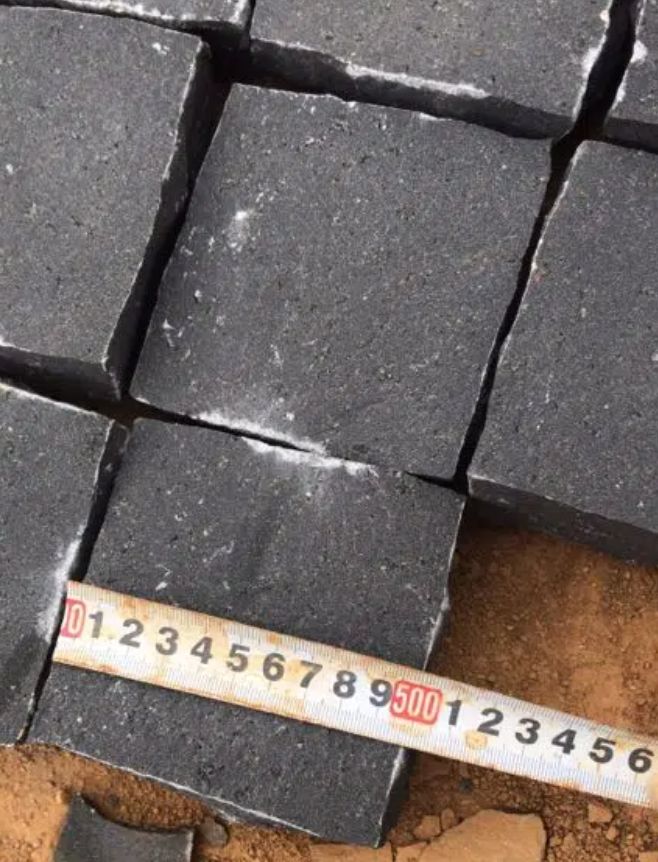
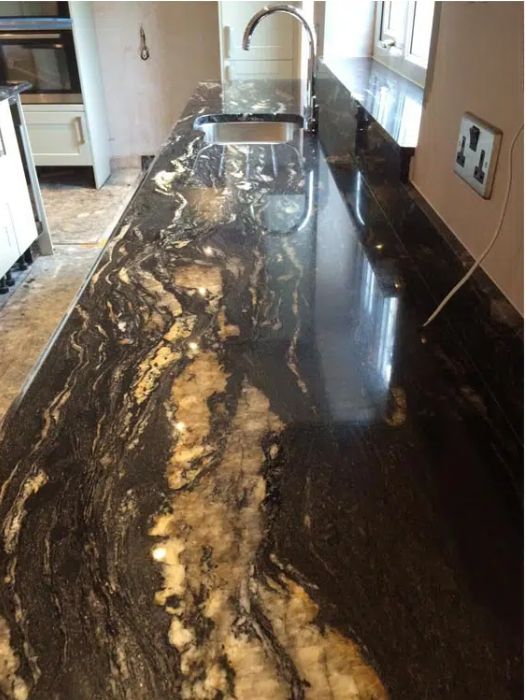
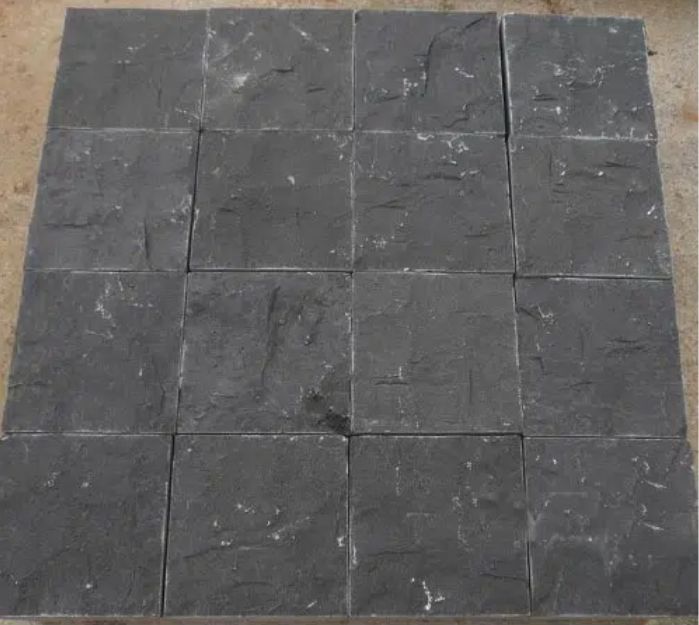
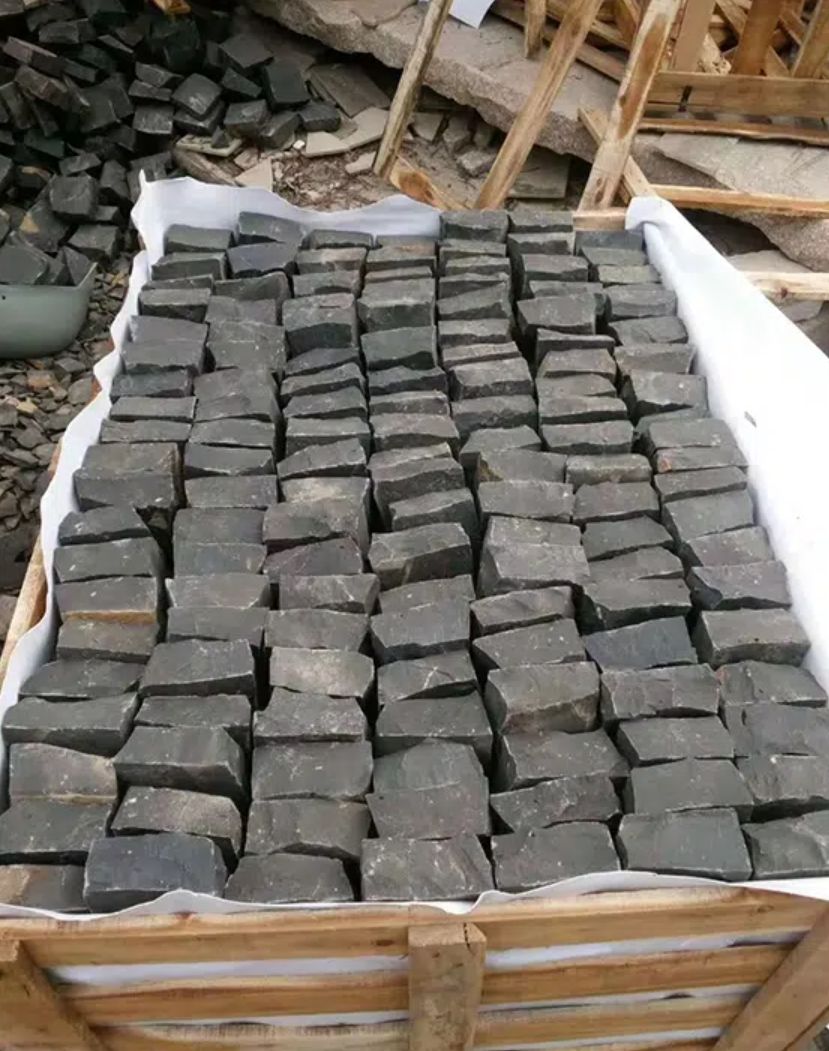
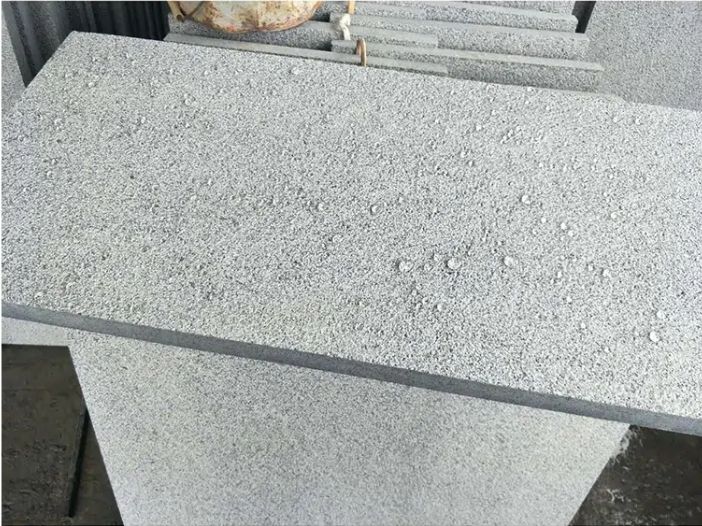
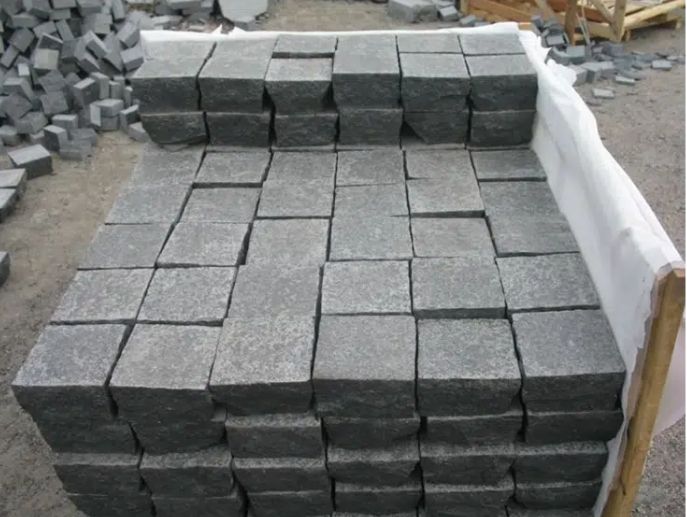
This natural volcanic stone from China is formed from solidified lava, characterized by a dark grey to black color palette and uniformly fine-grained texture. Unlike granites that display speckled crystalline patterns, this basalt offers a consistent, subdued surface that complements modern, minimalist, and contemporary architectural styles. Available surface finishes include natural split (the most common for outdoor paving), flamed (enhanced slip resistance), bush-hammered (decorative texture), and honed (smooth matte). When polished, the stone reveals a deep, near-black luster that compares favorably to premium dark granites at a more accessible price point.
Key Takeaways
- Dense basalt — density 2,600–2,900 kg/m³, water absorption 0.1–0.3%, compressive strength 180–250 MPa. Porous Hainan lava is a different material at roughly 2,400–2,500 kg/m³ — see the comparison below
- Hardness: 5–7 Mohs, suitable for both interior and exterior applications when properly specified
- Phoenix Power Stone factory-direct supply — 108,000 sqft facility, Shandong, China, 24+ years of export experience
Basalt Stone Paver Lava Technical Properties
Basalt is one of the densest and strongest natural stones available for construction. Cross-referenced supplier specifications indicate basalt from Chinese quarries typically achieves a density of 2,600–2,800 kg/m³, water absorption of approximately 0.18% (well below the 0.4% threshold for frost-resistant stone per ASTM C97), and compressive strength ranging from 110 MPa to over 400 MPa depending on the specific quarry formation. This combination of low porosity and high strength makes this basalt exceptionally well-suited for exterior freeze-thaw applications — it resists water penetration, spalling, and cracking under extreme temperature cycles. The stone is also highly resistant to de-icing salts, a practical advantage for paving installations in cold-region urban environments.
Basalt Stone Paver Lava Outdoor Paving
The original product description identifies walkways, patios, and pool decks as primary applications For outdoor paving installations, a flamed or natural split surface provides the slip resistance required by building codes for public wet areas (typically R11–R12 per DIN 51130). The stone's naturally dark color also offers a practical benefit in exterior settings: it shows less visible staining from organic debris, tire marks, and weathering than lighter-colored paving materials. Standard formats include setts (8×8cm and 10×10cm), tiles (300×300mm to 600×600mm), and kerbstones (1,000×300×150mm). Custom dimensions are available from Phoenix Power Stone's Shandong factory on request.
Basalt Stone Paver Lava Building & Construction
The original page lists retaining walls, foundations, and facades as construction applications. Basalt's high compressive strength and low water absorption make it a reliable material for load-bearing and ground-contact installations. As a facade material, Basalt stone in a honed or flamed finish provides a monolithic dark surface that architects specify for contemporary commercial buildings, cultural institutions, and high-end residential projects. The stone can be supplied as dimensional cladding panels cut to project specifications.
Basalt Stone Paver Lava Architectural Features
Columns, staircases, and decorative architectural elements are identified in the original product content. The stone's fine-grained structure allows it to be cut, shaped, and finished with precision — honed surfaces produce a smooth matte appearance suitable for interior stair treads and lobby columns; polished surfaces achieve a reflective dark finish for feature elements. Custom applications include tabletops, fountain surrounds, and landscape edging. The uniform dark coloration of this basalt ensures batch-to-batch consistency across large architectural projects.
Basalt Stone Paver Lava Sourcing — China Wholesale
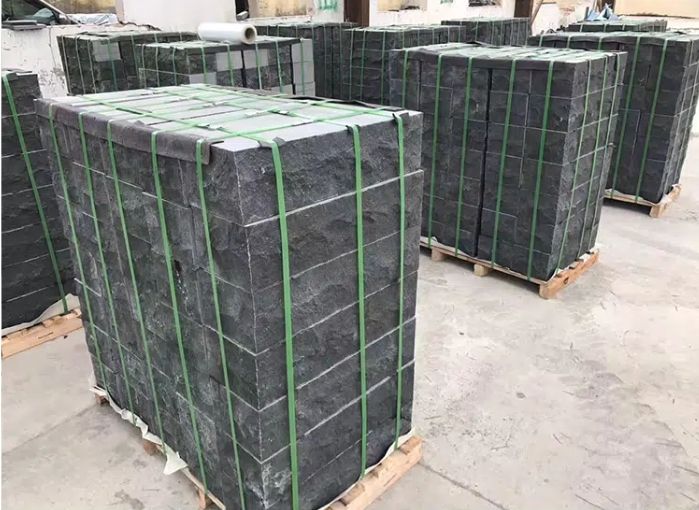
Phoenix Power Stone processes basalt pavers at our 108,000 sqft facility in Laizhou, Shandong. The stone is available in setts, tiles, kerbs, and custom-cut dimensions. Surface finishes: natural split, flamed, bush-hammered, honed. Standard thicknesses range from 10mm to 40mm depending on format. All orders ship from Qingdao port in ISPM-15 compliant packaging — bulk bags for setts, wooden crates for tiles and kerbs. Custom palletization and retail-ready labeling are available for wholesale distributors. Contact Phoenix Power Stone for current FOB China pricing on these basalt pavers, samples, and container-load quotations. Batch-specific test reports and third-party inspection (SGS/Bureau Veritas) are available upon request.
One planning note specific to this material: dense basalt weighs about 2.9 t/m³, so a 20 ft container weighs out long before it cubes out. If your market caps road weight below the ocean limit — Poland works to roughly a 24 t gross ceiling — say so at quotation stage and we will plan the load to the lower figure. Container quantities by thickness are in the FAQ below.
"Lava" vs. Dense Basalt: Two Different Stones Under One Trade Name
In the Chinese export trade "basalt", "black basalt" and "lava stone" are used loosely for two materials with very different measured properties. The price gap between them is small; the performance gap is not.
Dense basalt — the Fuding / G684 type from Fujian, also quarried in northern China — is a compact, non-vesicular rock: roughly 2,900–3,000 kg/m³, water absorption of 0.1–0.3%, and compressive strength around 180–250 MPa. This is the grade for driveways, kerbs, steps, walling and anything that has to hold a fixing.
Porous lava — Hainan black lava is the common export grade — is genuinely vesicular, with gas holes typically 1–20 mm across: around 2,400–2,500 kg/m³, water absorption of 1.0–1.9%, compressive strength as low as 49 MPa and flexural strength near 11 MPa. A denser Hainan / Yunnan variant is also sold at about 2,580 kg/m³ with 0.3% absorption and 205 MPa compressive strength — which is the problem: the trade name does not tell you which one you have.
That is why published water absorption figures for "Chinese basalt" range from 0.18% to 1.91% across suppliers: the spread is real and tracks the porous/dense split rather than measurement error. The holes are not a defect — they give Hainan lava its grip (one supplier reports SRV 89 dry / 84 wet on a sawn surface) and its evaporative cooling, which is why it is specified around pools. But porous lava cannot carry the same load at the same thickness and must not be substituted for dense basalt in a driveway or structural application without re-checking the design. Ask for the quarry name and a batch water-absorption figure before accepting a price.
| Property | Dense basalt (G684 / Fuding type) | Porous lava (Hainan black lava) |
|---|---|---|
| Density | 2,900–3,000 kg/m³ | 2,400–2,500 kg/m³ |
| Water absorption | 0.1–0.3% | 1.0–1.9% |
| Compressive strength | 180–250 MPa | ~49 MPa |
| Surface | Closed, uniform, fine-grained | Open pores 1–20 mm |
| Specify for | Driveways, kerbs, steps, walling, structural work | Pool surrounds, wet walkways, shaded paving, cladding |
Basalt vs. Granite: What Actually Differs in the Yard and on the Saw
Basalt is extrusive — the lava cooled quickly at the surface, so its crystals are fine and uniform and there is no visible speckle. Granite is intrusive — it cooled slowly underground, so a polished slab shows interlocking crystal faces. That single geological difference drives three practical ones.
Appearance and supply consistency. Basalt reads as near-uniform charcoal to black and varies little from block to block — an advantage on a multi-container project where the paving must look like one surface. Granite gives speckle, veining and a far wider colour range; if the design depends on movement in the stone, basalt is the wrong material.
Cutting and tooling. Counter-intuitively, granite carries more free silica — roughly 65–75% SiO₂ against 45–55% for basalt — so granite is generally the more abrasive on tooling. Basalt's cost is toughness: its fine grain offers no cleavage planes for a crack to follow, so it absorbs energy before fracturing and produces a very fine slurry. Water-fed cutting and a hard-bond diamond blade are essential; fabricators describe basalt as punishing a dull or soft-stone blade with chipping and slow cuts. Expect a hard-stone fabrication rate, and ask what blade and finish schedule a suspiciously cheap quote assumes.
Wear in service. A 2023 study in Coatings on skid-resistance attenuation of pavement aggregates ranked durability of skid resistance as basalt > granite > amphibolite > limestone. Field experience adds a caveat the other way: dense dark stone can develop a natural polish along wheel paths over several years, so specify bush-hammered or re-textured zones on turning areas and ramps from the outset.
Slip Resistance by Finish — and Why the Rating Is Not the Whole Story
Finish determines slip performance far more than stone type does. These are DIN 51130 ramp-test values, the standard European reference for paving and flooring.
| Finish | Typical DIN 51130 rating | Where it belongs |
|---|---|---|
| Polished | Not rated for exterior use | Interior feature work only — never outdoors or around water |
| Honed | Around R10 | Covered walkways, interior floors, dry areas |
| Natural split | Textured; varies with the split | Traditional paving — verify the batch, split depth varies |
| Flamed | R11–R12 | Standard exterior specification: paving, steps, pool surrounds |
| Bush-hammered | R12 | Maximum texture — ramps, steep approaches, vehicle turning areas |
R11 corresponds to roughly a 19–27° slip angle and R12 to 27–35°; the nearest pendulum equivalents are PTV 34–51 for R11 and PTV 51–70 for R12. Porous Hainan lava is reported to reach comparable grip in a plain sawn finish — SRV 89 dry, 84 wet — because its texture comes from the stone's own voids rather than from surface processing.
What the rating does not tell you: R-values are measured on clean stone. Wet leaves, moss, algae, and on driveways oil and fine grit push real-world grip well below the rated figure, and no paving is slip-proof once contaminated. Choose a joint width and jointing material the end user will actually maintain, and on shaded surfaces budget for periodic cleaning — slip resistance is a maintenance commitment as much as a specification line.
Where Dark Basalt Should Not Be Used
Basalt is not damaged by heat — this is a comfort limit, not a durability one — but it matters on the wrong project. Dark paving has low albedo (roughly 0.05–0.20) and high thermal mass: on unshaded projects in hot climates, dark stone is commonly measured at 130–145°F (54–63°C) at midday, runs 25–35°F hotter than light limestone, and releases that heat slowly enough that a deck can still be warm in the evening. Published basalt specifications list unshaded barefoot pool decks in hot climates as a critical application limit. For a resort pool surround in the Gulf, a light grey basalt or granite in a flamed finish serves the client better — we quote both so the comparison is explicit.
A second limit: basalt's colour range is narrow. Where a scheme must match an existing light paving or an architect-selected granite, basalt cannot be graded or tinted to suit — matching is a granite conversation.
Specifications
| Specification | Value |
|---|---|
| Material | Natural Basalt |
| Density | 2,600–2,800 kg/m³ |
| Color | Dark grey to black (uniform fine grain) |
| Standard Sizes | Setts: 8×8cm, 10×10cm | Tiles: 300×300mm to 600×600mm | Kerbs: 1000×300×150mm |
| Thickness | 20-40mm (paving), 10-20mm (tiles), custom available |
| Thickness Tolerance | ±2mm (setts), ±1mm (calibrated tiles) |
| Surface Finish | Natural Split, Flamed, Bush-Hammered, Honed |
| Water Absorption | ≤0.3% (ASTM C97) |
| Compressive Strength | 180–250 MPa (dense basalt; confirm per quarry and batch) |
| Slip Resistance | Flamed R11–R12, Bush-hammered R12, Honed ~R10 (DIN 51130) |
| Frost Resistance | Dense basalt resistant at low absorption; confirm batch data for porous lava in saturated freeze-thaw |
| Packing | Bulk bags (setts), ISPM-15 wooden crates (tiles/kerts) |
| MOQ | 1 × 20ft container (approx. 25-27 tons) |
| Delivery Time | 15-25 days after deposit confirmation |
| Payment Terms | T/T (30% deposit, 70% before shipment) |
Further Reading
Related guides: Basalt Stone Guide Properties Uses
Related products: Volcanic Lava Stone Paving · G654 Granite Kerbstone · Pool Coping Stone
Related guides: Stone Finishes Compared · Natural Stone Paving Guide · Container Loading Guide
Standards & references: EN 1341-1343 Paving Standards · ISPM-15 Wood Packaging (FAO)
Frequently Asked Questions
What is the difference between dense basalt and porous lava stone?
They are different rocks sold under the same trade names. Dense basalt (Fuding/G684 type) runs 2,900–3,000 kg/m³, water absorption 0.1–0.3%, compressive strength around 180–250 MPa. Porous lava (Hainan black lava) is vesicular — around 2,400–2,500 kg/m³, absorption 1.0–1.9%, compressive strength as low as 49 MPa. Ask for the quarry name and a batch water-absorption figure: porous lava is not a like-for-like substitute where dense basalt is specified.
What thickness of basalt paver do I need for a driveway?
For cars and light vans, 60 mm is the usual minimum and 80 mm the safe standard where vehicles turn or heavier vehicles use the drive; pedestrian paths take 30–50 mm. Thickness only works with the right build-up: 150 mm compacted MOT Type 1 sub-base for a domestic drive, 200–250 mm for commercial traffic, laid in lifts no deeper than 100 mm, with a 30–40 mm semi-dry mortar bed and edge restraint on at least three sides.
What slip rating do basalt paving finishes achieve?
Flamed finishes typically test at R11–R12 under DIN 51130 and bush-hammered at R12; honed is around R10, and polished is not recommended outdoors or in wet areas. Ratings are measured on clean stone, so wet leaves, moss and fine dust reduce grip well below the rated value. A supplier test on porous Hainan lava in a sawn finish reports SRV 89 dry and 84 wet.
Will a black basalt pool deck get too hot to walk on?
In an unshaded hot climate, yes. Dark paving has low albedo and high thermal mass; on desert projects it is common to measure 130–145°F (54–63°C) at midday, and dense stone stays warm into the evening. The stone is not damaged — it is a comfort issue. For unshaded pool surrounds in hot climates we recommend a light grey basalt or granite in a flamed finish, and reserve black for shaded areas, waterlines and wall cladding.
How much basalt fits in a 20ft container?
Dense basalt weighs about 2.9 t/m³, so a container weighs out before it cubes out. After allowing 1.5–2 t for crates and pallets, a 25 t net payload is roughly 8.5–9 m³ of solid stone — about 280–300 m² at 30 mm thick, 420–450 m² at 20 mm, or 210–225 m² at 40 mm. If your country caps road weight below the ocean limit, we will plan the load to the lower figure.
Related Resources
- Quality Control Standards — ASTM / EN testing and 6-stage inspection process
- Container Loading Guide — Maximize your shipment efficiency
- Request a Quote — Get pricing and availability for this product
Related Products
- Cobble Stone Paving G684 Black Basalt
- Mesh Back Paving Stone G684 Black Basalt
- Cobble Stone Maker Zp Black Basalt
Inquire About This Product
Contact us for pricing, samples, or custom specifications.
Get a Quote