What a 30mm Slab Feels Like On Site
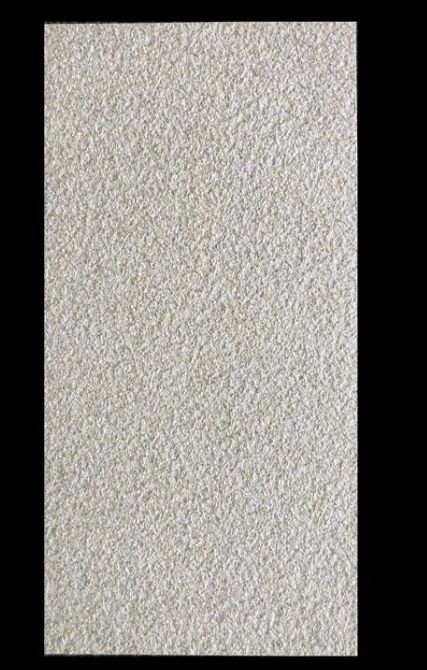
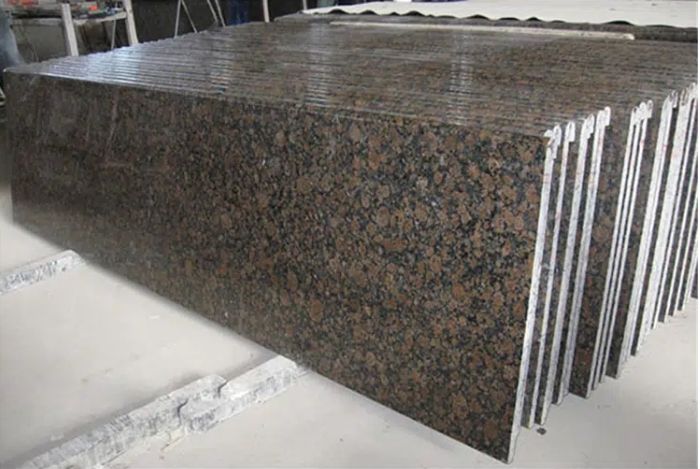
Thickness is visible, and that is half the reason people buy 30mm. A 30mm countertop edge reads as a solid block of stone. A 20mm edge reads thinner, and when it is built up with a laminated strip the joint line is often visible under close light — precisely the situation the 3cm specification exists to avoid. In a kitchen, where the edge is the most-seen surface of the whole installation, that difference is the entire argument.
Weight is the other thing you notice, in the workshop rather than on the drawing. A 30mm slab is about half again as heavy as a 20mm slab of the same size, so handling and support both change: a slab two people can carry at 20mm may need equipment at 30mm, and the substrate question — cabinet, subtop, bracket or sub-frame — arrives earlier in the project. On a facade that weight goes into the bracket schedule; on a countertop it decides whether a subtop is needed at all.
One smaller point that matters on light-coloured stone: a thicker slab has more material behind the finished face, so it can be re-honed or re-polished further into its life before the surface profile is compromised. On a 20mm slab there is simply less to work with.
Key Takeaways
- Thickness labels are market-specific: China's national slab classification calls 10–15mm thin, 20mm conventional and anything over 20mm thick — while North American countertop practice treats 30mm as the standard and 20mm as the thin slab
- A 30mm slab weighs roughly 78–84 kg/m² against 52–56 kg/m² at 20mm, and yields about 29 m² per cubic metre of block against roughly 42 m² at 20mm — that geometry, not marketing, drives most of the price gap
- 30mm is self-supporting over wider spans, takes full edge profiles in solid stone and is the common granite cladding thickness; 20mm suits adhesive-fixed wall tiles, solid-bed interior floors and weight-sensitive curtain-wall work
Slab Size, Not Just Thickness: Why the Cutting Plan Decides Your Yield
Thickness decides what the stone can do; slab size decides how much of it you can use. Chinese factories commonly cut granite slabs from 240×120cm up to 300×200cm, while international references often quote a standard slab around 280×160cm. The difference is not academic. On a kitchen with an island, the number of pieces you can get out of one slab frequently decides whether the job takes two slabs or three, and that swing is worth more than the price difference between two suppliers quoting the same stone.
So ask for the actual slab dimensions, and whether they are consistent across the bundle, before your fabricator produces a cut plan — then ask for the slab layout drawing set against your parts list. Confirm whether the slabs are sold as fixed sizes or as random sizes within a range, and whether the factory will reserve matched slabs from the same bundle for one job. On a project with a visible return, an L-shape or a waterfall end, having two pieces cut from adjacent positions in the same block is the difference between a matched corner and an obvious one.
Delivery Formats: Full Slabs, Cut-to-Size, or Finished Pieces
There are three ways to buy this material, and the right one depends on how much site control you have.
Full slabs ship as slabs and are fabricated locally. This suits projects where dimensions are not yet final, where the site has to be measured before cutting, or where you want your own fabricator to own the finished result. You pay more in local labour and you carry the slab inventory until the job is cut.
Cut-to-size means the factory cuts pieces to your schedule but leaves edges and cutouts to be completed locally. It removes most of the wastage from your yard and is the usual choice for cladding panels, stair treads and paving.
Finished pieces — countertops with edges profiled, sink and hob cutouts machined, pieces numbered to a layout — are fabricated entirely in China and shipped ready to install. The trade-off is straightforward: the unit price is lower and quality is controlled by one factory rather than several trades, but every dimension has to be fixed before production, and changes afterwards are expensive. It suits repeat programmes and standard kitchens far better than a one-off project that is still being designed.
The Arithmetic Behind the Price: Weight and Yield
Two numbers explain most of the price gap between 20mm and 30mm, and neither of them is salesmanship.
| Measure | 20mm slab | 30mm slab |
|---|---|---|
| Weight per m² (granite at ~2.7 t/m³) | ~54 kg/m² | ~81 kg/m² |
| Weight across the published granite density range (2.60–2.80 t/m³) | 52–56 kg/m² | 78–84 kg/m² |
| Block yield per m³ (2.5mm saw blade) | ~41.7 m² | ~29.4 m² |
| Typical 20ft container load | roughly 400–450 m² | roughly 280–300 m² |
Weight is calculated from thickness and density. Block yield is a geometric calculation that depends only on thickness and blade kerf; the source example used marble, but the arithmetic is identical for granite — only the weight column changes with density. Container figures are trade indications, not a rule: confirm against the payload limit for your destination.
The yield figure is the one to remember. A 30mm slab yields roughly 29 m² of saleable slab per cubic metre of block, against about 42 m² at 20mm — around 30% less area from the same block. That single fact explains most of the price difference, and it also explains why thickness is the first thing a factory looks at when you ask for a discount. Related to it: a 20mm slab is typically around 8–10% cheaper in slab price and about a third cheaper to ship per square metre.
On container weight, check your lane before you agree a quantity. At 30mm, a 300 m² load is about 24 tonnes of cargo; at 20mm, 400 m² is about 21.6 tonnes. One published logistics source puts the practical 20ft cargo limit at roughly 27 tonnes for Europe and about 19.9 tonnes for the United States, which means a US-bound container of 30mm slabs can reach its road-weight limit long before it is full. That is why a quotation expressed as "one container of slabs" without a thickness and a destination is not a quantity at all. Get the payload limit for your lane from your forwarder and set your order from that number.
What 30mm Buys You in Fabrication
- Spans and overhangs. A 30mm slab is self-supporting over wider spans. A 20mm slab usually needs a subtop or metal brackets once an overhang passes roughly 300mm. If your design has a 400mm breakfast-bar overhang or a long island, 30mm is normally the cheaper answer than a 20mm slab plus a steel substructure and the labour to fit it.
- Cutouts. Sinks and cooktops remove the strongest part of a countertop. A 30mm slab handles undermount sink and hob cutouts, and CNC cutting generally, with less risk of the hairline fractures that can appear around 20mm cutouts.
- Edges. On a 30mm slab, a full bullnose, ogee or DuPont edge profile is solid stone. On 20mm, the same profile is normally built up by laminating a strip to the underside — a bonded edge that can be visible at the joint and that depends entirely on the quality of the adhesive and the fabricator.
- Exterior and heavy-duty work. 30mm is the common thickness for granite facade cladding, and it is the usual choice for stair treads, pool coping and wall capping, raised floors and heavy pedestrian paving.
Where 20mm is the better answer: wall tiles fixed with adhesive, interior floors laid on a solid bed, lift and curtain-wall infill where every kilogram matters, and budget countertops where a subtop is acceptable. Choosing 30mm where 20mm would do is an expensive habit; choosing 20mm where 30mm is needed is the mistake that shows up as a cracked cutout or a sagging overhang two years later.
Tolerance, Calibration — and How to Check a 30mm Slab on Arrival
Tolerance first, because it is the most misunderstood number in a slab quote. For slabs thicker than 15mm, the Chinese national standard permits a thickness deviation of ±2.0mm on the same slab. Export-facing factories that calibrate their slabs commonly quote ±1.0mm as their own tighter standard, with ±0.5mm available as a premium option on request. The gap between those figures is where installation problems live: a lot that arrives with slabs ranging from 18–20mm, or a wavy 30mm, produces lippage and breakage on site, and by then the container has sailed and the argument is yours.
"Calibrated" is not the same as "sawn." Calibration means the slab has been ground to a consistent thickness on a calibrating machine after sawing. If your installer is laying large-format tiles on thin-bed adhesive, calibrated stock is effectively mandatory, because thin-bed adhesive cannot compensate for a 2mm thickness variation the way a deep sand-and-cement bed can.
When the container arrives, check these in order:
- Thickness with a caliper, not a tape measure, at several points across each slab. Thickness, flatness and squareness are three separate checks — passing one does not mean the others pass.
- Shade across the lot, not within one bundle. Shade is a lot-level property, so approving a single bundle proves nothing about the rest of the shipment.
- Ring test each slab with a rubber mallet. A clear, metallic ring means sound stone; a dull thud suggests an internal crack that will open when the slab is lifted.
- Surface defects: pinholes, resin marks, saw lines, warpage and edge chipping. On a calibrated slab, look specifically for grinding marks that indicate the caliper has taken off more than expected.
- Test data if the application is structural or external: flexural strength (ASTM C880 or EN 12372) and water absorption (ASTM C97) on the actual lot. A generic slab datasheet that does not name your lot is not evidence about your stone.
Where to read next
- Granite slabs for sale, tiles and countertops and granite slab supply from China
- Granite worktops, floor tiles and pavers and anti-slip granite stair treads
- Granite countertop cost guide — what 20mm and 30mm actually cost installed
- Stone container loading guide — payload, packing and what fits in a 20ft
- Procurement timeline: sample to bulk — lead times and approval stages
Further Reading
Related guides: Granite Slabs Wholesale · Granite Countertop Cost Guide
Standards & references: ASTM C615 Granite Standard · EN 12057 Natural Stone Tiles
Frequently Asked Questions
Why is a 30mm granite slab described as thin?
Because the word means different things in different markets. Under the Chinese national classification of decorative stone slabs, a thin slab is 10-15mm, a conventional slab is 20mm and anything over 20mm is a thick slab - so 30mm is thick by that framework. In North American countertop practice the convention is the opposite: 20mm is treated as the thin slab and 30mm as the standard premium thickness. Both descriptions are correct within their own market. What should decide your specification is the application, not the label.
How much does a 30mm granite slab weigh per square meter?
At a granite density of about 2.7 tonnes per cubic metre, a 30mm slab weighs roughly 81 kg per square metre. Across the density range commonly published for granite (2.60-2.80 t/m3) the figure runs from about 78 to 84 kg/m2. For comparison, a 20mm slab is roughly 52-56 kg/m2. That difference matters for transport, for the sub-frame on a facade, and for container planning: 300 m2 of 30mm slab is about 24 tonnes of cargo, which is at or near the practical limit for a 20ft container on some trade lanes, including the United States.
Do I need 20mm or 30mm for my countertop?
It depends on spans, cutouts and the edge you want. A 20mm slab is usually sufficient for standard countertops and vanities and is roughly 8-10% cheaper in slab price, but it generally needs a subtop or metal brackets once an overhang passes about 300mm. A 30mm slab is self-supporting over wider spans, handles undermount sink and cooktop cutouts and CNC cutting with less risk of hairline fractures, and supports full bullnose, ogee or DuPont edge profiles in solid stone rather than as a laminated strip. For large islands, wide overhangs and heavy use, 30mm is normally the cheaper answer overall because it avoids the substructure.
What thickness tolerance should I expect on a 30mm slab?
For slabs thicker than 15mm, the Chinese national standard permits a thickness deviation of plus or minus 2.0mm on the same slab. Factories that calibrate for export commonly quote plus or minus 1.0mm as their own standard, and plus or minus 0.5mm is available as a premium option if you specify it on the order. Uneven thickness is a common hidden downgrade because it is invisible in a photograph and shows up as lippage on site. Measure with a caliper at several points per slab, and check flatness and squareness separately - passing one does not mean the others pass.
How many square meters of 30mm granite slab fit in a 20ft container?
Trade indications put a 20ft container at roughly 280-300 square metres of 30mm slab, against roughly 400-450 square metres of 20mm slab, because the thicker stone consumes both more volume and more weight. Do not treat those as a rule. At about 81 kg/m2, a 300 m2 load of 30mm slab is around 24 tonnes, and one published logistics source puts the practical 20ft cargo limit at about 27 tonnes for Europe and about 19.9 tonnes for the United States. On a US lane the container can hit its weight limit before it is full, so confirm the payload limit for your route with your freight forwarder and set your order quantity from that figure.
Specifications
| Specification | Value |
|---|---|
| Material | Natural Granite |
| Color | As shown — multiple color options available |
| Standard Sizes | Slabs: 2400×1200mm to 3000×2000mm | Tiles: 305×305mm to 600×600mm (custom available) |
| Thickness | 10mm / 12mm / 15mm / 18mm / 20mm / 30mm (custom on request) |
| Thickness Tolerance | ±1mm (standard), ±0.5mm (premium, specify in order) |
| Surface Finish | Polished, Honed, Flamed, Bush-Hammered, Flamed + Brushed, Sandblasted |
| Water Absorption | ≤0.4% (ASTM C97) |
| Compressive Strength | ≥130 MPa (ASTM C170) |
| Packing | ISPM-15 fumigated wooden crates / pallets. Polished faces interleaved with protective sheets. |
| MOQ | 1 × 20ft container (approx. 400-500 m² slabs or 500-1,100 m² tiles) |
| Delivery Time | 15-25 days after deposit confirmation |
| Payment Terms | T/T (30% deposit, 70% before shipment), L/C at sight |
Related Resources
- Quality Control Standards — ASTM / EN testing and 6-stage inspection process
- Container Loading Guide — Maximize your shipment efficiency
- Request a Quote — Get pricing and availability for this product
Related Products
Inquire About This Product
Contact us for pricing, samples, or custom specifications.
Get a Quote